

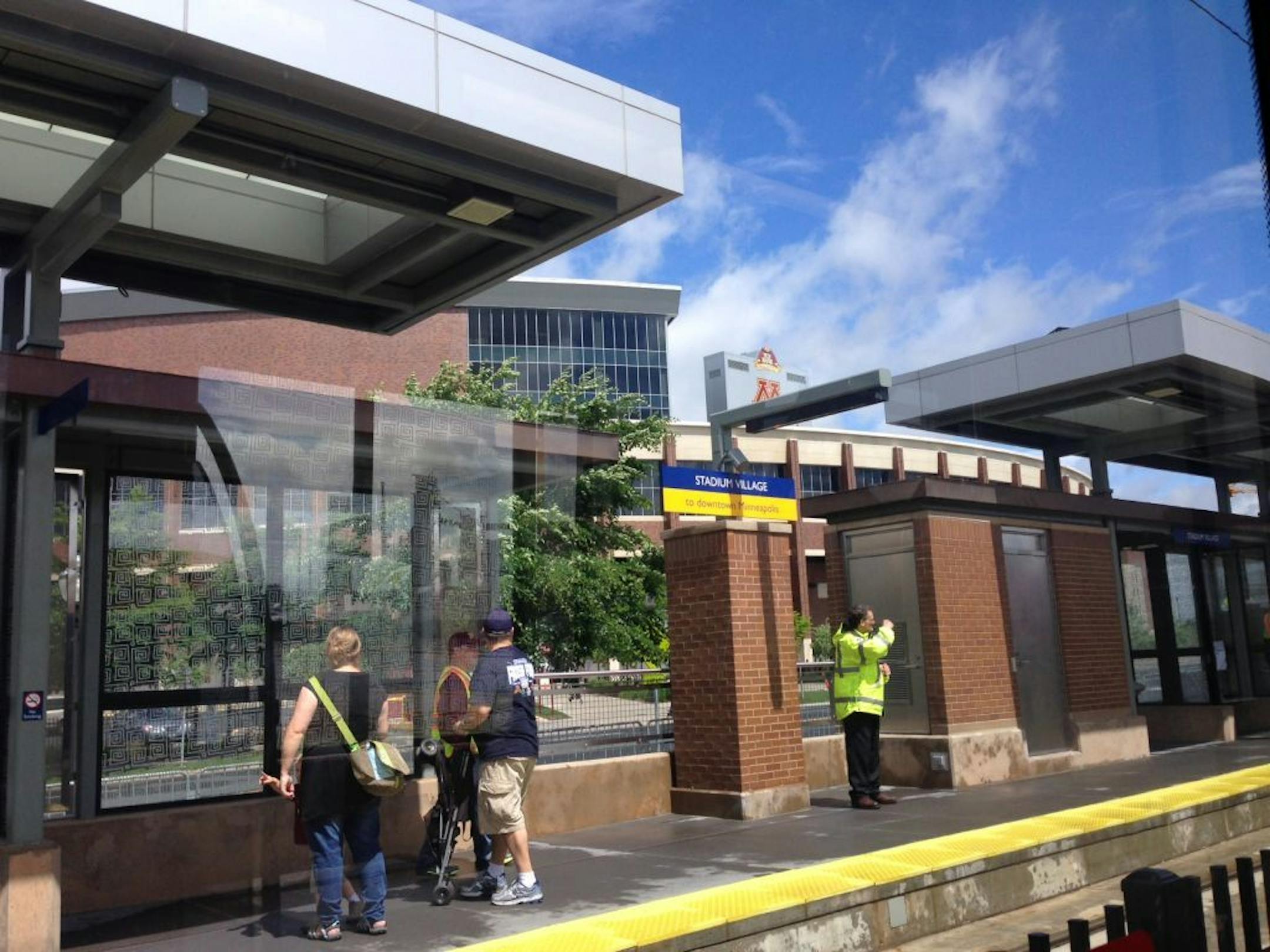
A month before the Green Line light-rail service debuted in June, test trips took more than an hour for trains to travel from one downtown to another, specifically Union Depot to Target Field.
More than 60 minutes to cover 11 miles. Ouch.
But timing along the route has been refined, and now the average time for the entire stretch is about 52 minutes.
That's exactly how long it took me when I took the Green Line from start to finish last Tuesday. In my decidedly unscientific "study," I boarded at Union Depot at 7:50 a.m. and arrived at Target Field at 8:42 a.m. The train appeared to stop about 16 times beyond the Green Line's 22 stations. But the stops, usually at intersections, tended to last less than 30 seconds before the train chimed on.
Stations were generally within two to three minutes of one another, and the cars didn't appear to be overly crowded, even though it was technically morning rush hour. (A frequent passenger said the trains were less crowded than usual, probably due to the brilliant weather.)
Metro Transit spokesman Drew Kerr says average weekday ridership through August was 32,128, 17 percent ahead of 2015 projections. During the week of Sept. 1, when the University of Minnesota's fall semester began, average weekday ridership was 40,445.
Officials from Metro Transit and St. Paul have been testing "predictive priority" low-volume intersections — Victoria, Chatsworth, Grotto, Mackubin and Western. This is transit-speak for technology that gives trains the best-possible chance of hitting a green light at an intersection, Kerr said. Bottom line: Trip times may decrease.
He says initial results from these tests are "overwhelmingly positive" — at Victoria, Chatsworth and Grotto, trains are clearing intersections without stopping up to 99 percent of the time. Information still is being tallied from the Mackubin and Western intersections.


