
'Great Wall' goes beyond cuisine

A life of travel led to cookbooks with a political, cultural view.

May 14, 2008 at 9:16PM
(Star Tribune/The Minnesota Star Tribune)

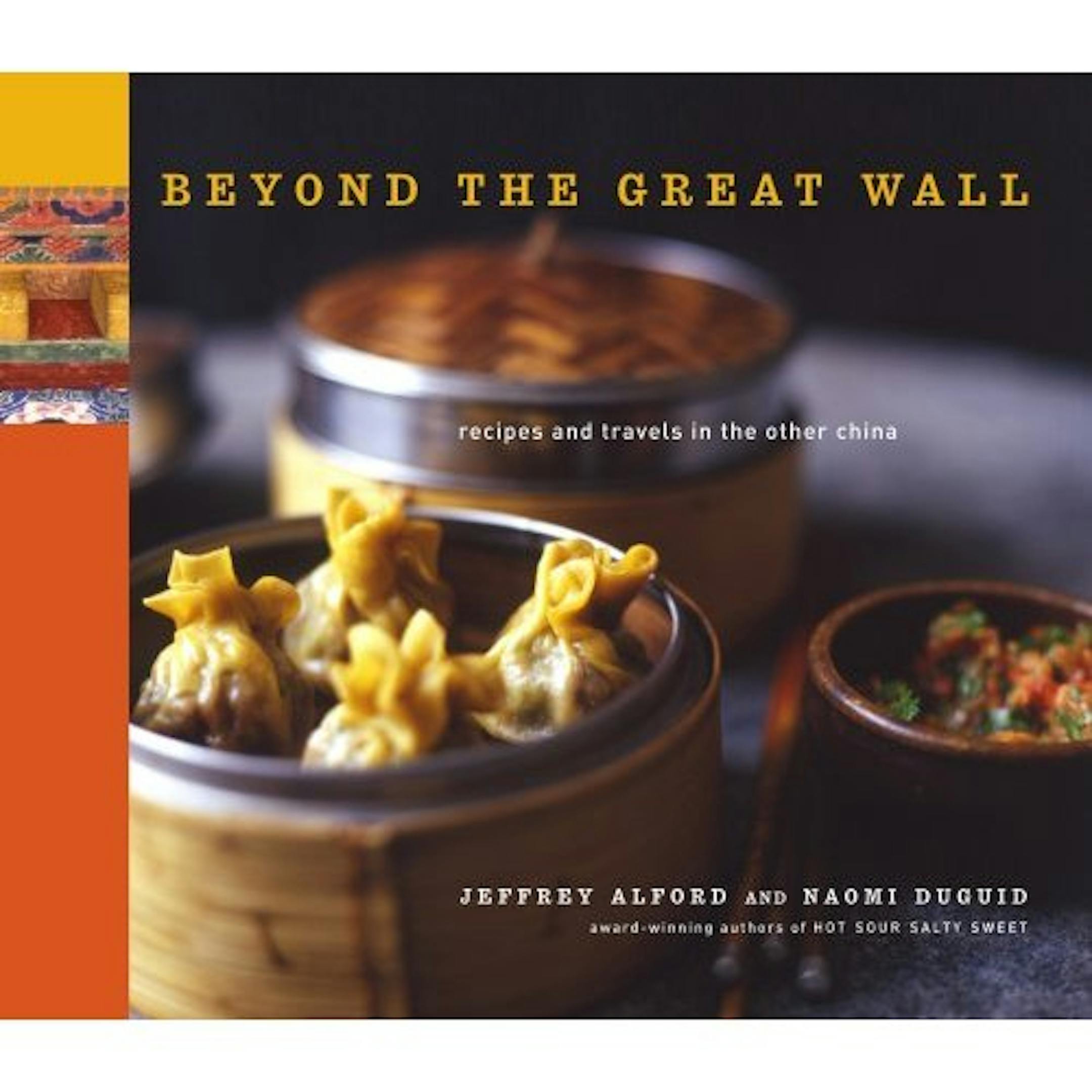
Few cookbooks take a political point of view, but that is the case with "Beyond the Great Wall" (Artisan, 376 pages, $40), by Jeffrey Alford and Naomi Duguid, a husband-wife team who have collaborated on six remarkable books that pair recipes with culture amid stunning photographs.

In their most recent book, these two adventurers tell the tale of great change in China, which they observed first-hand over 20 years. The resulting book is a travelogue with breathtaking visuals, in the form of a cookbook with great recipes, in the guise of a political treatise buried within stories. Its subtitle explains its purpose further: "Recipes and travels in the other China," the "other China" being the one of ethnic minorities within this vast country. More than 130 million of those living in China, spread over three-fifths of the countryside, are not considered by the government to be Chinese. That includes Tibetans, as recent unrest has reflected, and many other disenfranchised groups.

Perhaps only Alford and Duguid could present great social change in the context of an insightful cookbook. From their first, "Flatbreads and Flavors: A Baker's Atlas" to "Mangoes and Curry Leaves: Travels Through the Great Subcontinent," their books have influenced the cookbook industry as they have woven together cultures, history, recipes and photos.

Both Alford and Duguid were travelers before they met in Tibet in 1985, each on separate bicycle tours. From that time, their travels have taken them all over Asia and recently to Ethiopia, a far cry from the creative writing program Alford was part of in Wyoming.

He read cookbooks as a teenager, and one of his heroes was Claudia Roden, the author of many Middle Eastern cookbooks. Recently he was in New York City for an event celebrating his book, and Roden came on stage with him, to his amazement. "This is a magical world," he said later in an interview.

Alford and Duguid share photo, writing and recipe duties for all their books, and they have been self-taught in each. Their books take two to three years to complete.

Alford is in town this weekend for a class at Cooks of Crocus Hill, where he'll share stories, photos and flavors from the new book.

Q Why this book and why now?

A We've had the same editor forever, and she called one day and said she likes when we go across borders with our books. 'Have you ever thought of Central Asia? Like Tibet and those areas?' Yes, we always wanted to do a book on what we call non-Chinese China. We thought our editor would come to her senses. But then we realized there was a tie-in with the Olympics, and Naomi had the title. And so the book went forward.

We had been to China in earlier years. But when I made my first trip for this book, I was completely blown away. Somehow in the book we had to deal with this incredible amount of change in China. In the book, we start in 1980 [when Naomi took her first trip] and we decided to chronicle the change. We had been working in India, Pakistan and Bangladesh, and had seen change there, but not in any shape or form like what we saw in China.

Having worked in India where it's a pleasure to go, China was just the opposite for me. I came back exhausted, and it was in some ways scary. Rich people are really, really rich and when they come to those areas not ethnically Han [the dominant Chinese group], they come in such numbers like a steamroller and completely wipe out a population. The country has never had an economic decline. We know that's inevitable. With so much wealth coming so fast, the country feels vulnerable.

Q Tell me about the Chinese minorities.

A In China, there are 130 million people who aren't Chinese. They are called "national minorities." But the rest of the world also is considered a minority. All this has to do with ethnicity. Six groups are recognized as nationalities, but there are many more.

Once we got to work on the book, we decided we wanted it to come out before the Olympics because it is so important. We weren't surprised by the demonstrations and think there will be more before the Olympics take place. The Olympics will make people more aware of people who are less than happy with the present system. It's not a Tibet question. There are a lot of people in the exact same position and it's not like they are going to get their own country. There are incredibly positive things that have taken place in China.

Q How do you gather the recipes in the book?

A We do it in different ways, but always with our cameras. We don't just sit there with pad and paper. Those aren't situations where that's comfortable. We try to photograph cooks as they work and then, when we get home, we study shots and work out the recipes. A lot of it is really simple food.

Q You mention in the book that you took your sons to China on an earlier trip.

A We've been taking them since they were born. One of our ideas was that we wanted to do this together. When the older one was in his last year of high school, he couldn't go. Otherwise, they've always traveled with us. They've been to India six times.

Q What do you want from your books?

A This is the most political in nature [of what are essentially cookbooks]. It makes people aware. It's just like what happened in Burma or with the tsunami. We're thrilled this book has issues, and we bring them up through food. It's really important that people on the outside know what's going on. Some of what's going on in China is really wrong, and it feels good for us to have a book that lets people know.

Q Your books were among the first to combine food and anthropology. Did you do that intentionally?

A We feel lucky because our books are non-mainstream subject matter that is published in a mainstream way. Our first book was on flatbreads from around the world. People said it was good timing. We always feel like we're fighting to get people to think about books. These are more than just food. They are about people and food. We just did a program with Gourmet magazine about "Beyond the Great Wall." That gets to an audience that might not otherwise think about these issues. Cookbooks shouldn't stand still. They should move, and we feel like we do our part.

Q Have you switched to digital photography?

A We didn't. We thought about it. It looked attractive. But even our publisher said 'You don't have an original' with digital. We also realized we should stick with what we know.

Lee Svitak Dean • 612-673-1749

about the writer

about the writer

Lee Svitak Dean

Taste editor

See Moreicon