
Great pumpkin crop isn't escaping drought's effects

The drought didn't hurt the size of this year's pumpkin crop, which benefited from spring rain. But the drop in precipitation has had other effects.

For the Minnesota Star Tribune
October 19, 2012 at 9:47PM
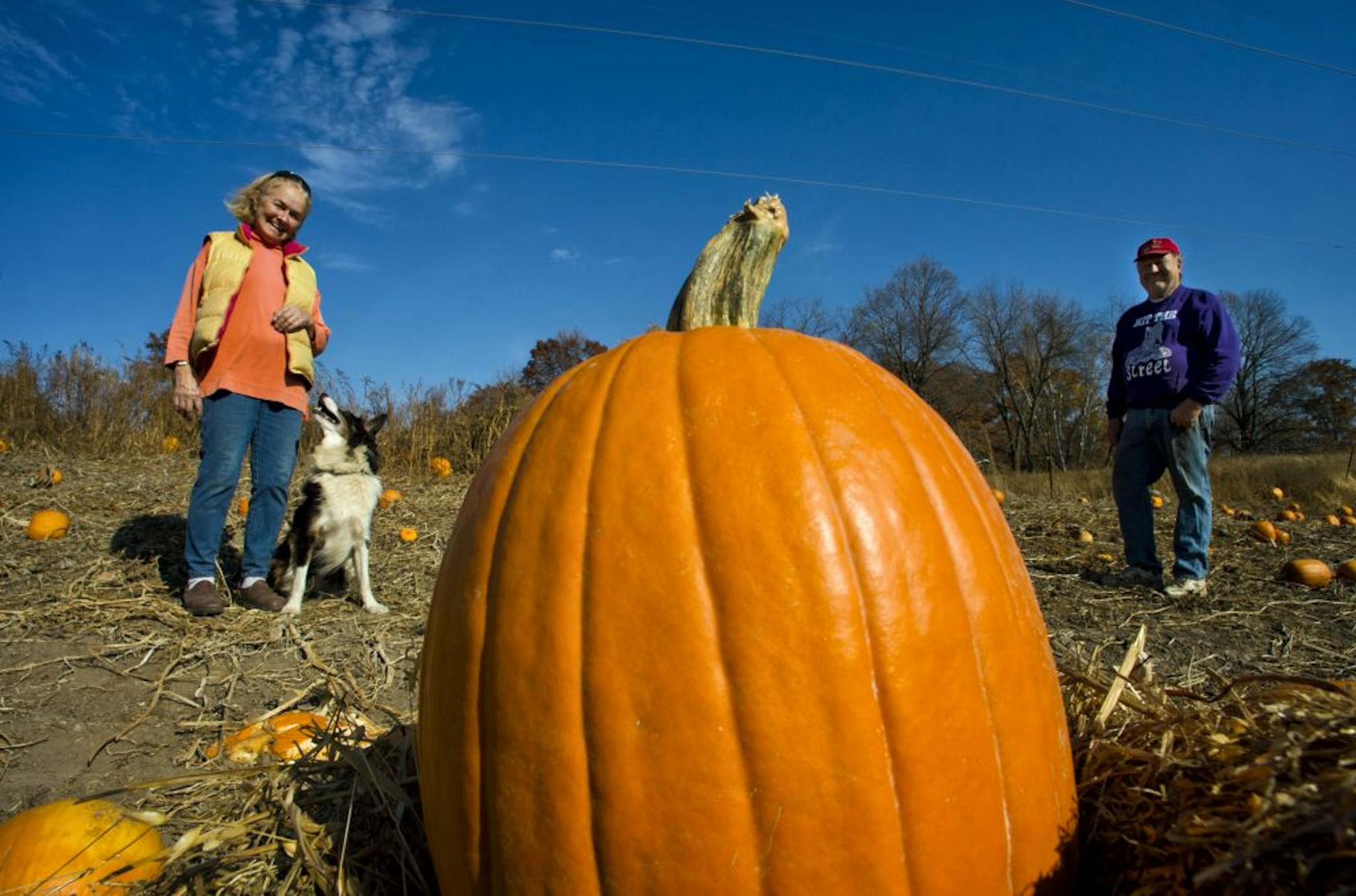
Sharon and Tom Pogreba run the Hugo Animal Farm and each year host visiting groups to pick their own pumpkins. They are open weekends from 1 to 5 p.m. through the end of October. Tuesday, October 16, 2012
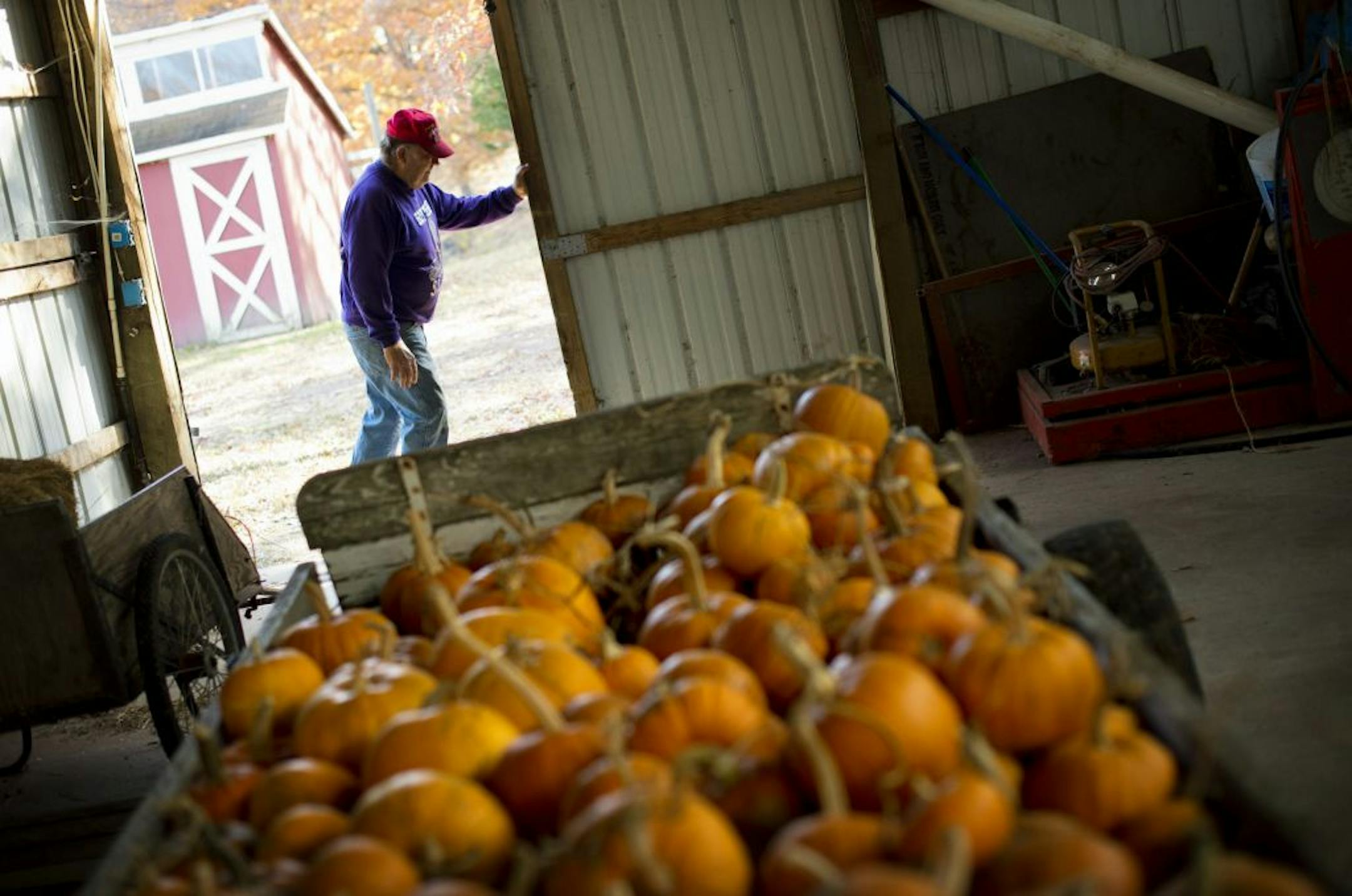
Tom Pogreba helps run the Hugo Animal Farm. The farm used to host just school groups, but they have so many pumpkins that they’re open weekends from 1 to 5 p.m. through the end of October. (Star Tribune/The Minnesota Star Tribune)

lenty of pumpkins are poised for the picking at Washington County pumpkin farms, despite the drought. Late spring and early summer rains gave the crop a head start, and several farmers reported bumper crops. And while some said the orange gourds didn't quite reach their usual size, others reported whoppers. Pumpkin prices remain relatively stable from year to year, with you-pick prices usually higher than grocery store prices, said Bill Jacobson, co-owner of Pine Tree Apple Orchard in White Bear Lake. Pine Tree has been growing and selling pumpkins since the mid-1980s, when the price was 35 cents per pound; now it sells them for 40 cents per pound. They wholesale for 20 cents per pound, Jacobson said. Price may not be such a factor for families who travel to pumpkin patches for the experience, according to Paul Hugunin, coordinator of the state's Minnesota Grown program. That experience may include a corn or hay-bale maze, hayride, petting zoo, apple picking and a retail store with decorative pumpkins, pies, cider, caramel apples and other treats. The Minnesota Grown website -- www3.mda.state.mn.us/mngrown -- allows visitors to search for a farm by crop or location. "Some other states do have significant impacts because of the drought and do have a very limited crop of pumpkins, but in Minnesota, we do have a very good crop of pumpkins," Hugunin said."Although we didn't have rainfall when we got into late summer/mid-summer, pumpkins were well on their way. A lot of our farmers have the ability to irrigate as well. We are one of the lucky ones as far our pumpkin crop."

Smaller, but plenty to pick from

Hugo Animal Farm's owners count themselves among the lucky ones. The farm used to be open only to school tour groups, said co-owner Sharon Pogreba.

"In the last four years we've had such an abundance of pumpkins that we've had people come" to pick their own from 1 to 5 p.m. on Saturdays and Sundays, she said.

Sharon and her husband, Tom Pogreba, charge 25 cents per pound and set a maximum price of $7 per pumpkin, no matter how large. "We have a lot of big ones this year," Sharon Pogreba said.

Tom Pogreba plants different varieties of pumpkins on about 10 acres. Howden pumpkins can range from 25 to 35 pounds, and Tom Fox pumpkins from 30 to 35 pounds, he said.

Hugo Animal Farm has two mazes, one of hay bales and the other of sorghum-Sudangrass, which is about 14 feet tall and difficult to see through.

As the name implies, it also has a farm-animal petting zoo. Hungry animals come in handy if there are pumpkins left over after Halloween, said Sharon Pogreba.
"Whatever we don't sell, the animals get," she said. "They're not wasted."

A late frost hurt Afton Apple Orchards' apple crop, but the pumpkins thrived, said Cindy Femling, one of the owners.

"I've seen some humongous ones come in," Femling said. "It's a great crop, a really good mix of sizes."

Afton customers may pick white or red pumpkins in addition to the traditional orange, which have deeper ridges than the other varieties.

Afton also has a 15-acre corn maze, a giant spider web for climbing and Halloween decorations featuring smiling ghosts and goblins. The farm is open 10 a.m. to 6 p.m. daily, with hayrides from 3 to 6 p.m. on weekdays and all day on weekends.

Some of the pumpkins at Pine Tree Orchard are a little smaller than usual due to the drought, Jacobson said. Still, it's one of the farm's biggest crops ever.

"We have a local high school cross-country team who pick and bring in the pumpkins from the outer fields. This year they worked all day and only got one field done," Jacobson said. "There's a ton of pumpkins out there."

Pine Tree has its share of basketball-size and larger pumpkins, he said. Customers pick from the fields closer to the farm store.

Those who want to buy from a farmer without traversing a field may visit Ziertman's Pumpkin Farm in Lake Elmo. Steve and Joan Ziertman raise bees and sell honey, pumpkins, squash, straw and hay bales. The 40-year-old farm is open only on weekends and draws lots of repeat customers.

Steve Ziertman said they have plenty of pumpkins, but some are smaller than normal due to the lack of rainfall. The drought also had another effect, he said. "The mini-pumpkins get chewed on by mice because they're looking for moisture," he said. "Some of the crop got ruined because of critters."

Nancy Crotti is a Twin Cities freelance writer.

Sharon and Tom Pogreba run the Hugo Animal Farm and each year host visiting groups to pick their own pumpkins. They are open weekends from 1 to 5 p.m. through the end of October. Tuesday, October 16, 2012
Sharon and Tom Pogreba had plenty of pumpkins at the Hugo Animal Farm, where they host visiting groups and others who come to pick their own. (Star Tribune/The Minnesota Star Tribune)
about the writer

about the writer

NANCY CROTTI