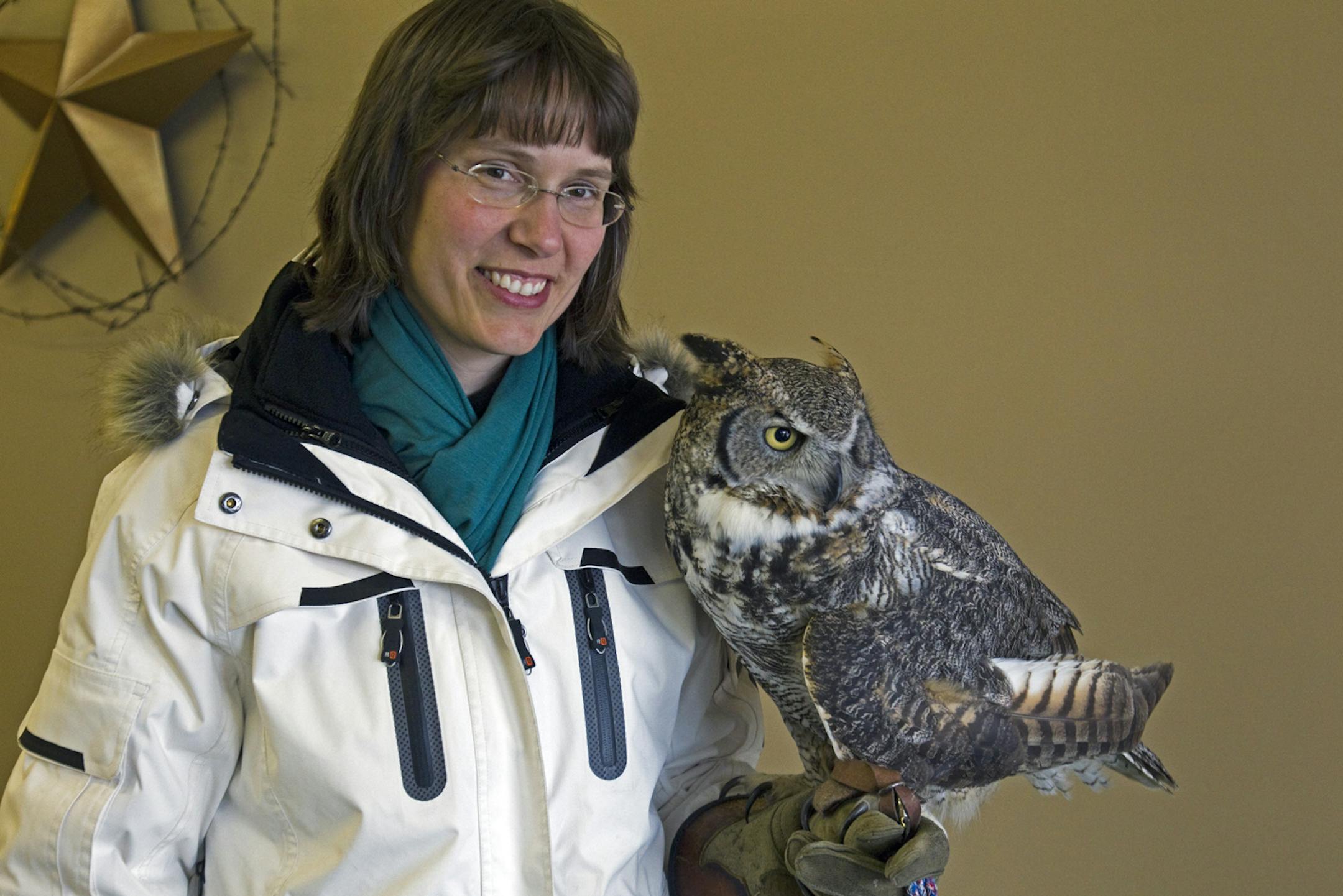
A sudden intake of breath, a moment of stunned attention. This is how most of us react when we encounter a great horned owl. If the owl is looking at us, those big yellow eyes seem to bore right into our own, holding our gaze for many heartbeats. The overriding impression is of a very large bird (about 2 feet tall), hinting at its charisma and potential for fierceness.
But it's a safe guess that not many of us see these owls because they're night hunters and take care to remain hidden during the day. This is prime time for hearing male and female owls hooting to each other, however, something they do in winter (and autumn) as they build toward nesting season. Great horned owls' deep, resonant hoots are what come to mind when we think of owl calls, but they make various other sounds, too — whinnying, screeching, squawking and caterwauling to attract a mate and define a territory.
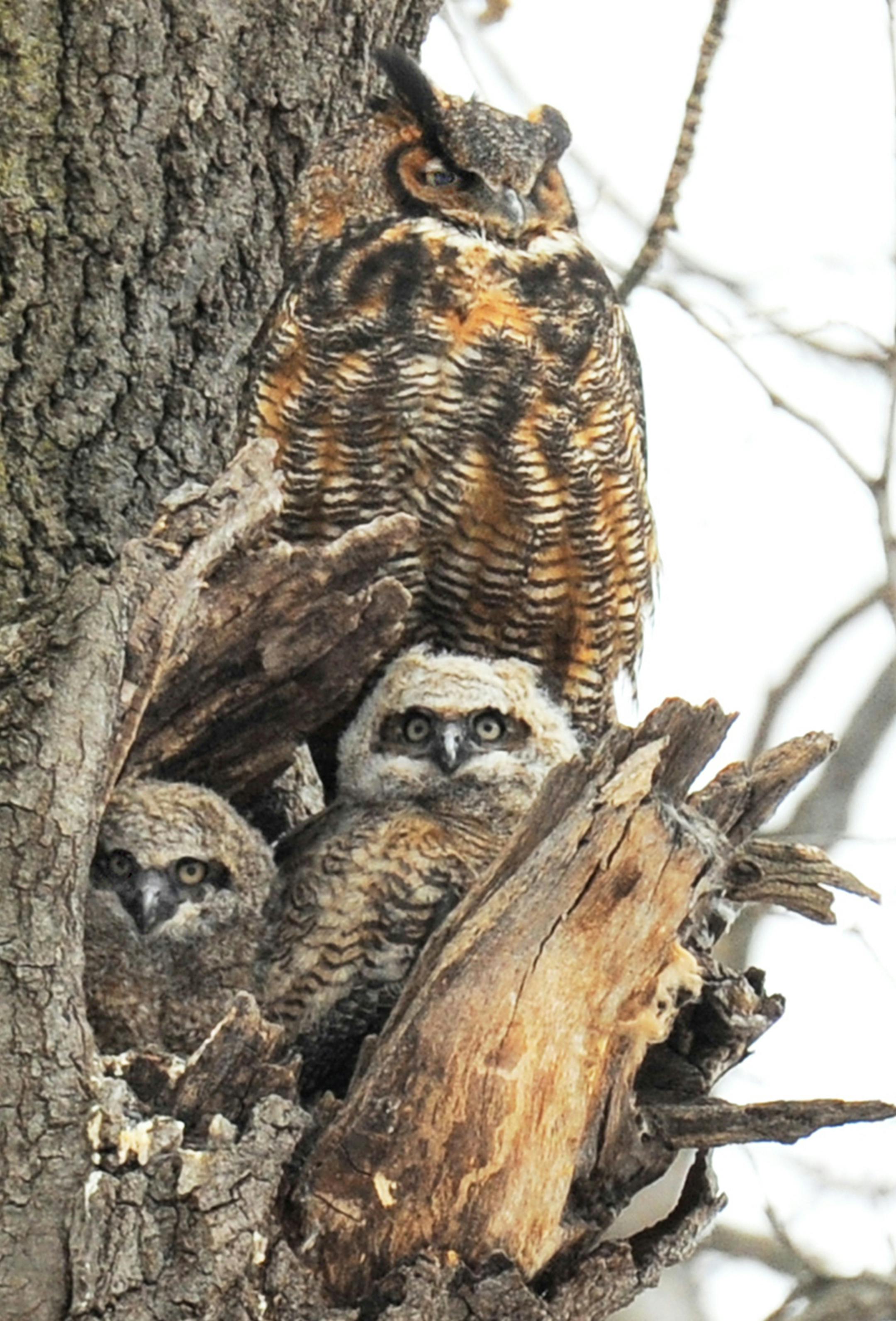
Even as cold as it is, once they've established themselves as a pair, most great horned females lay their eggs in February, and begin sitting on them right away. To keep eggs from freezing she needs to incubate them around the clock, relying on her mate to bring in food. Once the youngsters hatch, usually around mid-March, she continues to gather them underneath her to share her body heat for several weeks. The male owl is the family provider, bringing back rodent, rabbits, even skunks for the female to share with their young.
Why do they nest so early in the year, at a time when it's so cold and snowy that the mother owl sometimes wears a "snow hat" after a storm?
"Great horned owls are slow to become independent," says Karla Bloem, executive director of the International Owl Center in Houston, Minn. "The juveniles don't become independent of their parents until fall, although some become independent earlier and some mooch as long as possible."
It takes many months for young owls to learn to listen for barely audible sounds in the dark, and then soar silently through the woods before dropping down to grasp a mouse or vole for dinner.
Owls aren't nest builders, instead taking over a nest built the previous year by a hawk, crow, even a squirrel, or an owl pair will commandeer a tree snag, where a limb or part of the trunk has broken off.
They have feather tufts on the top of their heads that may look like ears, but whose purpose seems to be to make them look bigger to other owls, an intimidation factor.