

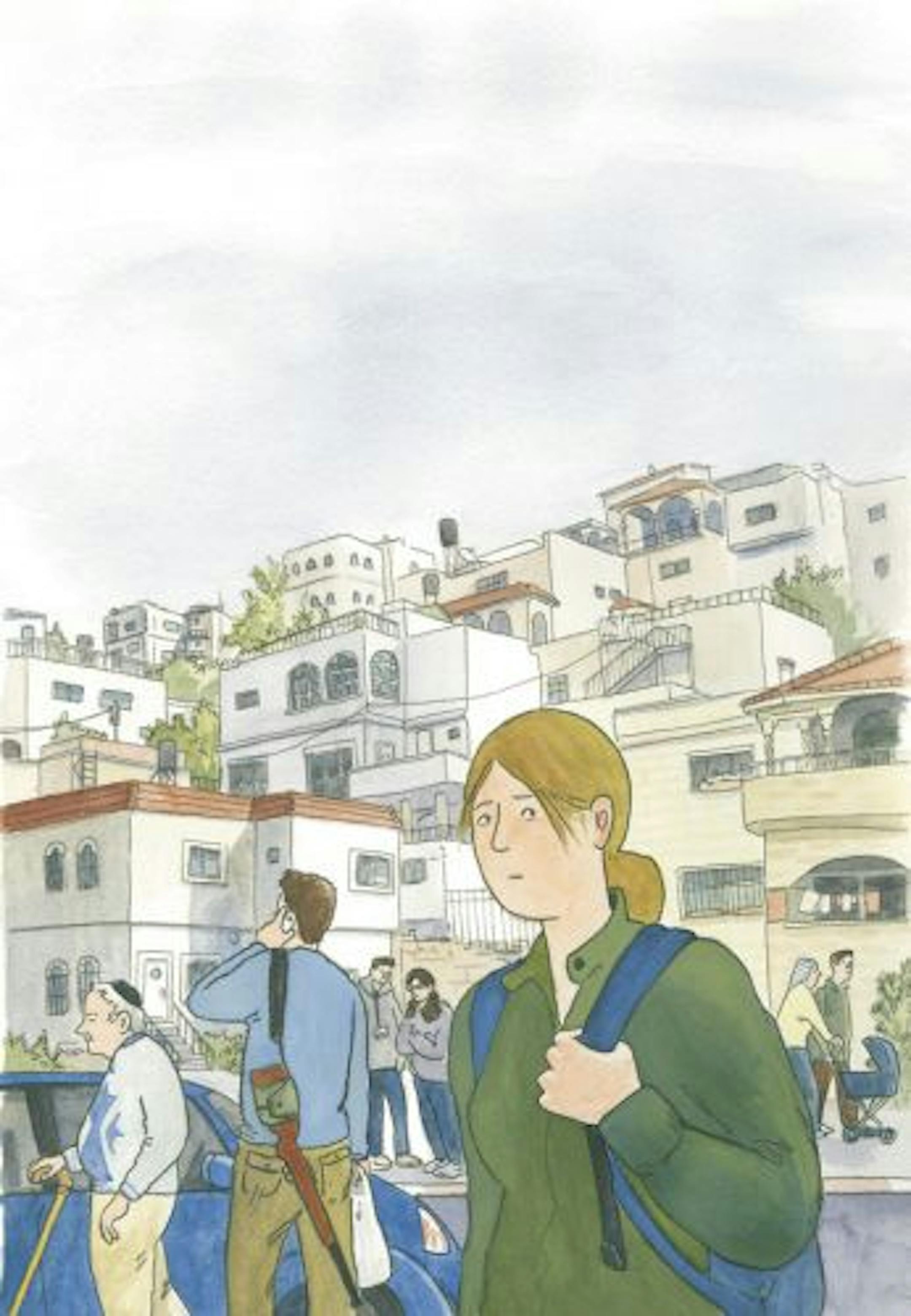
Sarah Glidden's debut graphic novel, "How to Understand Israel in 60 Days or Less" (DC/Vertigo, $25), registers in a lot of different categories, and is charming and thoughtful in all of them.
On the surface, at least, "Israel" could be pigeonholed into that fast-growing category, the first-person graphic-novel travelogue, like "Joe and Azat" and "Burma Chronicles." Glidden's ironically named book is about a "Birthright Tour" she and her friend Melissa take to Israel. As such, the reader gets to travel with her to famous (and infamous) places such as the Golan Heights, Masada, the al-Aqsa mosque, the Western Wall and the Dead Sea.
It's also something of a book exploring Middle Eastern politics, as discussion and argument about "the situation" ensues between the pro-Palestinian Sarah and her guides and fellow travelers, who hold a variety of opinions (or, like Melissa, none at all). This places "Israel" in the fine company of other graphic novels that do similar heavy lifting about this thorny subject, such as Joe Sacco's "Palestine" and "Footnotes in Gaza."
Third, and probably most important, "Israel" is also a personal story, something of a coming of age for Glidden. Given the location and subject matter, Rutu Modan's "Exit Wounds" immediately leaps to mind. Also, Glidden's artwork seems to owe something to Modan, as well. Glidden's style still seems to be in the process of forming, but where it is strongest I was immediately put in mind of "Exit Wounds."
(For the record, Glidden's art -- while not strong -- is of the cartoony "Tintin" style that clearly defines what you need to see, and assigns sufficient visual cues that distinguishing one character from another is never in doubt. Some older and more accomplished artists have failed to achieve these simple reader-friendly techniques, so I'm not complaining. I'll take clear content over artsy, elaborate style any day.)
It is that last category where "Israel" leaves you thinking. Glidden doesn't spare herself in her mocking self-description as the almost-clichéd, left-wing, pro-Palestinian, mostly secular New York Jew. But from there the book treads virtually new ground. Glidden expects the Birthright Tour to brainwash her, but, to her surprise, the presentation is not always pro-Zionist, and sometimes threatens to be balanced and reasonable. Her resultant cognitive dissonance is represented by a "brainwashing trial" in Glidden's head, where all the principals (judge, defense attorney, prosecutor, jury) are played by Glidden.
These abrupt detours into metaphorical depictions of internal monologue are among the charming storytelling techniques Glidden invents or swipes to acquaint the reader painlessly with various questions, conflicts and back stories.
This is a sophisticated tale, one that asks a lot of the reader, while telling a fresh, new story in an old, storied land.


