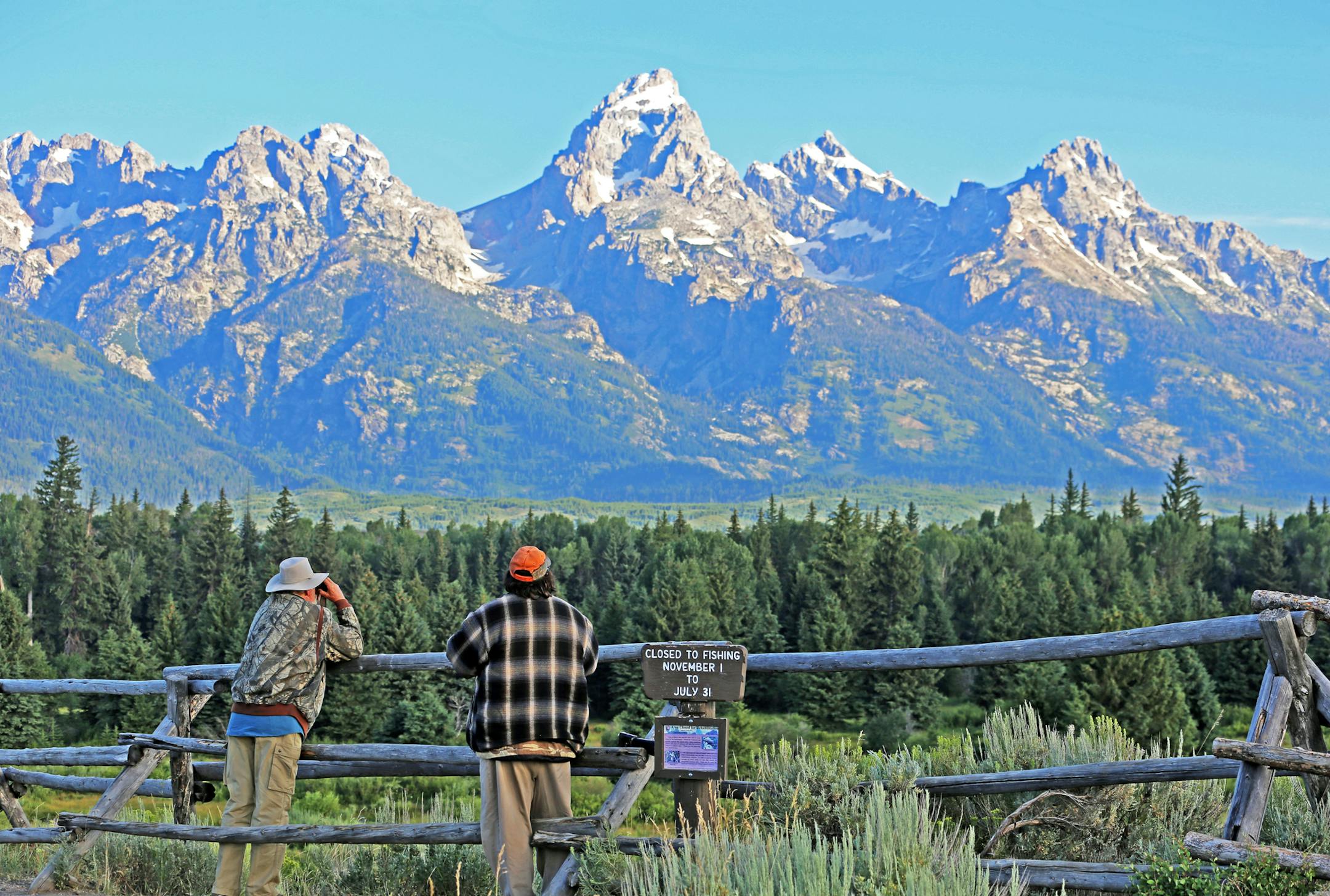
GRAND TETON NATIONAL PARK – In 1911, James Manges laid claim to 160 acres inside what eventually would become this park, and when he left his small cabin to fish cutthroat trout in the Snake River, he'd tack a handwritten note to the door:
"Gone fishing," he scribbled. "If I don't come back try to make a living off the place."
Manges was only the second settler to pony up $15 for a plot of land in the shadow of the Teton Range, following passage of the Homestead Act of 1862. Other stake claimers followed. But 50 years would expire before 400 titles were let in Jackson "Hole" — the name trappers gave to valleys surrounded by mountains.
The other day, as we launched a drift boat into the Snake River, its wide sweep of clear, moving water bore the same invitation it must have rendered to Manges, and some 11,000 years earlier to the forebears of modern American Indians who visited here to hunt and gather plants in spring, summer and fall.
One of the West's great waterways, along with the Yellowstone and the Missouri, the Snake, unlike the latter two, eventually flows west, into Idaho and ultimately into the Columbia River, before emptying into the Pacific Ocean.
"We'll try these," my older son, Trevor, said, selecting large foam-bodied attractor flies to tie onto our leaders.
Trevor lives in Missoula, Mont., where he is a fly-fishing guide, and had traveled to Grand Teton National Park to spend a few days with his mother, Jan, and me.
"Remember the first time we were on this river?" Jan said from the bow. An eager fly angler, and a good one, Jan, on a given day, will match me fish for fish.