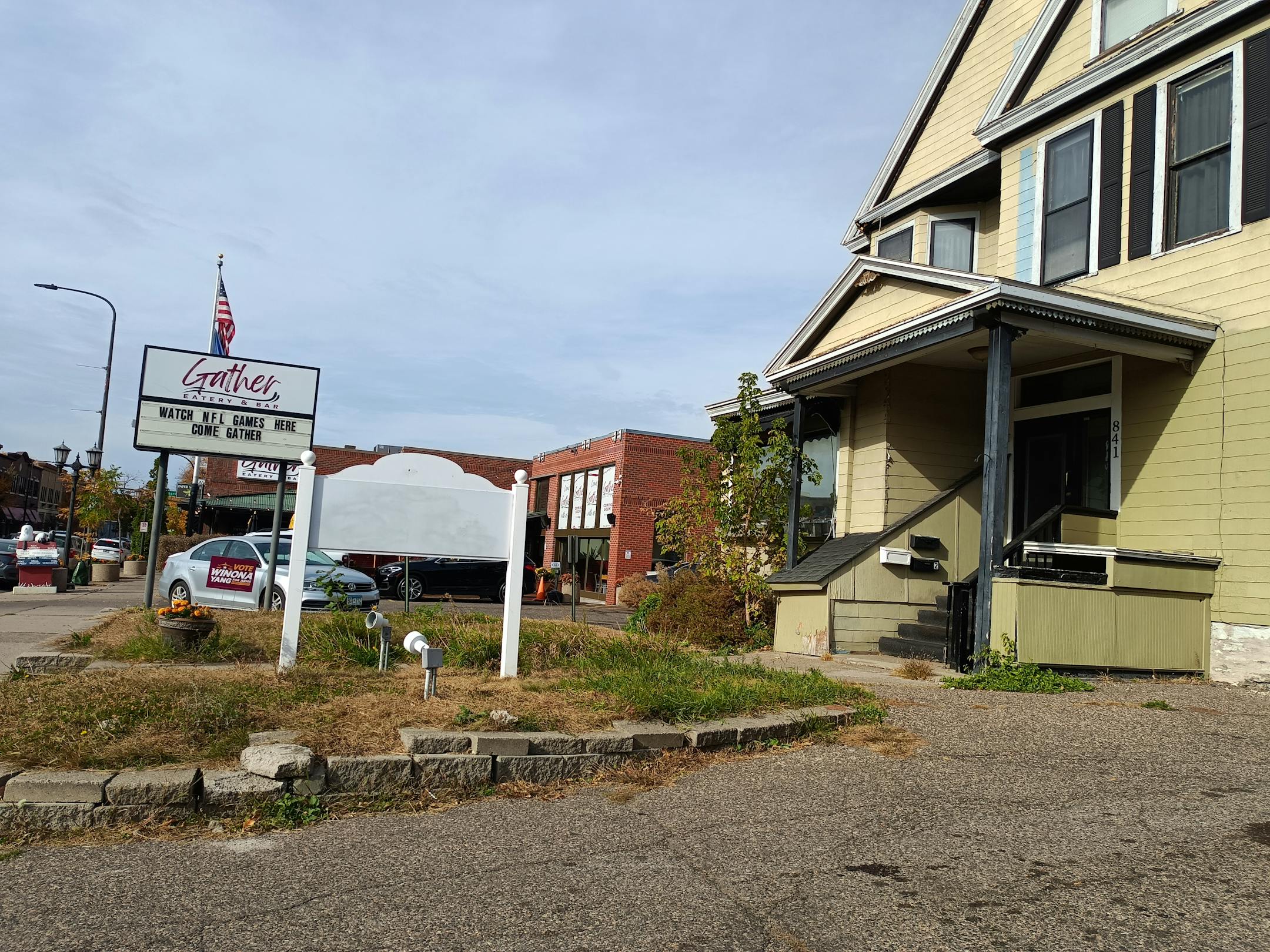
The northeast corner of Victoria and Grand avenues in St. Paul, where a developer wants to build a six-story building with shops and restaurants, 90 apartments and parking. (James Walsh/The Minnesota Star Tribune)
Picture a pre-pandemic summer evening on St. Paul’s Grand Avenue.
The patio at Billy’s on Grand is jammed and noisy with chatter, clinking glasses and strains of karaoke from inside the bar.
Today, that porch is empty. Billy’s closed suddenly almost a year ago, not long after the property was rezoned and sold. Other shops and restaurants are gone.
It is quiet. But is it blighted?
That’s the question the City Council weighed Wednesday when they decided if a developer should get a tax incentive usually used to redevelop blighted areas, using future tax payments to pay back the developer for certain costs. The City Council approved the incentive.
Developer Ari Parritz of Afton Park Development wants to tear down the single-story Victoria Crossing East shopping plaza and a neighboring house on Grand Avenue. In its place, he wants to build a six-story building with shops and restaurants on the ground floor, 90 apartments upstairs — and plenty of parking for residents and shoppers.
Parritz asked St. Paul to approve $2.95 million in tax-increment financing for the project, directing a large portion of the development’s future tax revenue to reimburse certain costs of development and construction.
“A market-rate project, even at the best intersection in the whole city, still needs a boost,” Parritz said.
Skeptics said St. Paul should not have to support development in a well-off area.
“Homeowners and other businesses are dealing with the impact of higher interest rates recently; all developers will need to adapt to the new financial environment,” resident Carl Michaud said in an email to the Housing and Redevelopment Authority. Michaud is a member of Insight St. Paul, a group that opposes most tax-increment financing in the city.
Despite the opposition, an analyst hired by the city has recommended St. Paul approve the incentive. According to that analysis, the property will not be developed without the incentive. A state grant from the Department of Employment and Economic Development will add $350,000 to remediate hazardous materials.
Related Coverage
Parritz is a St. Paul resident paying city property taxes, and he said he hears concerns with the way St. Paul made bad bets with the incentive in the past.
But the alternative to using tax incentives would be years without development, he said.
The corner of Grand and Victoria avenues may seem like a great location for a developer, but there are larger macroeconomic forces at work. Namely, interest rates (high) and return rates on new construction (not as high as they were just a few years ago), Parritz said.
He worked on the development of a similar building just a few blocks east on Grand Avenue that opened in 2023, replacing two restaurants and a parking lot with a five-story mixed-use building that includes three new restaurants. That building did not receive a tax incentive.
It doesn’t work that way anymore, Parritz said.
“Every part of the process is more expensive, and what you have at the end is worth less,” he said.
Developers now need tax incentives to get other investors on board, he said, to finance a project.
“We do need this financing to close the [financing] gap and reach marketable returns,” he said. “The rest of it is just math.”
Correction: An earlier version of this story misstated developer Ari Parritz's role in a development that opened on Grand Avenue in 2023, and misstated the size of the building and number of restaurants.
Clarification: This story has been updated to clarify that Insight St. Paul opposes most of the city's uses of tax-increment financing.
about the writer
Josie Albertson-Grove
Reporter
Josie Albertson-Grove covers politics and government for the Star Tribune.
Sheriff Dawanna Witt told reporters Friday she’s met with federal officials four times but is still unsure about how much to cooperate with immigration enforcement.