

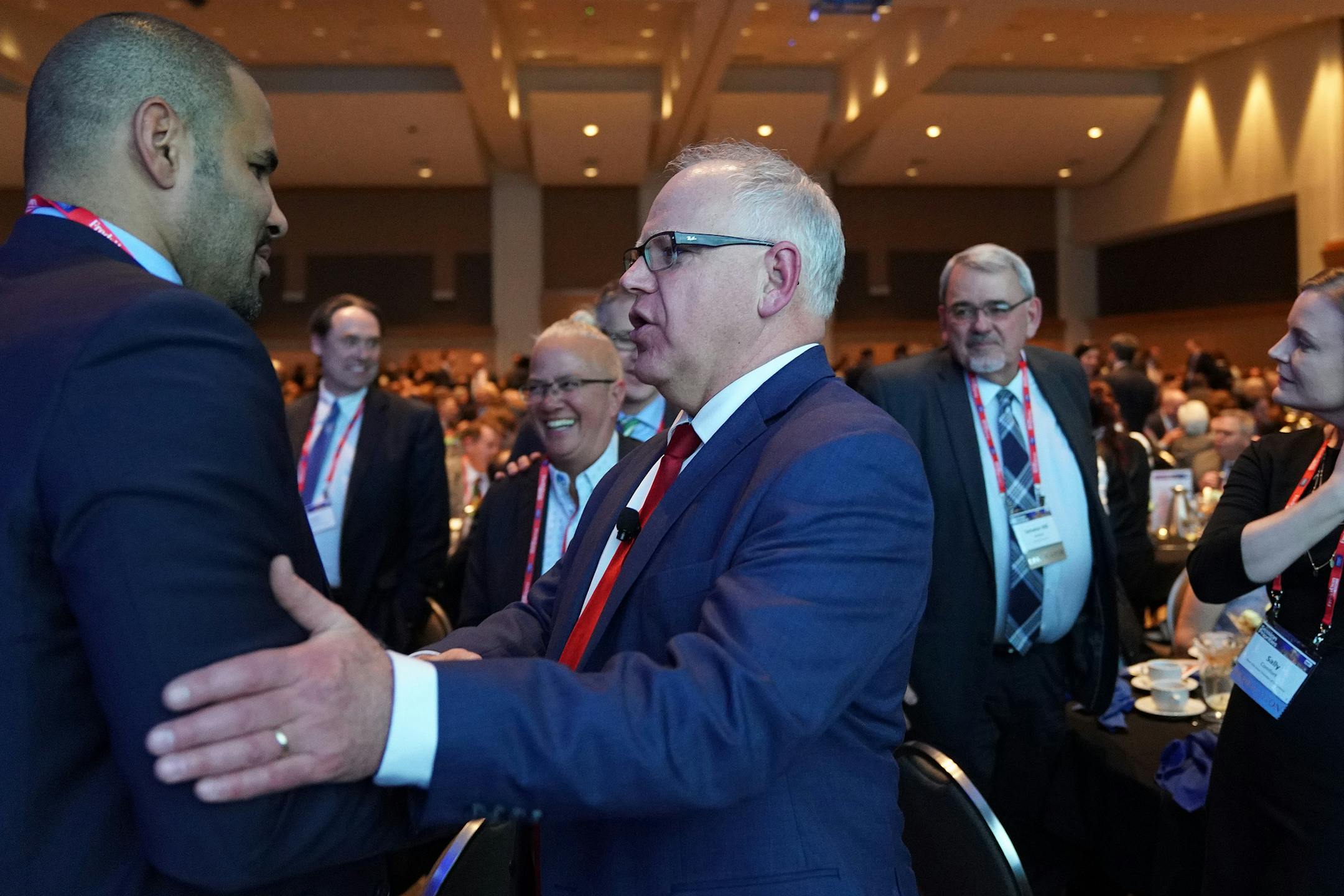
Gov. Tim Walz is expected to press for his new budget and spending plans April 3 when he delivers his first State of the State address at the Minnesota Capitol.
The Democratic governor will likely offer a look at the state's fiscal challenges and make the case for his administration's policy priorities. He will deliver the speech at 7 p.m. in the House chambers before a joint meeting of the Legislature.
Past governors have often used the annual speeches — a set piece of state politics — to argue for their budget plans.
Walz unveiled a $49.5 billion two-year budget last month that he said prioritizes education, health care and community development. Republican legislators have balked at some of his tax and spending proposals, and his first annual address will give the newly elected governor another high-profile opportunity to broadcast his vision for spending and the state's future.
Walz, a former congressman from Mankato, said he would have liked to give the address in greater Minnesota.
But he said he decided to deliver the speech at the Capitol at the request of legislators who see it as a more convenient and cost-effective location. He said he plans to hold a future State of the State outside the metro area.
The address is traditionally given at the Capitol. It has been delivered at locations outside the Capitol just nine times in the state's history.
Jessie Van Berkel • 651-925-5044


