As health officials race to contain the spread of the coronavirus and prepare the public for quarantines, lawmakers from Minnesota to Washington are debating ways to protect millions of hourly wage earners who do not get paid sick time.
Gov. Tim Walz and some top DFL lawmakers say state action may be needed to prevent workers from missing paychecks. "In a health emergency, asking someone to worry about paying rent or child care or leaving work and keeping folks safe, that's a tough one," he said Tuesday. "So I think we need to have the conversation."
President Donald Trump, who met with lawmakers on Capitol Hill Tuesday, also has pledged to pursue "very substantial relief" at the federal level, including a payroll tax cut and assistance for hourly workers who need to stay home. But both remedies have met resistance in Congress and at the state level.
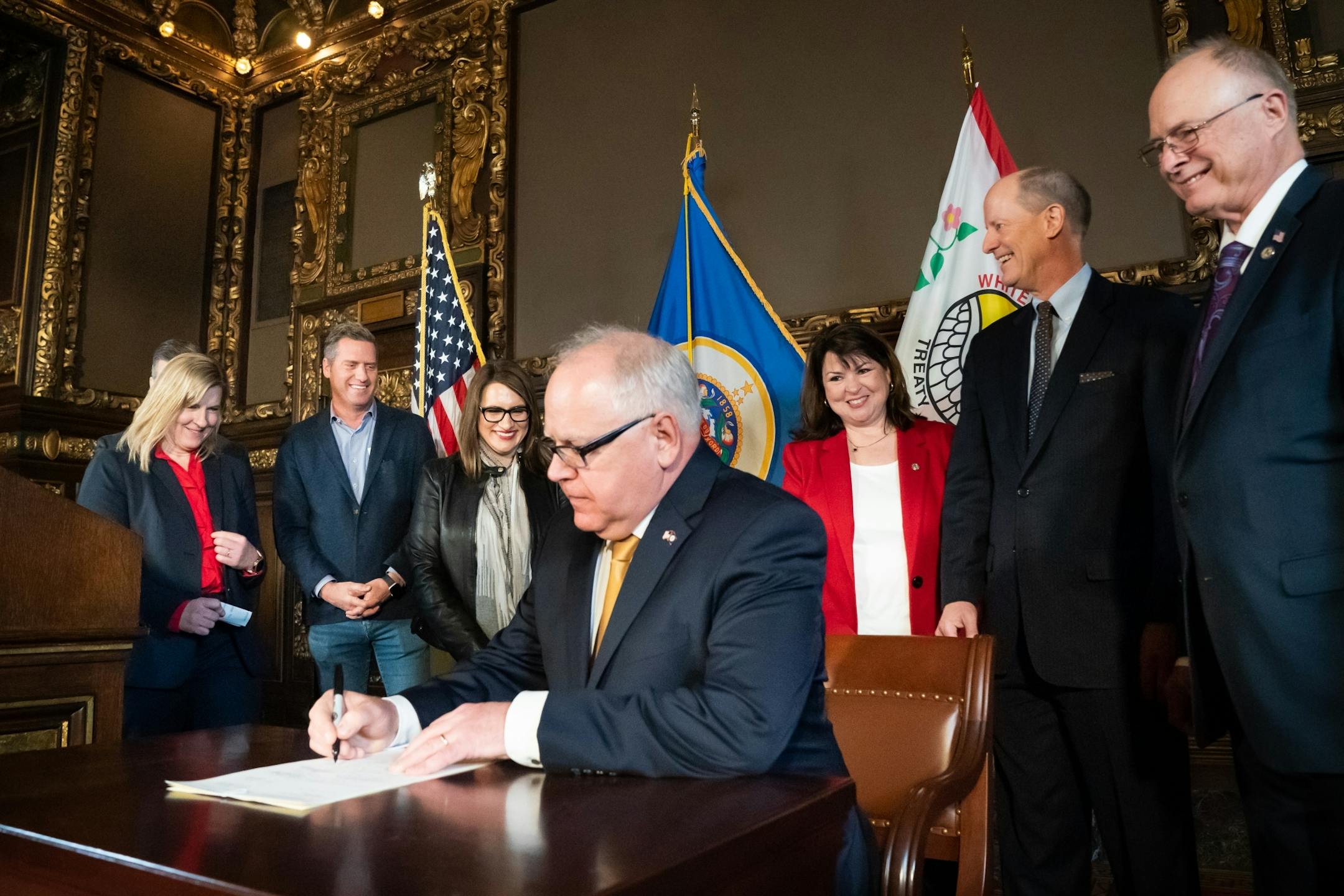
The divisions have emerged as Walz signed legislation Tuesday earmarking an additional $21 million for the state's coronavirus response. That brings the total available for the state's public health response to $25 million as state and federal lawmakers grapple with the fast-spreading virus and provide economic relief for employers and workers in the weeks and months ahead.
One of the biggest questions is what if anything to do for employers and workers reeling from the ongoing economic fallout and the likelihood that more workers will face self-quarantine orders as the virus spreads. Public officials are already urging anyone who is sick to stay home from work and school. People who have been exposed to the virus are asked to limit contact with the others, with the length of isolation dependent on the extent of contact with an infected person. Authorities also are also asking the public to prepare for possible voluntary quarantines by stocking up on enough food, medicine and basic provisions to remain at home for up to 14 days, which is how long it can take for symptoms would show up after infection.
Advocates for requiring paid sick time point to studies estimating that more than 900,000 Minnesota workers, about 36% of the workforce, lack the benefit. Service industry and lower-wage workers are less likely to have access to sick time from employers.
State legislation to require paid sick time for all workers has faced opposition from the GOP-controlled Senate and large business groups, with critics raising concerns about a one-size-fits-all approach being too costly and burdensome for businesses. Walz, who supports strengthening sick time laws, said he thinks it's a positive sign that the president is talking about the issue. But in the absence of broader support for the full measure, DFL lawmakers said they are looking into short-term fixes aimed at alleviating financial strain for those following social isolation guidance.
"If everyone had sick time paid, that would be a terrific response, unfortunately, that's not the case," said Majority Leader Ryan Winkler, DFL-Golden Valley. "Obviously there's a broader, longer-term discussion about earned sick and safe time, but in the immediate time, for purposes of disease management, we have to make sure that we're not undermining our public health by people being forced to come to work."