100 years later, state's gophers still golden for bounty hunters

A few towns and many townships keep paying to have the pesky critters taken out. Town clerks are not always thrilled.

May 9, 2009 at 3:40AM
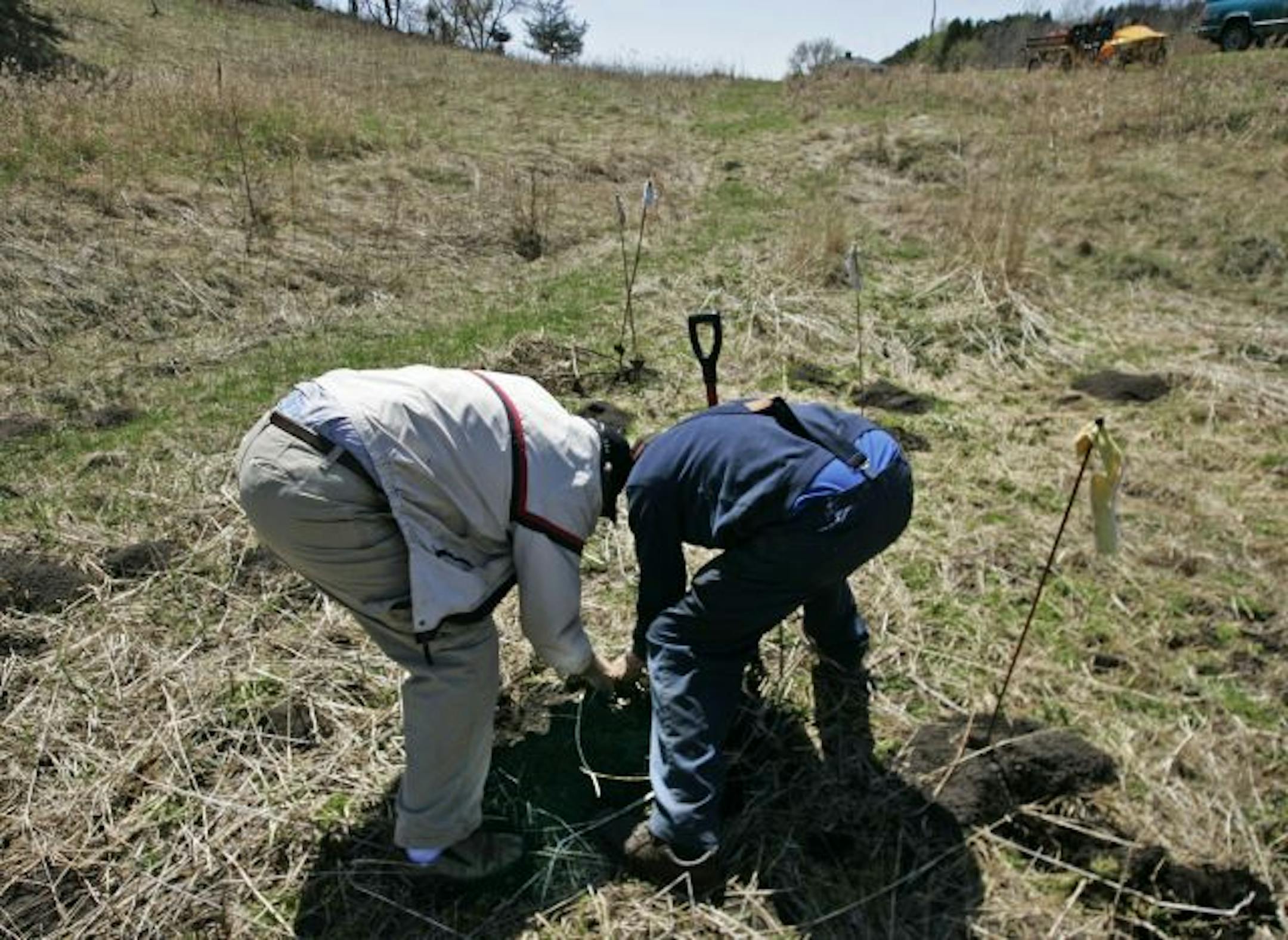
Landowner Bill Voedisch, left, and bounty hunter Bert Arkman loaded a gopher trap on Voedisch's property in May Township. Arkman, 83, is going to hang up his traps this year
Landowner Bill Voedisch, left, and bounty hunter Bert Arkman loaded a gopher trap on Voedisch’s property in May Township. Arkman, 83, is going to hang up his traps this year (Star Tribune/The Minnesota Star Tribune)

Linda Klein isn't particularly squeamish. But the city clerk for May Township feels her stomach churn when residents drop off cans full of gopher paws so they can collect the $1.50-per-gopher bounty.

A throwback to an era when the metro area was crawling with the critters, the gopher bounty marks its 100th anniversary this year. As farmers and road construction crews around Minnesota begin their spring labor, many are scouting for the persistent pests.

"The last guy who brought gophers in had the paws attached to a chain, to separate them so I could count them better," said Klein, who is among dozens of Minnesota town clerks whose 21st century job duties include counting gopher feet.

"I looked up and down at them, estimated how many there were, and said, 'Take them away!"'

Even the mascot of the University of Minnesota isn't exempt from the bounty. So watch out, Goldy! Minnesota law permits local governments to pay bounties for striped, gray and pocket gophers, as well as ground squirrels and woodchucks.

The practice is still widespread, said Eugene Dufault, special programs coordinator for the Minnesota Association of Townships. Bounties are still paid by counties such as Polk, Clearwater and Blue Earth, as well as dozens of townships.

Of the five bountied animals, the pocket gopher is by far public enemy No. 1, said Dufault, because they are so destructive. State law requires that their feet be presented for the bounty to be paid.

"They're tricky creatures so you have to know what you're doing," Klein said.
A dying breed

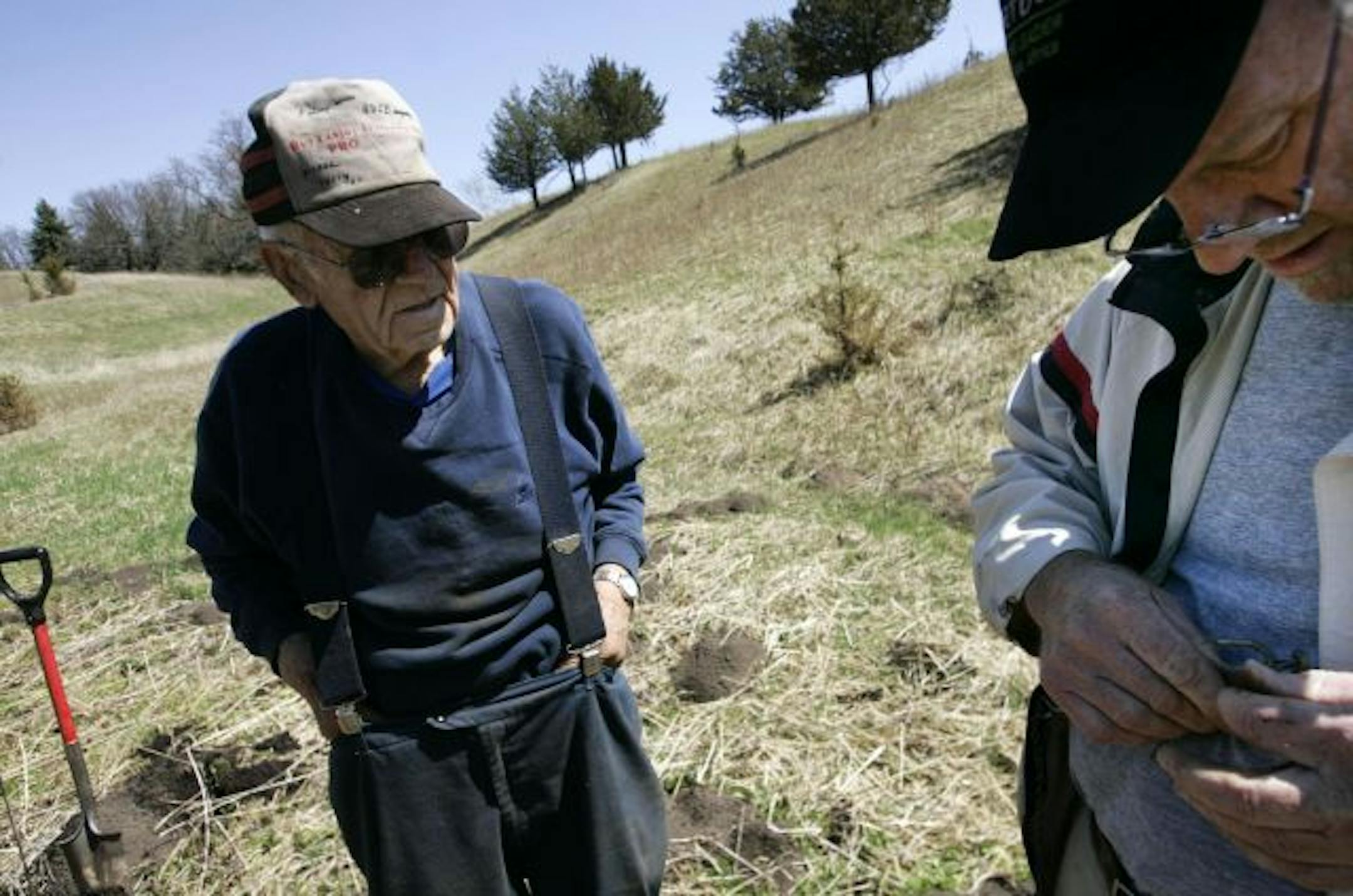
Bert Arkman knows what he's doing. He's been a gopher hunter in western Washington County for the past seven years. On a recent morning, he drove to the May Township farm of Bill Voedisch to set a few traps. But he also wanted to show Voedisch how to do it himself, because at 83, Arkman is retiring this year.

Voedisch and Arkman drove into a hay field searching for mounds of fresh dirt, a sign of recent gopher activity. They dodged dozens of older mounds, which continue to mess up farm equipment and farm animals' legs. That's why gophers are considered such a nuisance, they said.

"The first year I took 147 gophers out of here," said Arkman. "I think last year I got something like 47. Looks like it worked."

As the men headed through the fields, their vehicles wobbled on the uneven ground. Said Voedisch: "When I bought this land it was smooth as a table. ... That's the work of gophers."

Finally a cluster of freshly dug mounds appeared. Arkman got out of his car and grabbed some metal traps, a metal rod and a small shovel. Walking to a mound, he stuck the rod in its center and searched around for a larger burrow. He then took a shovel, dug a hole in the burrow and inserted the metal contraption.

"You've got to put it in the runway [tunnel] like this," he instructed Voedisch, showing him the technique used for decades.

Tools of the trade

But the art of eliminating gophers has become more sophisticated over the years. For people who aren't thrilled about pulling dead gophers out of traps, there's now a product called a "rodinator" that emits an explosive mixture into the tunnel, blasting away the hole and the rodent.

"But we believe the gophers are on to the rodinator," Voedisch said. "My theory is they smell it and run in the opposite direction."

There's also a device called the "Elston Gopher Getter," which May Township now owns, said Voedisch, who is the president of the township Board of Supervisors. It digs gopher-friendly tunnels and injects poison into them.

The problem is, people need a Minnesota pesticide applicator license to buy the poison, he said. And to get the license, applicants need to pass a written test.

"It gets complicated," he said.

In another sign of the times, gopher bounties have become a competitive business. May Township last year began requiring gopher catchers to sign a form verifying that the paws came from resident gophers -- not foreigners. Klein then contacts the landowner listed to verify it was once the gophers' home.

"We're not going to have Scandia gophers coming into May Township for payments," joked Voedisch, referring to a nearby city that eliminated its bounty last year.

Scandia eliminated the bounty in part because of concerns it was paying for gophers from -- gulp -- Wisconsin.

"It was difficult to certify where gophers are trapped," explained Mayor Dennis Seefeldt. "Plus we had people say, 'This is a tradition whose time has passed.' And it wasn't a pleasant task [for city workers.]"

However grisly this practice may seem, it does have a silver lining -- at least with Arkman's work. Arkman has donated the gophers he has trapped to the Warner Nature Center, near Marine on St. Croix, which feeds them to its rehabilitated birds of prey.

Said Voedisch: "It's all part of the circle of life."

Jean Hopfensperger • 612-673-4511

Before his retirement, Bert Arkman, left, is showing Voedisch how to set a gopher trap himself. But it's also becoming a competitive business: Last year, May Township required hunters to sign a form that the animals were from the area, and officials checked with landowners.
Before his retirement, Bert Arkman, left, is showing Voedisch how to set a gopher trap himself. But it’s also becoming a competitive business: Last year, May Township required hunters to sign a form that the animals were from the area, and officials checked with landowners. (Star Tribune/The Minnesota Star Tribune)
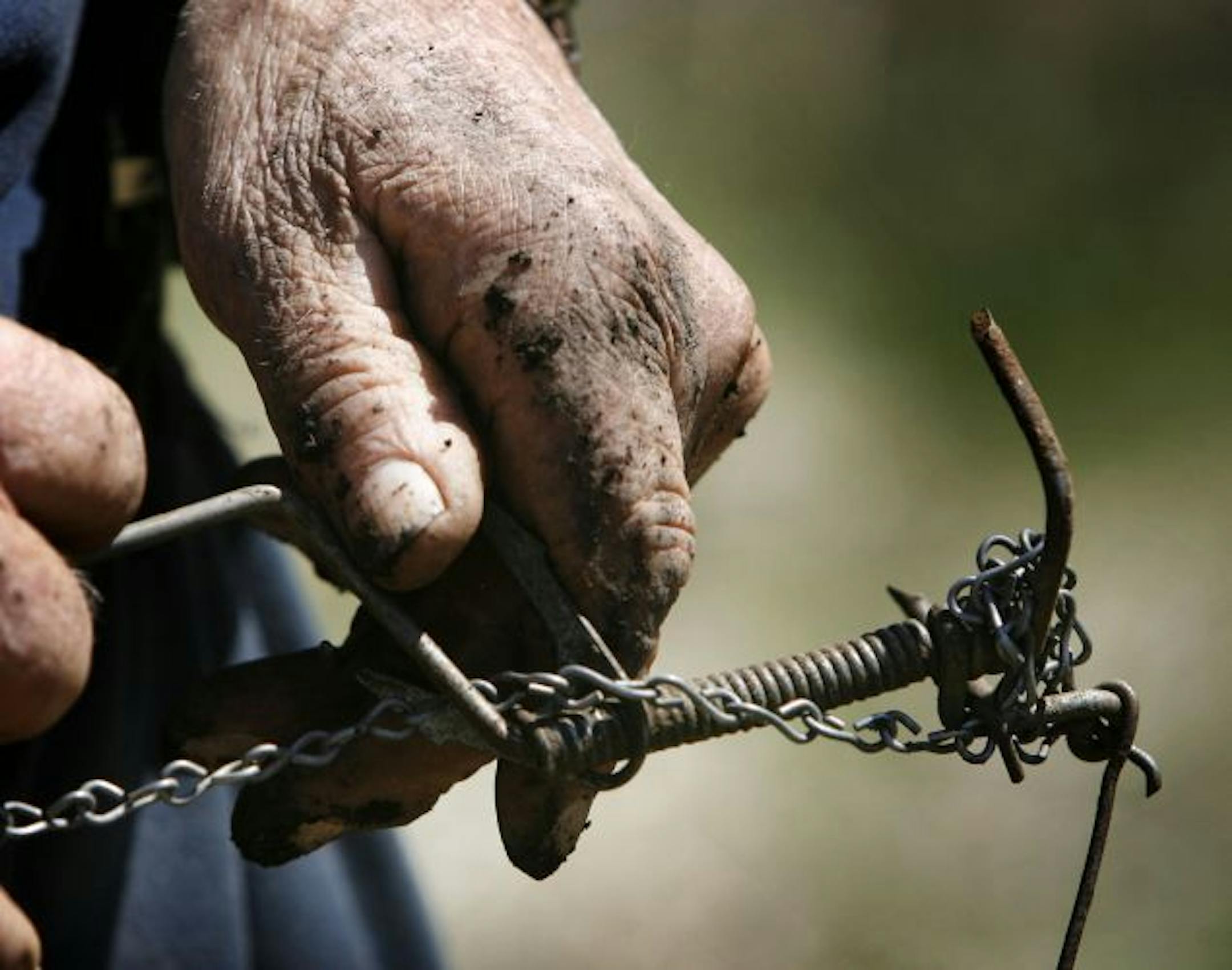
Bert Arkman used traps to catch "something like 47" gophers last year at Bill Voedisch's farm.
Arkman used the traps to catch “something like 47” gophers last year at Voedisch’s farm. “The first year I took 147 gophers out of here,” Arkman said. however, Arkman is training a young apprentice and teaching some of his clients how to trap gophers. Last year Arkman trapped 47 pocket gophers on Voedisch’s land and 140 plus the year before. May Township pays $1.50 for each gopher taken. (Star Tribune/The Minnesota Star Tribune)
about the writer

about the writer

Jean Hopfensperger

Reporter

Jean Hopfensperger is the religion, faith and values reporter for the Star Tribune. She focuses largely on religious trends shaping Minnesota and the nation. 

See Moreicon