Gophers men’s basketball coach Niko Medved gets daily perspective from family’s journey

Medved’s father, Miro, raised him after a 4,700-mile journey from the former Yugoslavia to Minnesota.

The Minnesota Star Tribune
January 31, 2026 at 10:55AM
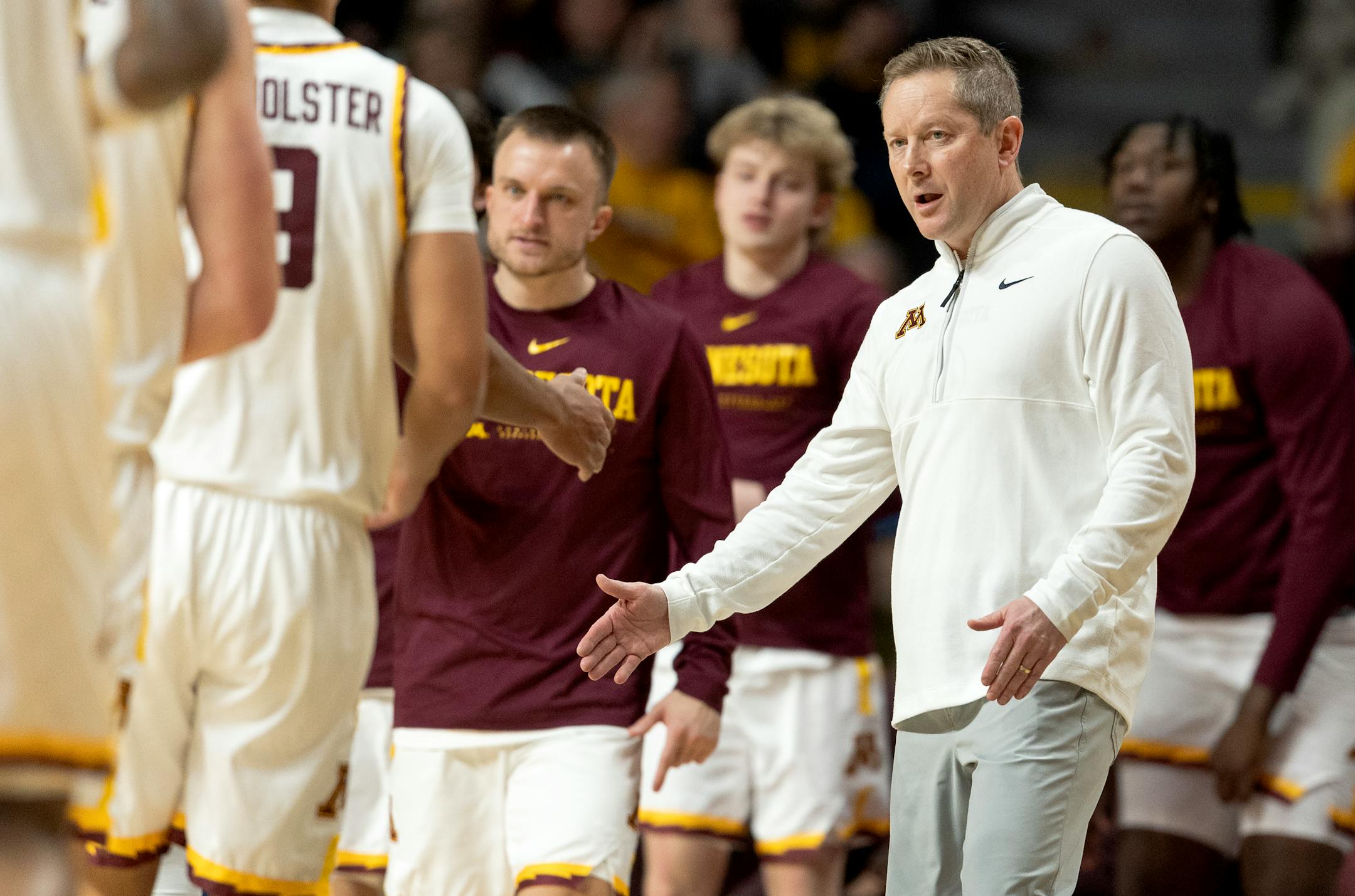
Gophers head coach Niko Medved at Williams Arena on Dec. 29. Medved's father, Miro, was born in the former Yugoslavia and came to the United States when he was 7 years old. (Carlos Gonzalez/The Minnesota Star Tribune)

Niko Medved’s childhood home sits 8.5 miles from Williams Arena. The path to him becoming Gophers men’s basketball coach traces back much farther than that, roughly 4,700 miles to a small village in the former Yugoslavia.

The hardships Medved’s family endured to forge a new life in America provide him daily perspective when managing his own professional challenges coaching college basketball in his hometown.

“Oftentimes I’m sitting out there before a game and I look around,” Medved said, “and I’m so thankful for what I get to do every day.”

Medved’s father, Miro, was born in 1942 in Trboje, Slovenia, during World War II. He was the fourth of six children. His father owned a market in town.

The family fled Slovenia after the country came under communist rule once the war ended in 1945. Miro’s father opposed the new regime, which, among other things, brought religious persecution.

“If you went to church,” Miro said, “you were persona non grata.”

Too unsafe to stay, the family crammed into a horse-drawn wagon filled with supplies and trekked across the Alps into Austria. They crossed the border on Miro’s third birthday.

“We just barely made it,” he said, noting that others left behind weren’t so fortunate.

ADVERTISEMENT

His family settled in a British-controlled Displaced Persons (DP) camp. That area had been used as a prison during World War I where Germans held Russian prisoners. The facility included horse stables that served as housing quarters for DP arrivals.

Miro’s family lived there for five years.

“There was no place else,” he said.

The stables had no heat. Miro’s father burned wood in a small barrel. The kids collected wood.

Teachers who fled in the DP convoy taught children in fields. They bathed once a week and used the bathroom in holes in the ground. Bed bugs were terrible at night.

Families were served food once a day from a kitchen. Volunteers dumped a ladle full of sustenance into their cans.

“We found out later they calculated how much calories it took to sustain life,” Miro said. “That’s what we got.”

The Medved family had one rule: No complaining.

“My dad would not allow it,” Miro said.

Not even when a tooth needed to be pulled using pliers. One miserably cold day, Miro wrapped rags around his feet to keep them warm.

Recalled Miro: “My dad said, ‘You see that big tree over there? Run back and forth as fast as you can four times and you’ll warm up. There’s no crying. No complaining.’”

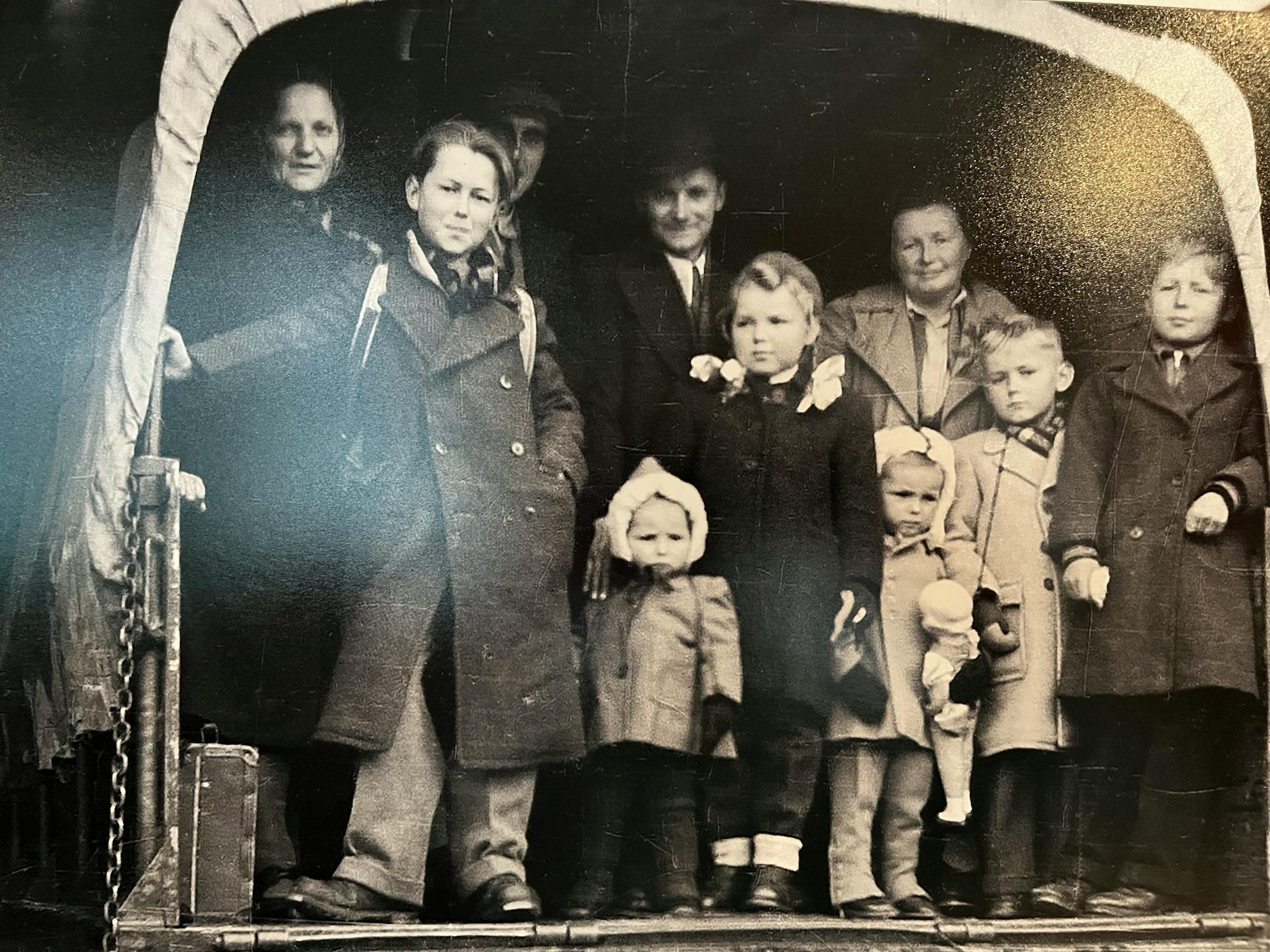
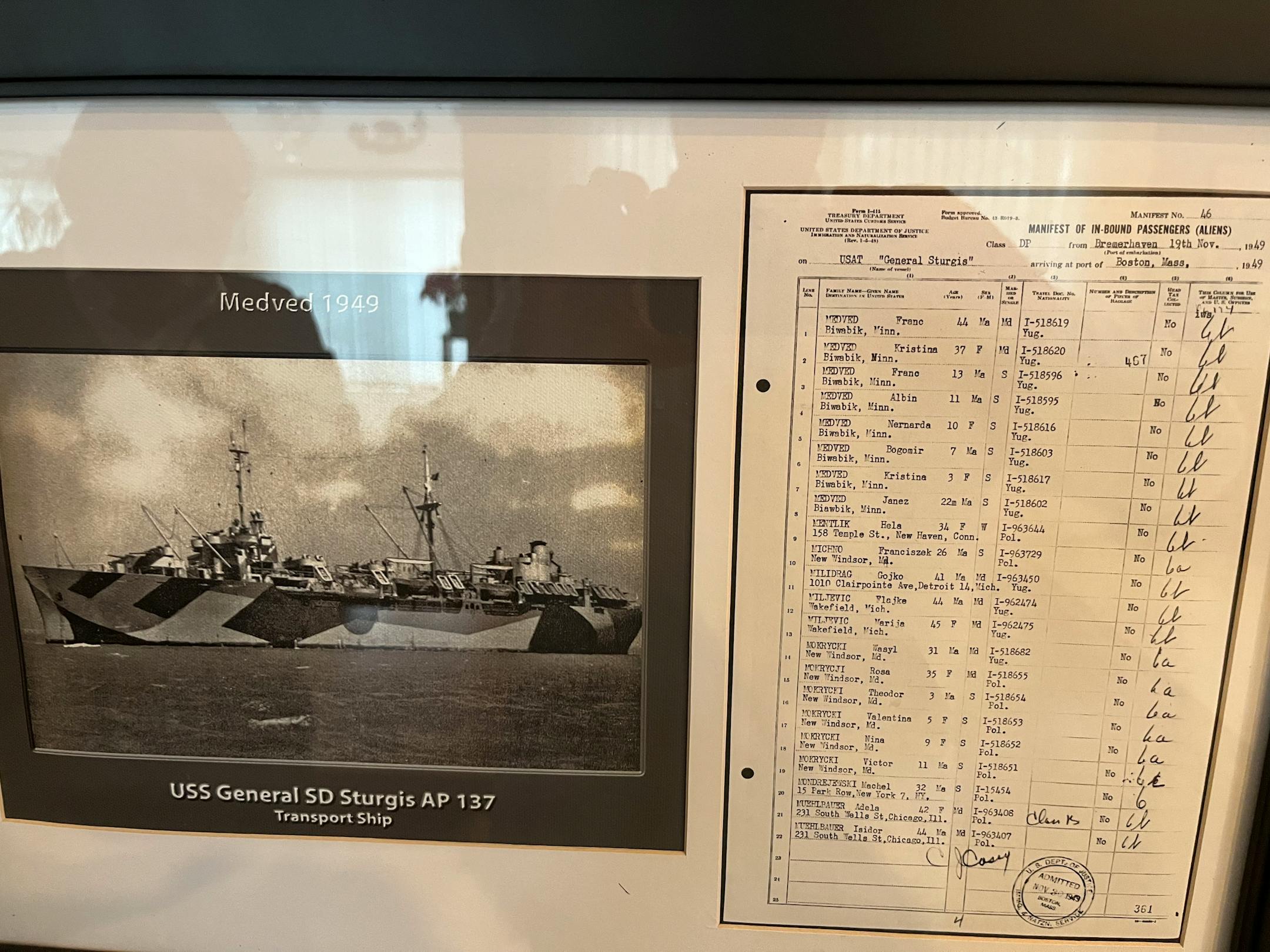
The family waited to be accepted by another country. Argentina opened, but his father desired the United States. In late November 1949, three women of Slovenian descent living in Biwabik in northern Minnesota sponsored the Medved family. The family boarded the USS General S.D. Sturgis transport ship bound for Boston. Miro was 7 years old.

Miro Medved, second from right, in 1949 on a military vehicle taking him, his parents and five siblings to the ship that carried them to the United States. The two adults in the back row on the left are not part of the Medved family. (Chip Scoggins/The Minnesota Star Tribune)

He remembers getting seasick. He initially thought he was headed to New York City, leaving him confused when he didn’t see the Statue of Liberty. But he learned his first words of English along the passage.

Miro was a bit rambunctious as a child. Wandering the ship, he met the captain, who taught him how to say, “Let’s go, let’s go. Time is money.”

Once he had perfected it after some practice, the captain took Miro to meet some crew members. The captain gave him the signal, and Miro bellowed, “Let’s go, let’s go. Time is money.”

The captain and workers howled with laughter.

His family took the “milk run” train from Boston to Minnesota that made stops to deliver perishables along the route. He remembers being mesmerized by billboards featuring loaves of bread. The family was driven from Duluth to Biwabik in a funeral home car that accommodated eight people.

“We didn’t care,” Miro said, laughing. “It had four wheels.”

His family made a life in Biwabik, though not without challenges. They had to learn English. A kid once teased Miro by telling him that “DP” stands for Dirty Pigs. His father told him to ignore it and smile back.

“He said, ‘If you’re rowdy, they’ll take us for bandits,’” Miro recalled. “He said eventually people will realize we’re good people.”

Miro graduated from high school and enrolled at the University of Minnesota in 1960. He met a student named Karen from Chippewa Falls, Wis. Miro told her he would marry her someday.

He was drafted into the U.S. Army in 1966. He thought he would be headed to Vietnam, but the Army found his bilingualism useful and stationed him in Germany as a translator and supply officer.

Miro wrote letters to Karen almost every night, which she kept in boxes. He also bought a wedding ring while in Germany.

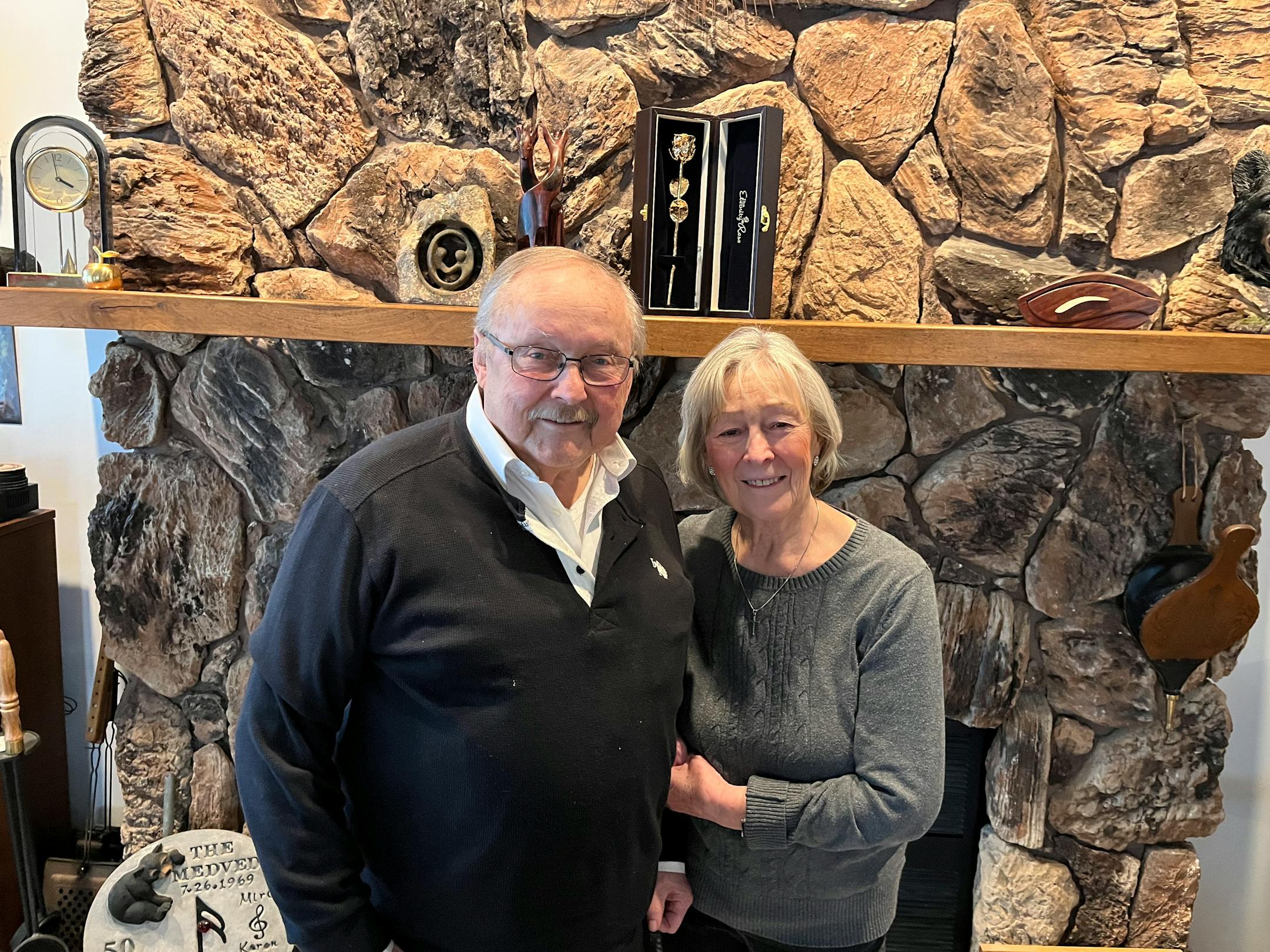
He returned to the Twin Cities after his service, started a career in business and married Karen in 1969. They will celebrate anniversary No. 57 this year.

Miro and Karen Medved. (Chip Scoggins/The Minnesota Star Tribune)

Miro purchased season tickets to Gophers basketball in 1971. He loved basketball as a kid. A neighbor gave the family a radio and Miro would listen to Minneapolis Lakers games at night. He made a funnel out of paper to amplify the sound as he painted a mental image of George Mikan and Clyde Lovellette scoring baskets.

Miro spent hours shooting at a rim attached to a telephone pole in an alley near his home. He became an exceptional shooter.

“I could play H-O-R-S-E with anybody,” Miro said.

Gophers basketball sucked him in, initially as a student, then as a season-ticket holder for 55 consecutive years.

“My all-time favorite was Lou Hudson,” he said. “Sweet Lou, we called him.”

Miro introduced Gophers basketball and Williams Arena to his oldest son Niko as a child. Niko’s first love was hockey. He skated for hours on ponds and rinks.

He was one of the best players in his age group in Roseville, good enough to earn a spot on an elite traveling team. His parents told him no, because the commitment was too taxing for them and his two younger siblings. Niko turned to basketball.

The Medved house became a popular gathering spot when Niko was in high school. Friends and teammates always went to Niko for advice or to help solve a problem.

“He was already coaching,” Karen said.

Niko became a real coach after college. As his career pinballed to different schools, his mom clung to a dream that he would eventually end up back home in charge of the Gophers. That wish came true, and now Karen and Miro attend every home game, sitting right behind the home bench.

“Sometimes when things get hard or you take a tough loss and you’re hurting because I’m so competitive,” Niko said, “it also creates perspective of just how lucky we are to have what we have.”

Eight miles away, his childhood home is filled with reminders of his father’s journey.

Miro serves as Honorary Consul of Slovenia, a volunteer position that requires some official duties. He was invited back when Slovenia gained its independence in 1991. He had lunch with the prime minister on a visit.

Two photos hang in the Medveds’ living room. One is a picture of his family standing in the back of a British military truck, waiting to be transported to the ship bound for America in 1949.

The other photo was a gift from Niko’s wife, Erica. She found in archives and framed a copy of the official manifest of the Displaced Persons on board the ship, including eight members of the Medved family headed for Biwabik, Minn.

The ship manifest of the Displaced Persons aboard the USS General S.D. Sturgis in 1949, including Miro Medved, his parents and his five siblings. (Chip Scoggins/The Minnesota Star Tribune)

They had no way of knowing what a new life had in store. When Miro sees his son climb those steps to coach basketball on Williams Arena’s elevated court, he knows a dream indeed came true.

about the writer

about the writer

Chip Scoggins

Columnist

Chip Scoggins is a sports columnist and enterprise writer for the Minnesota Star Tribune. He has worked at the Minnesota Star Tribune since 2000 and previously covered the Vikings, Gophers football, Wild, Wolves and high school sports.

See Moreicon

More from Gophers

See More
card image
Carlos Gonzalez/The Minnesota Star Tribune

Medved’s father, Miro, raised him after a 4,700-mile journey from the former Yugoslavia to Minnesota.

card image
card image