

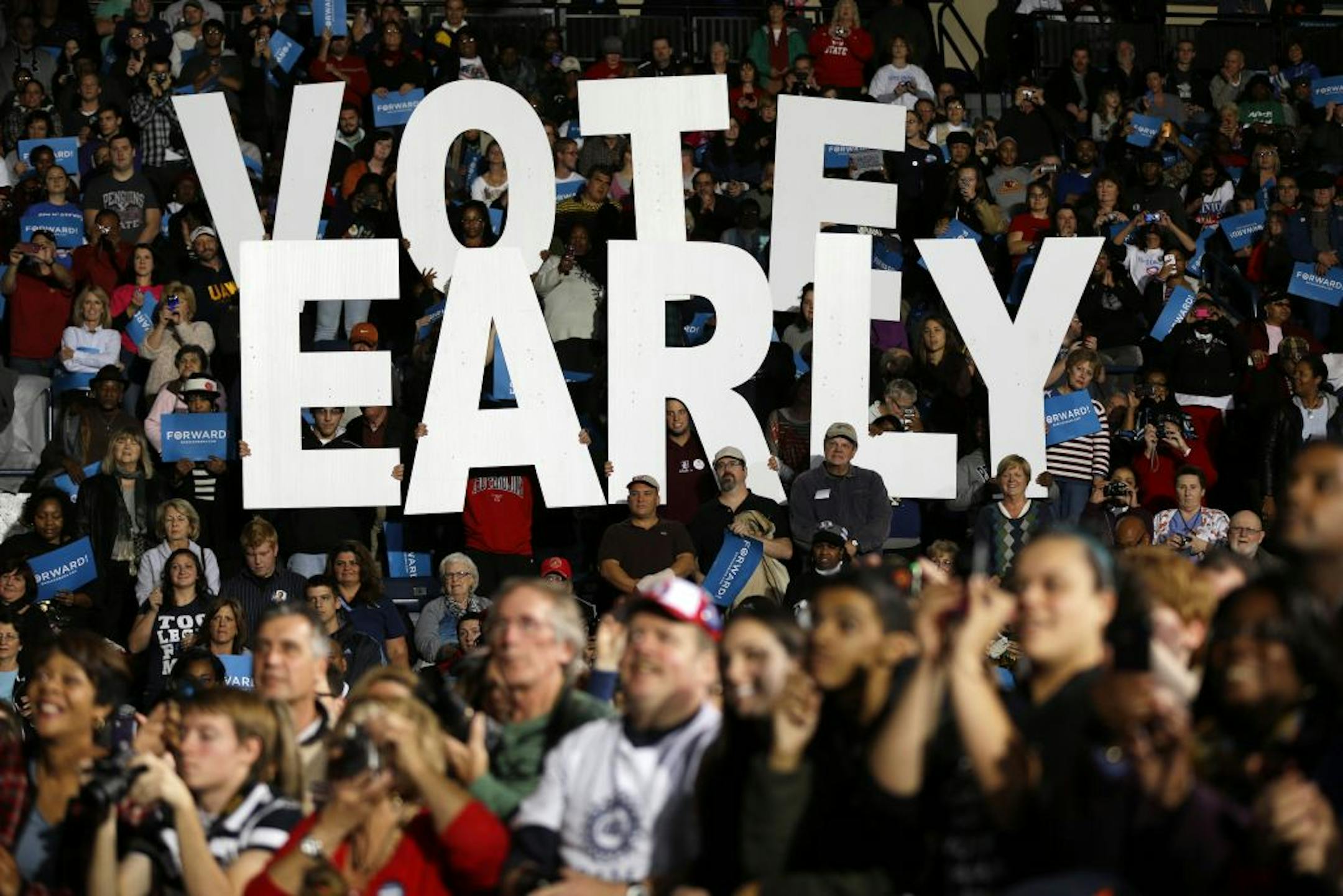
With more than one in three votes likely to be cast before Election Day this year, Republicans are stepping up their efforts to chip away at what has been a Democratic advantage in early voting in key battlegrounds like Ohio and North Carolina.
In Ohio, where 18 electoral votes are at the center of the presidential race, more than 1 million votes have already been cast, highlighting a change in the political rhythm that has led Republicans to begin to embrace the belief long held by Democrats that early voting can be used to increase turnout, not just to shift votes from one day to another.
"Some Republicans don't like to vote early, they like to go on Election Day. I understand that," said Sen. Rob Portman of Ohio, state chairman of Mitt Romney's campaign, at a campaign rally last week. "If you go down and vote, that frees you up to help others on Election Day."
When President Obama flew home to Chicago last week to cast his ballot, he became one of the millions of Americans who have already voted -- a flood of early votes that is reshaping how both campaigns operate.
The early vote gave Obama his margin of victory in several key states four years ago, and Democrats are trying to maintain that advantage this year by banking as many early votes as they can. But Republicans are trying to dampen any early Democratic edge by making a bigger organizational push than they did in the last election.
The Sandy factor
Hurricane Sandy has introduced more uncertainty into the mix: It forced the closures of early voting sites in North Carolina and some in Virginia on Monday, and the storm could curtail early voting hours in other key states as it moves inland.
Early voting has transformed modern campaigning, from the splashy Bruce Springsteen concerts the Obama campaign organized this month to mobilize supporters to the polls, to the less-glamorous databases that the campaigns keep to track potential early voters, as their get-out-the-vote operations have stretched into weeks.


