

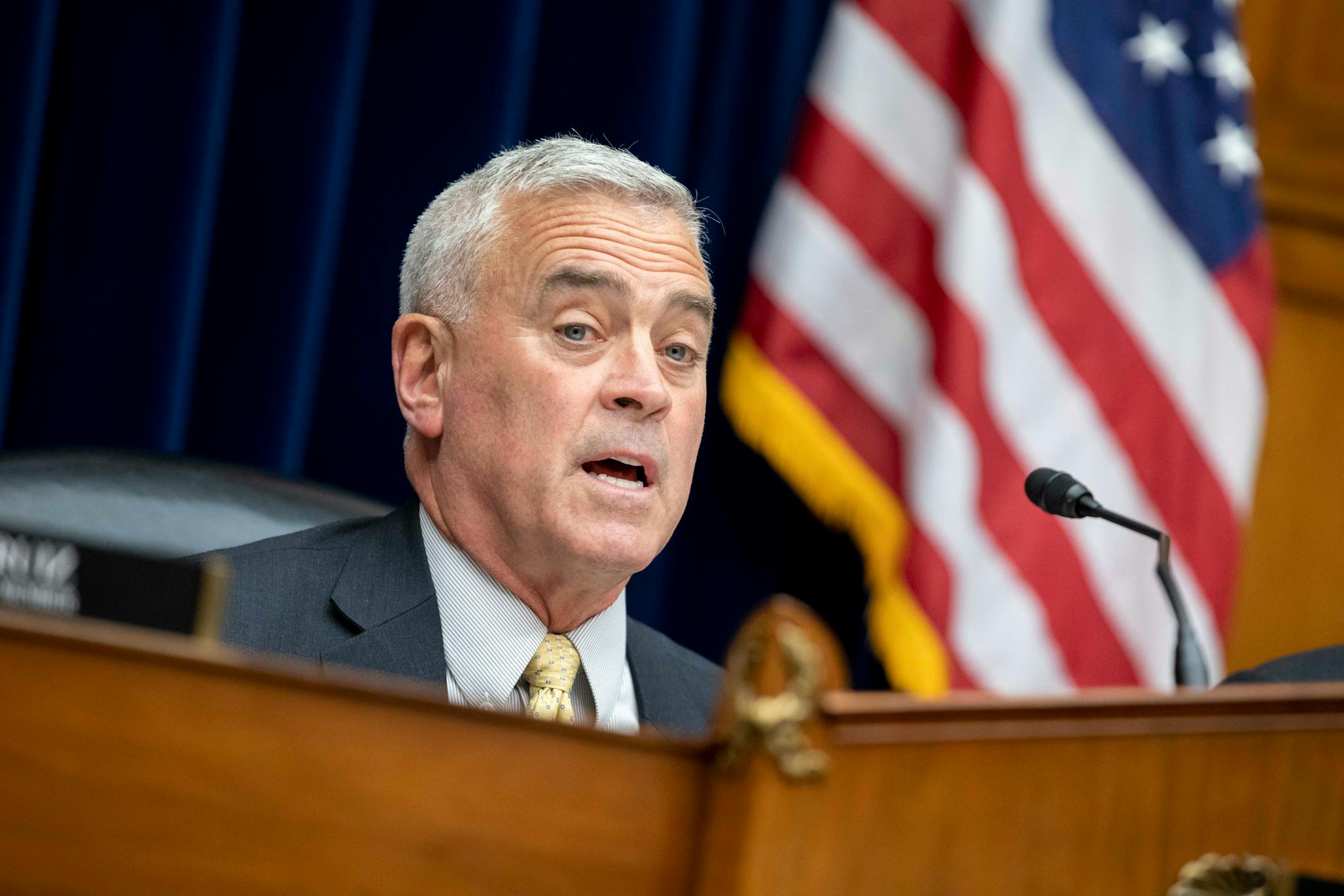
The House panel investigating the government's response to the coronavirus pandemic heard testimony Tuesday from influential virologists who concluded in 2020 that the pandemic did not begin as a laboratory leak. The hearing came amid dueling reports from lawmakers and bitter recriminations from the scientists, who say they have been wrongly maligned.
And it traces its beginning to 13 words: "We do not believe that any type of laboratory-based scenario is plausible."
That assertion, written in a widely cited paper by five leading virologists studying the early coronavirus outbreak in March 2020, helped prompt government officials and others to repeatedly dismiss the possibility that the pandemic began with a lab accident. But more than 1,200 days later, and framed by a steady change in public opinion about the origins of the virus, the scientists' conclusion was the focus of the House hearing, with Republicans alleging the paper represented a "coverup" purportedly orchestrated by former National Institutes of Health officials Anthony S. Fauci and Francis S. Collins.
"This is not an attack on science. It's not an attack on peer review," Rep. Brad Wenstrup (R-Ohio), the chair of the House Select Subcommittee on the Coronavirus Pandemic, said in an opening statement at the oft-contentious hearing on Tuesday. "We are examining whether scientific integrity was disregarded in favor of political expediency, maybe to conceal or diminish the government's relationship with the Wuhan Institute of Virology or perhaps its funding of risky gain-of-function coronavirus research."
In a staff report released Tuesday, Republicans homed in on the initial concern of the authors that the virus may have leaked from a lab, which prompted frantic messages between several virologists about the possibility that aspects of the virus appeared man-made, and how that position changed after a Feb. 1, 2020, conference call with Fauci and Collins. The first draft of the virologists' paper, "The Proximal Origin of SARS-CoV-2," was finished within several days and was published in March 2020 in the journal Nature Medicine.
"After publication, Proximal Origin was used to downplay the lab leak hypothesis and [suggest that] those who believe it may be true conspiracy theorists. Dr. Fauci and Dr. Collins tracked the paper through the review and publication process," the Republican report asserted, drawing on prior testimony by the virologists, personal messages and other documents. Fauci, Collins and the virologists have denied the Republican allegations as baseless and politically motivated, saying they updated their positions as they studied the virus, and two of the paper's authors defended their work in front of the panel on Tuesday.
"Let me categorically say that these allegations are absurd and false," Kristian Andersen, a Scripps Research scientist and co-author of the paper, testified in prepared remarks. The "conclusions stated in Proximal Origin were based on scientific data and analyses by a team of international scientists with extensive track records in studying virus emergence and evolution," he said. "None of this work was influenced by Dr. Fauci."
Andersen and his co-author, Robert F. Garry Jr., a professor at Tulane University School of Medicine, added that the team of virologists were motivated only to seek the truth about the origin of the pandemic. "When I outlined my initial hypothesis about a potentially engineered virus, Dr. Fauci told me, and I'm paraphrasing here, 'If you think this virus came from a lab, you should write a scientific paper about it,'" Andersen said.

