

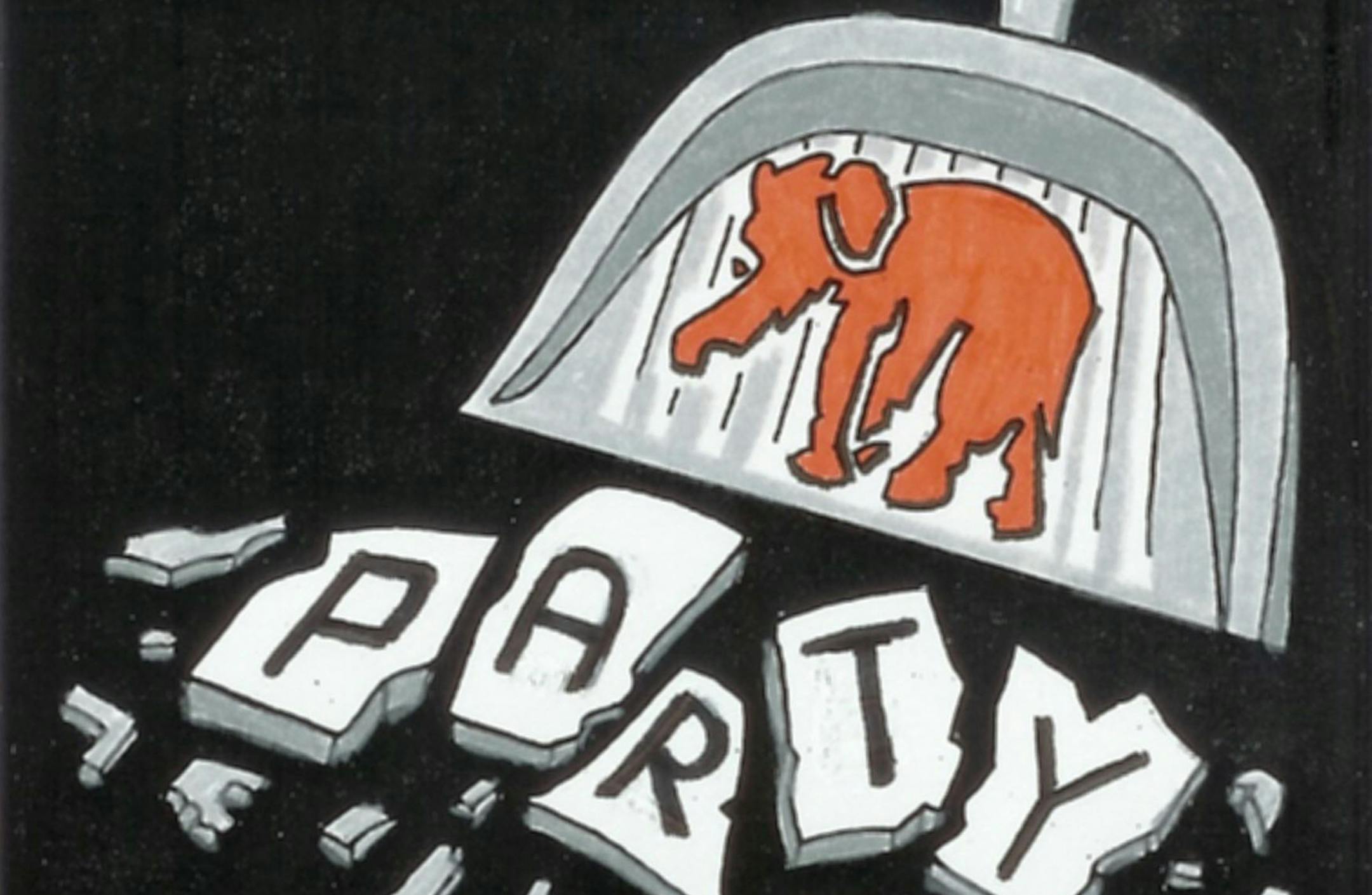
A look back at U.S. history uncovers an undeniable vein of intolerance and right-wing fanaticism. Recent discussions about the 150th anniversary of the U.S.-Dakota War of 1862 revealed ugly calls for genocide and ethnic cleansing by Gov. Alexander Ramsey.
Ramsey was a Republican. But from the birth of the Republican Party in 1854 until about 1965, the real home of right-wing fanaticism was the Democratic Party.
In our own time, the far right has migrated to the Republican Party, where today it is challenging for that party's soul.
Democrats dominated the Southern part of the United States after the Civil War and ruled Dixie in the interests of white manhood. In 1928, Ulrich Bonnell Phillips, the dean of Southern historians, proclaimed that maintaining the South as a "white man's country" was the "central theme" in Southern history.
The South experienced regularized and public lynching for more than 50 years; disenfranchised millions of black voters, and created a segregated system of life that was dramatically unequal.
But the Democratic Party was a complicated organization. As the great American humorist Will Rogers said long ago: "I am not a member of any organized party. I am a Democrat."
And sure enough, as the Democratic Party reorganized itself in the North following the Civil War, it became the home of millions of immigrants, most of them from Eastern and Southern Europe, and many of them Catholic and Jewish.
In 1924, the Northern wing asserted itself at the Democratic National Convention. New York Gov. Alfred E. Smith attempted to become the first Catholic to be nominated for president by a major party. Before the nomination battle, Smith's forces attempted to pass a resolution condemning the Ku Klux Klan. The resolution failed, and, after 103 ballots, so did Smith's run for president.


