

When the Supreme Court threw out part of the Voting Rights Act last year, many predicted it would bolster Republican efforts to tighten voting rules before this fall's election, particularly in the South.
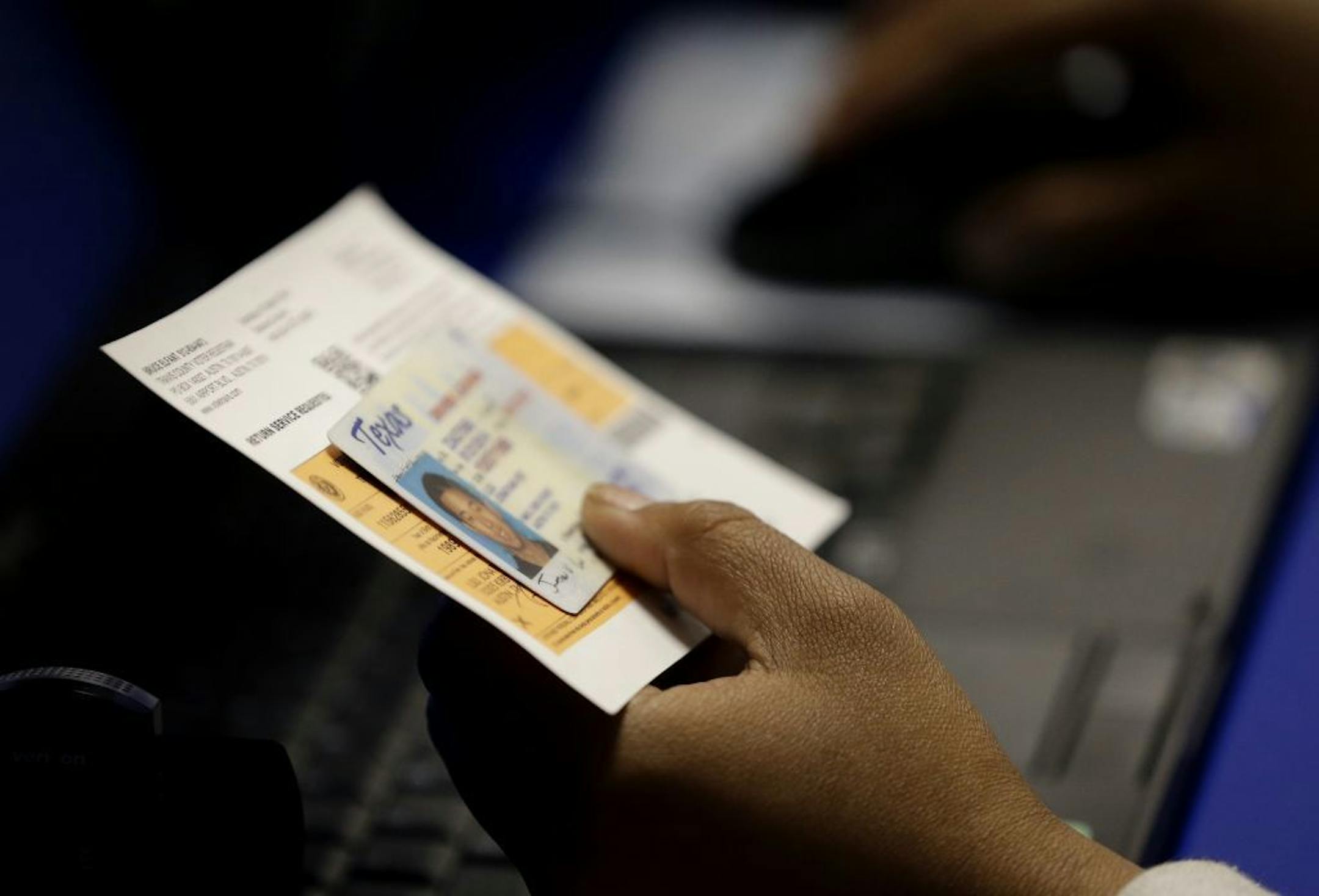
Already, more Americans than ever will face new voting restrictions in November as 15 states — some with the closest midterm races in the country — begin implementing laws banning same-day registration, requiring photo IDs or shortening the period for early voting.
Less anticipated, however, was the robust and sometimes creative backlash that has followed from Democrats and their allies, who are launching a spirited counteroffensive that strategists say could end up benefiting party turnout on Election Day.
In Wisconsin, a photo ID law signed by Republican Gov. Scott Walker led the mayor of liberal Madison to urge voting this November as an "act of defiance." He wants city vans to take seniors to have their photos taken in time to vote.
North Carolina's new voting laws, approved last year by the first GOP-led state Legislature since Reconstruction, spurred the NAACP to stage large-scale voter registration rallies that may explain why new Democratic registrations in some key counties are growing faster than new Republican registrations.
And in Georgia, Democrats turned the court's decision into an unexpected opportunity. After justices set aside the provision that required the state to obtain federal approval before changing voting rules, Democratic-led counties realized they had the authority to expand early voting in their districts.
So polls will be open around Atlanta for the first time on Sundays.
"The irony here was tremendous," said Lee May, the 38-year-old interim chief executive of DeKalb County, a large Democratic and African-American jurisdiction that was the first to launch Sunday voting. "Of course I was not in support of the changes that took place in the Voting Rights Act, but I get a great sense of pleasure that, in this, we get to take advantage of those changes to benefit voters in the South."


