

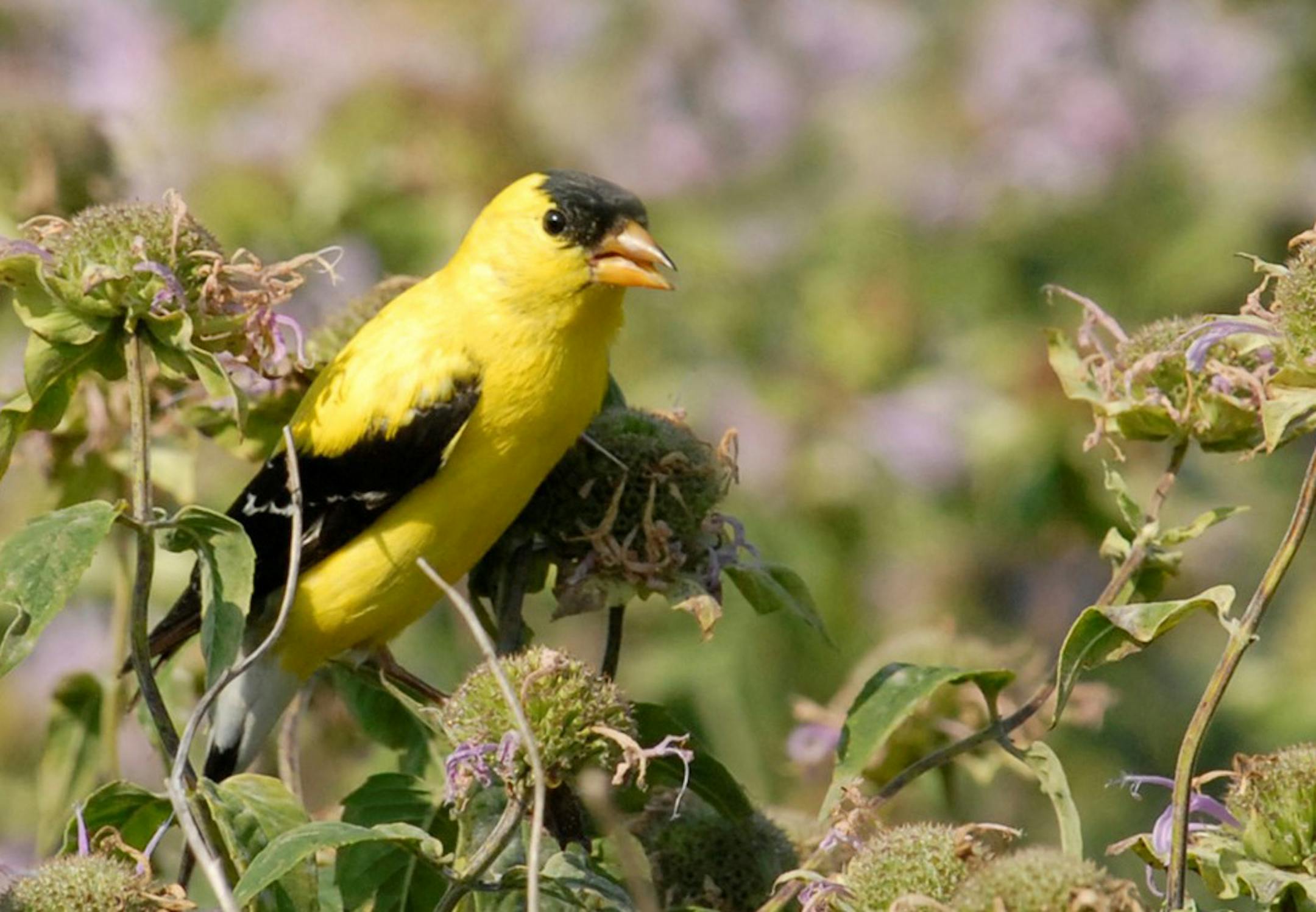
It's the time of year when goldfinches disappear, a fact lamented by many of our readers. Note that I didn't write that the little birds leave, because, contrary to popular belief, they're still out there. Even though many people believe that goldfinches depart in the fall and are only seen again in the spring, the reality is quite different.
Like the Purloined Letter, goldfinches in this season are hiding in plain sight, escaping our notice because they look little like their summertime selves. They've molted out of the brilliant yellow plumage that earns the males the nickname "wild canary" into drab, sparrow-like feather coats.
Take a closer look at the small birds gathered at feeders or on top of plant stalks in your garden. If their backs are taupe-colored but wings are striped with pale bars, that's a goldfinch. If you look closer, there's another way to tell them from sparrows: Goldfinches have a typical finch beak, conical in shape and coming to a sharp point at the end.
This is typical of seed-eating birds, useful for plucking seeds out of seed heads, then crushing the shell to reach the tasty meat inside.
According to the Cornell Lab of Ornithology, goldfinches are among the most vegetarian of birds, consuming seeds almost exclusively all year long. If they occasionally ingest a small insect, it's by accident.
While they flock to bird feeders, they spend much of their time in parks and semi-open country where they busily pluck seeds from weeds like thistle, teasel, dandelion, mullein and goatsbeard. Later in the fall goldfinches work on weeds like ragweed and burdock and travel around in winter to snack at native plants that have gone to seed.
These finches spend many hours in the large rain garden near my home, intent on plucking every last seed from the monarda, black-eyed Susan and aster plants. This garden serves as a buffet all winter, until the seed cupboard goes bare.
My backyard offers tube feeders filled with a mix of sunflower seed pieces and the thin black needles known as nyger seed. Goldfinches relish both of these kinds of food and flock to these feeders in droves. And I mean droves — every feeder port is usually occupied, and dozens of finches perch in the nearby plants and shrubs, impatiently waiting their turn.


