Q: We usually have many goldfinches at the feeders in the summer but now I'm not seeing so many. Are these little birds OK?
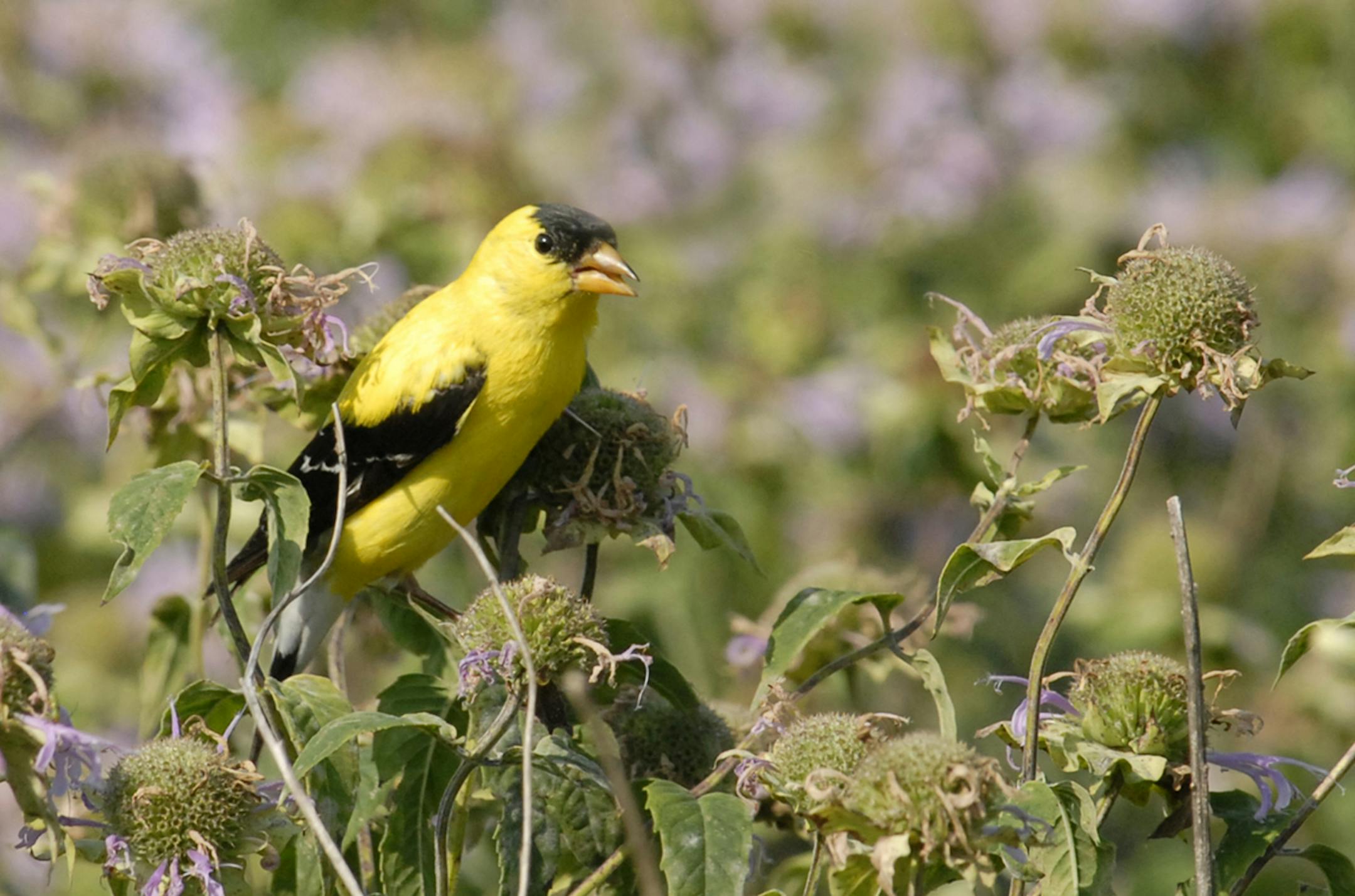
A: There are two possible explanations for the lack of bright yellow little finches at your feeders. One is the fact that autumn is a time of abundance for seed-eaters and goldfinches are taking advantages of natural food sources. Readers report seeing them standing on sunflower heads to pull out seeds, shredding zinnia petals to reach interior seeds and even consuming seeds from catnip. Faced with this kind of bounty, goldfinches may make fewer visits to feeders until the seed crop diminishes.
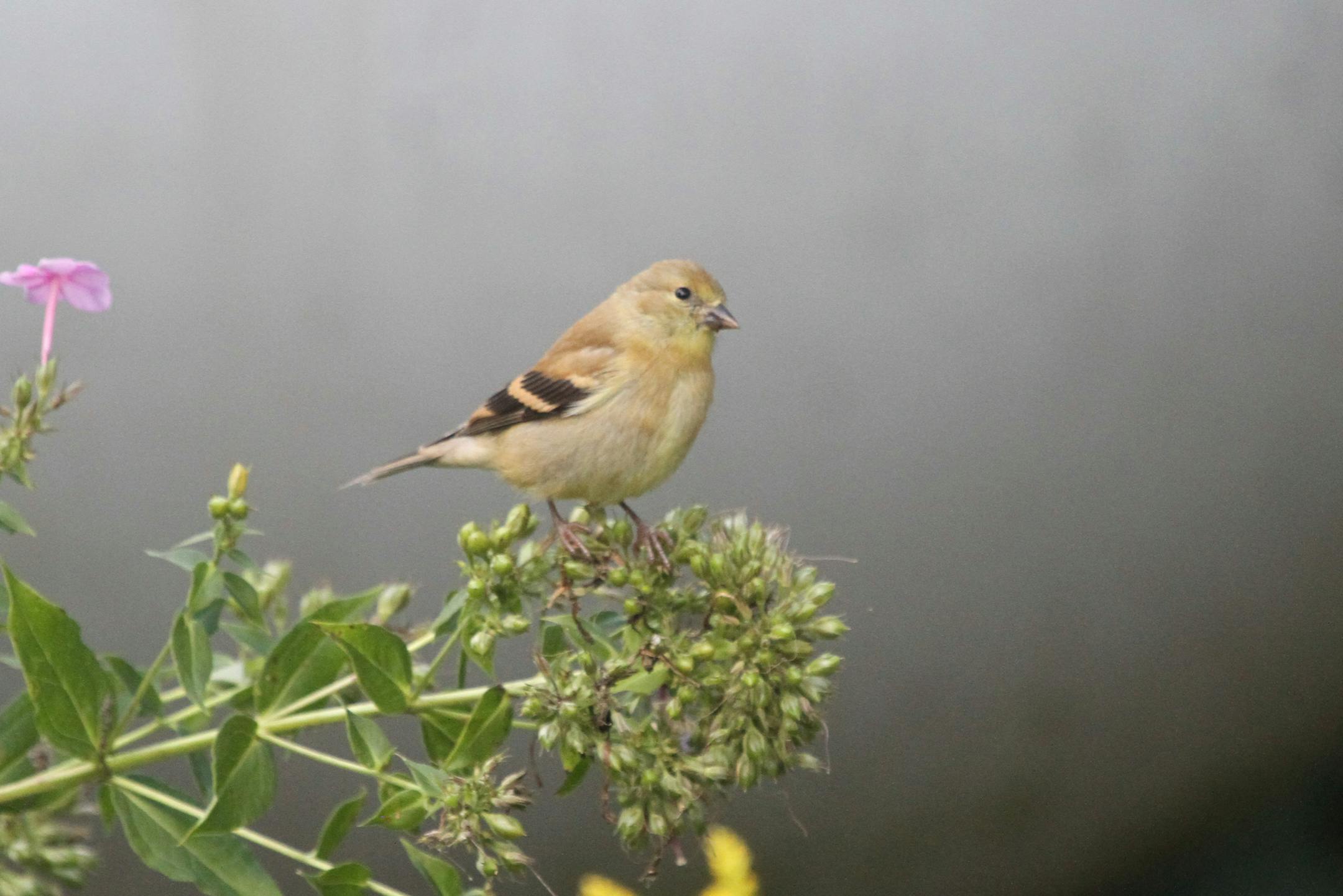
Another possibility is that your feeders still are hosting goldfinches, but they don't look like goldfinches. Soon after their youngsters fledge, goldfinches molt a new set of feathers, which turns them into little taupe-colored birds. We may glance out at a feeder and assume it's covered by sparrows, but these could very well be a flock of winter-ready goldfinches.
Ant moats
Q: Ants have become a big problem at our hummingbird feeder and the birds won't stop to feed when the fluid is filled with ants. What should we do?
A: Ants have very good sensors for sweet things and seem to quickly locate a nectar feeder. They slide down through the feeding ports, and then drown in the nectar. The best way to keep them out is either to attach an ant moat to the feeder's hanger or buy a feeder that has a built-in moat. Once filled with water, a moat prevents ants from reaching the nectar. A side benefit: Chickadees find these small water pools to be just their size, and they stop by frequently for a sip.
When to feed?
Q: How important is it to feed birds in the summertime? The sparrows eat up my entire food budget for the month in less than a week, so I've taken the feeders down for the summer, but will put them back up for winter.
A: Good question, and if you need to be selective about feeding, then I'd hang out the feeders in winter and spring. Nature's larder is full in summer and fall, providing easy meals for most kinds of birds. However, I keep my feeders up year round because I want to be able to observe back-yard birds in all seasons.
Even in summer, adult birds often stop for a quick meal between visits back to the nest to feed their brood. And it's fun to watch the young nuthatches, woodpeckers, cardinals, blue jays and finches learn how to use a feeder. I agree, sparrows are a negative force around feeders, hogging the feeding ports and tossing a great deal of seed onto the ground. By the time winter rolls around, their population usually has been significantly reduced due to predators and poorly developed survival skills.