

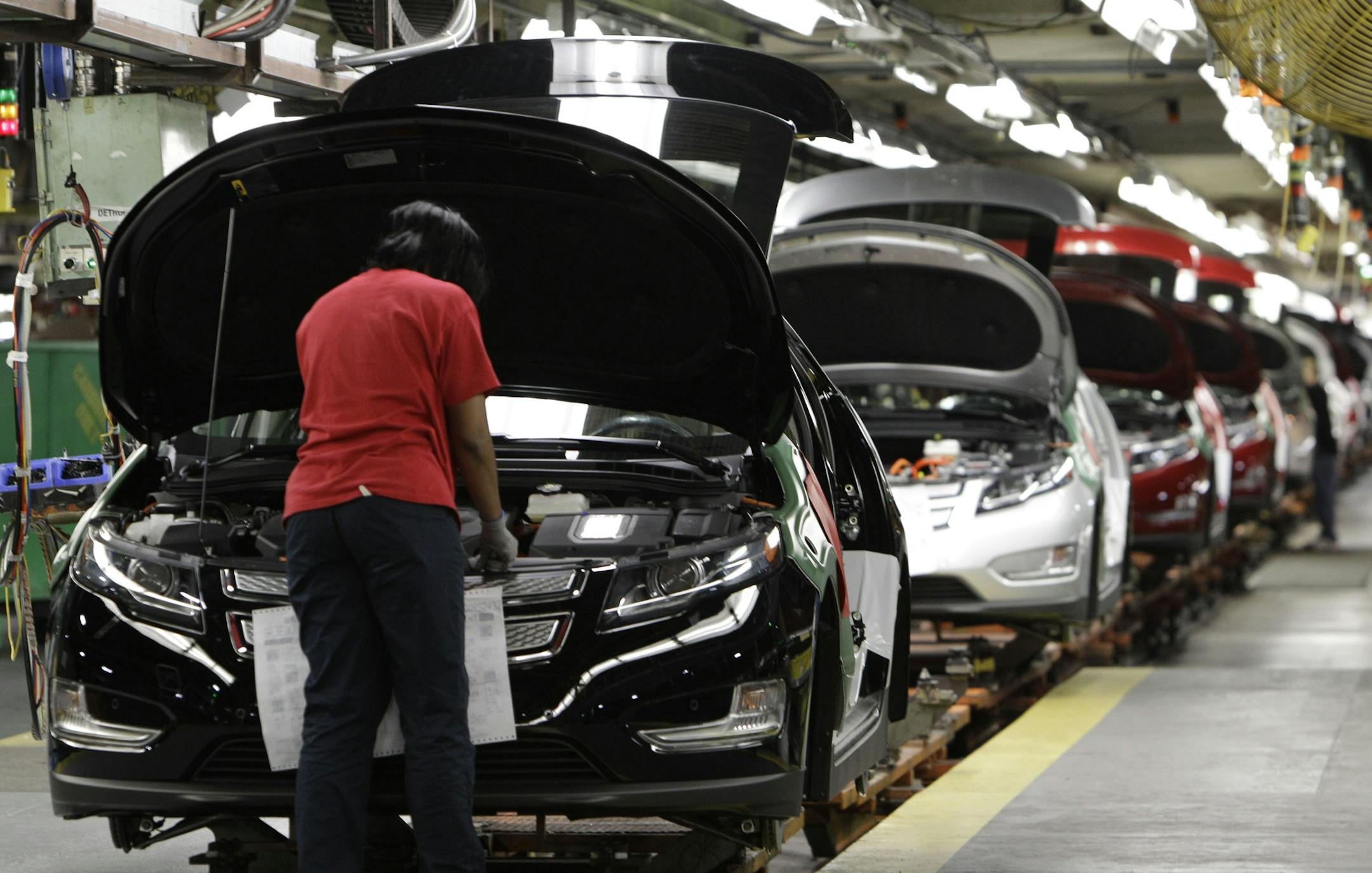
General Motors announced recently that it will close three assembly plants, including the Detroit Hamtramck factory that assembles the path-breaking Chevy Volt. Many commentators have bemoaned the thousands of American jobs that will be lost. Few have commented on the implications of this decision for our environment.
My wife and I drive 2013 and 2017 Volts. We have driven many cars since the 1960s, beginning with American cars but later switching to Toyotas, then Hondas, which were far better designed and built then.
In a patriotic attempt to "buy American" in the 1980s I purchased a Chevy Citation, the popular "X-platform car." Worst car I ever owned, it rattled from the start and needed service constantly. I returned to Hondas.
In 2013 I needed a new car and saw great reviews of the Volt. With trepidation, since it is a GM product, I took a chance.
It's the best car I've ever owned. We bought a second-generation Volt last year.
Why am I such a fan? Well, GM appears to have caught up to its rivals on quality; our Volts are well-built and virtually trouble-free. They're comfortable and quiet, and, with their heavy battery and low center of gravity, they handle well in the winter. Their electric motors are powerful and responsive, and they cost a reasonable amount with the federal energy tax credit. They have performed very well on crash tests and bristle with the latest driver-assist and safety features.
There's more. We've driven the 2013 Volt 30,648 miles, 93 percent of them on battery power. That translates to an EPA-rated 197 miles per gallon. Our 2017 Volt, with a longer-range battery, has gotten 240 MPG over 15,429 miles. We recharge our cars overnight and buy gasoline so rarely that we no longer look at its price. And in a typical month we avoid putting close to 1,000 pounds of carbon dioxide into the atmosphere. That's why the Volt has won multiple Car of the Year and Green Car awards and enjoys very high owner loyalty.
We get this mileage without range anxiety. On the rare occasion when I drive more than 60 miles in a day — the range of my 2017's battery — the Volt's gasoline engine kicks in to recharge the battery as I drive. Although the Tesla and smaller Chevy Bolt have longer-range batteries, when they run out of battery power — unlike the Volt — you're done for a while.


