

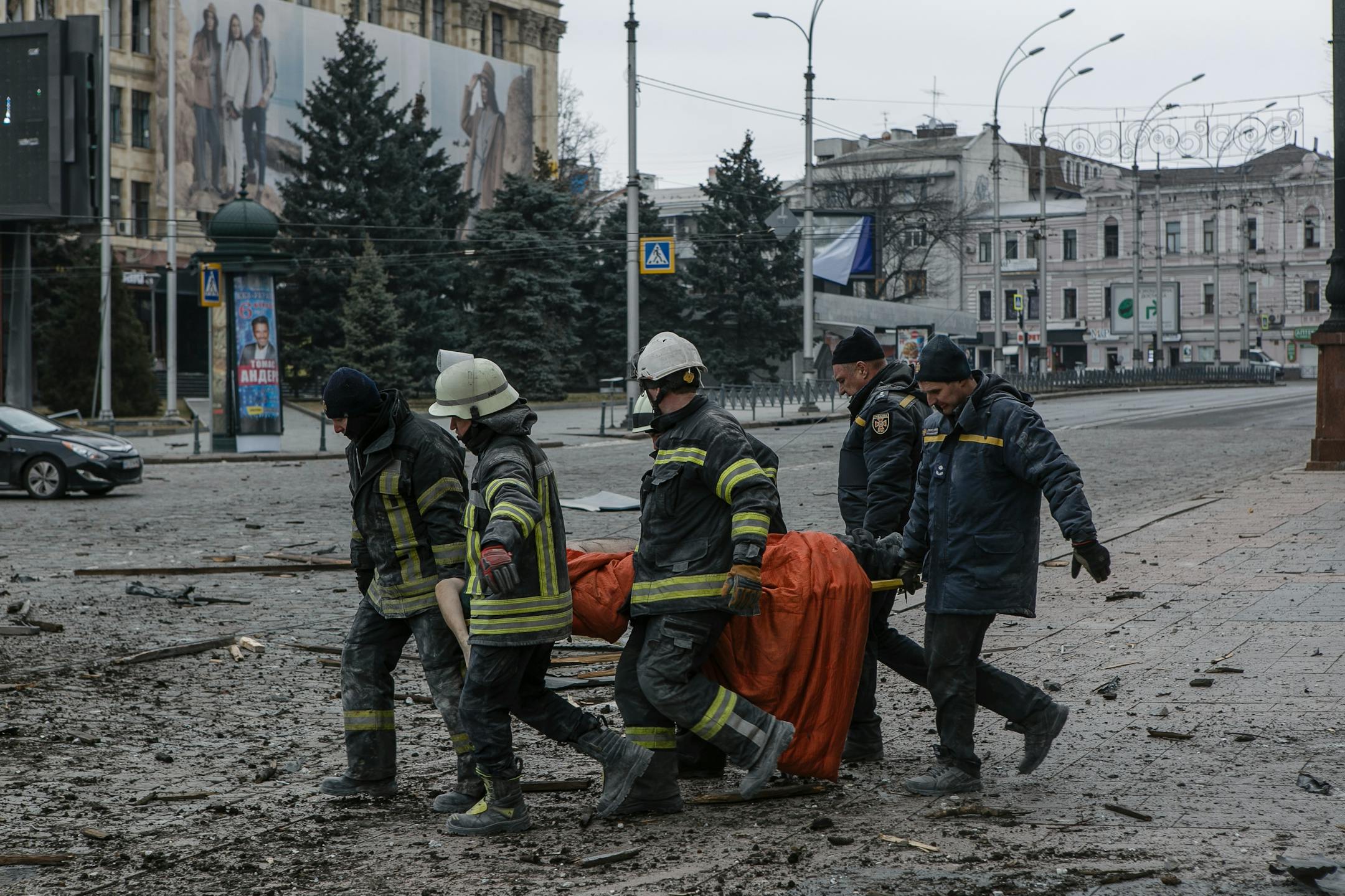
After brutalizing his own citizens in Chechnya and violating international borders — and law — in Georgia, Crimea, and eastern Ukraine, Russian President Vladimir Putin was apparently counting on continued ineffectual international protest against his invasion of Ukraine and relatively little resistance from forces on the ground.
Putin majorly miscalculated militarily, diplomatically, economically and even culturally. Most significantly, he underestimated Ukrainians.
Led by intrepid President Volodymyr Zelenskyy, Ukrainian armed forces and everyday citizens have put up a ferocious fight against the Russian invasion. They have shown a patriotism more profound than the jingoistic version often found in other countries, including sometimes our own. Outmanned and outgunned but not out motivated, Ukrainians have shown an inspiring spirit just as reports of Russian dispirit emerges from the front lines and the home front, which once again sees an iron curtain isolating Russian citizens from the world.
Diplomatically, after a halting start, democracies have rallied in rare unity. The coordinated, consequential sanctions imposed by the U.S., European Union, the United Kingdom and Asian and Australian nations who share the universal values of democracy and sovereignty are real and deep. And finally, many are targeted at the kleptocratic oligarchs enabling, and enabled by, Putin. Unfortunately, everyday Russians will still mostly feel the brunt of a collapsing economy. But maybe that will inspire them to show courage commensurate to Ukrainians and take to the street to protest Putin's disastrous war against nonaggressive neighbors who were once fellow citizens.
The Western-led effort to condemn the Kremlin went international on Wednesday when the United Nations General Assembly voted 141-5 to condemn Russia's invasion of Ukraine. The "no" votes were the usual repressive suspects: the offender, Russia, and its supplicants Syria and Belarus, as well as global pariahs North Korea and Eritrea. There were 35 abstentions, including Moscow's allies in Beijing and, shamefully, India, the world's largest democracy that wouldn't stick up for the world's most beleaguered.
While quick to acknowledge that the nonbinding vote doesn't directly change anything, the lopsided result was "extraordinary," and "the result of intense diplomacy to build that support" from the U.S. and other key countries, Mary Curtin, diplomat-in-residence at the Humphrey School at the University of Minnesota, told an editorial writer. It's also reflective of world leaders witnessing "Ukraine's intent and determination to push back, which I think surprised Russia."
Moscow may also have been surprised by the breadth and depth of not just official government sanctions, but by corporations acting independently to isolate the aggressor. Major multinationals — including but not limited to Boeing, Volkswagen, Harley Davidson, Nike, Adidas and Apple — have admirably made unilateral decisions to suspend or curtail investments and/or operations in Russia, often at the cost of billions of dollars.
And while not nearly as militarily, geopolitically or economically as consequential, the cultural cutting-off of Russian teams and athletes from international competitions like the World Cup as well as other events in globally connected 21st-century cultural life are appropriate and may intensify the gut reaction of Russians (belying the lies from Russian state media) that Putin is taking their country off a cliff.


