
Giuliani is unlikely to face criminal charges in lobbying inquiry

A federal investigation into Rudy Giuliani over his work in Ukraine during the 2020 election campaign is winding down.

The New York Times
August 3, 2022 at 7:10PM
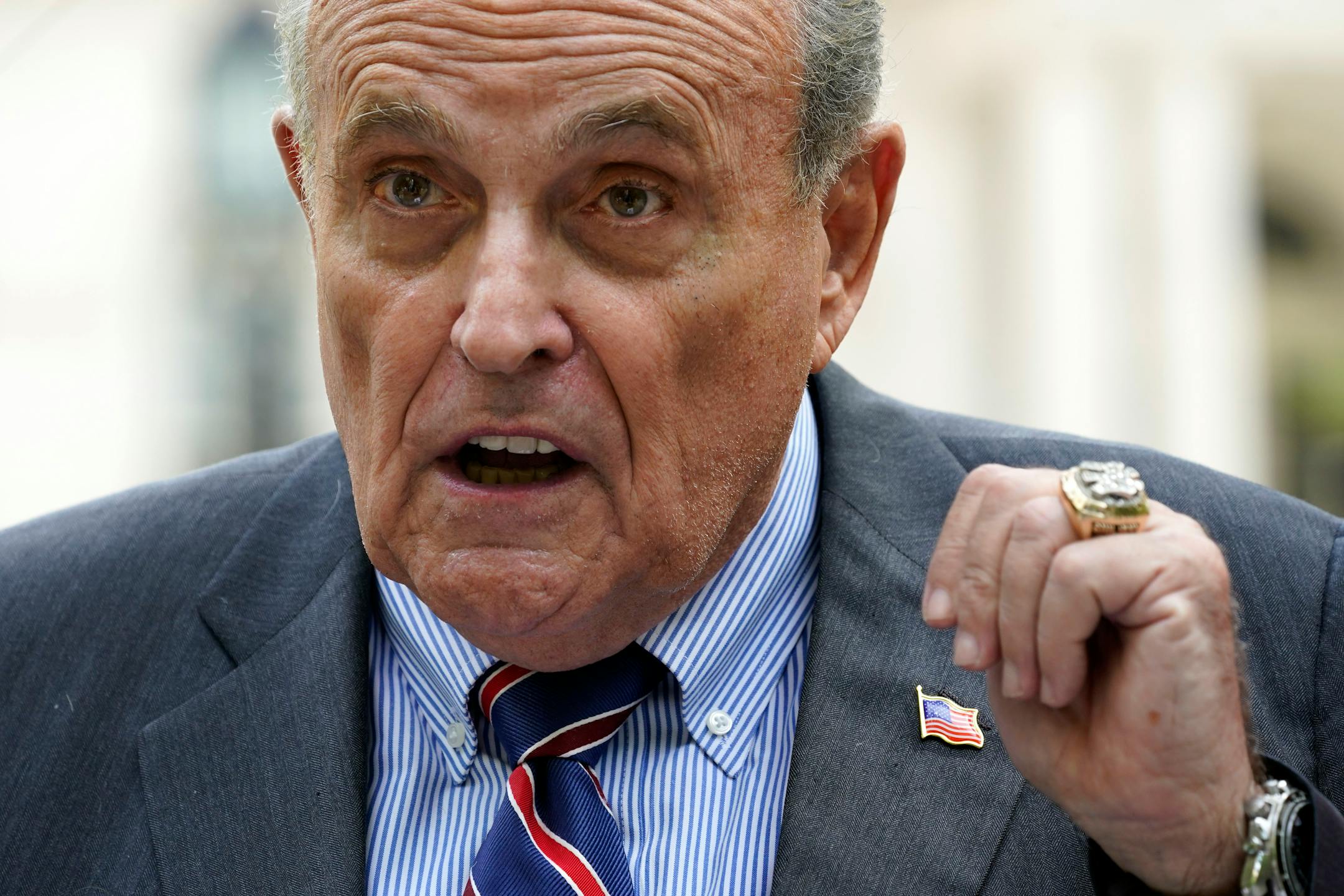
Former New York City Mayor Rudy Giuliani speaks during a news conference June 7, 2022, in New York. (Mary Altaffer, Associated Press/The Minnesota Star Tribune)

As Rudy Giuliani comes under intensifying scrutiny for his efforts to overturn the 2020 election results, another legal threat is quietly fading: the criminal inquiry into his ties to Ukraine during the presidential campaign.

The investigation, conducted by federal prosecutors in Manhattan, and the FBI, has examined whether Giuliani illegally lobbied the Trump administration on behalf of Ukrainian officials who helped him impugn Joe Biden, then expected to be the Democratic presidential nominee.

But after nearly three years, that inquiry into Giuliani, the former personal lawyer to Donald Trump, is unlikely to result in charges, two people with knowledge of the matter said.

While prosecutors had enough evidence last year to persuade a judge to order the seizure of Giuliani's electronic devices, they did not uncover a smoking gun in the records, said the people, who spoke on the condition of anonymity to discuss a federal investigation.

The prosecutors have not closed the investigation, and if new evidence were to emerge, they could still pursue Giuliani. But in a telling sign that the inquiry is close to wrapping up without an indictment, investigators recently returned the electronic devices to Giuliani, the people said. Giuliani also met with prosecutors and agents in February and answered their questions, a signal that his lawyers were confident he would not be charged.

The Manhattan inquiry once posed the gravest legal danger to Giuliani, whose pressure campaign in Ukraine helped lead Trump to his first impeachment. But in recent weeks, as the Manhattan investigation has wound down, Giuliani's efforts to keep Trump in power after the 2020 election have come under an increasingly harsh glare.

He has emerged as a key figure in the Georgia criminal investigation into attempts to overturn Trump's loss in that state. Federal prosecutors also are examining his role in creating alternate slates of pro-Trump electors in several states, and he has been a central focus of the congressional investigation into the Jan. 6 attack on the Capitol.

The Manhattan inquiry reached further back in time to examine Giuliani's entanglements with powerful Ukrainians in the run-up to the presidential election, when he blurred the line between his political goals and his business pursuits in ways that were highly unusual.
As he pushed Trump's agenda in 2019, Giuliani developed ties to a Ukrainian oligarch under indictment in the United States, new interviews and documents show. Giuliani stayed in a five-star hotel and took a private flight courtesy of the oligarch's company, an arrangement that has not been previously reported but was of interest to Manhattan authorities, people with knowledge of the matter said. (Both men deny knowing about the travel payments, which were arranged by their associates.)

The investigators zeroed in on Giuliani's relationship with Ukraine's top prosecutor at the time, Yuriy Lutsenko, exploring whether Giuliani had illegally lobbied the Trump administration to oust the American ambassador to Kyiv at Lutsenko's behest.

Lutsenko traveled to New York in January 2019 and met with Giuliani for hours, providing information that Giuliani hoped would damage Biden's campaign. The next month, Giuliani considered accepting $200,000 from Lutsenko to retain both his firm and a husband-and-wife legal team to help recover funds believed to have been stolen from Ukrainian government coffers.

As the country's top prosecutor, Lutsenko could provide what Giuliani and Trump desperately wanted: an announcement of an investigation into Biden and Burisma, the Ukrainian energy company that had paid Biden's son Hunter as a board member. Lutsenko also wanted something: the removal of the American ambassador to Ukraine, Marie Yovanovitch, with whom he had butted heads. For weeks, Giuliani urged the Trump administration to remove her, and in April 2019, she was recalled.

It is against federal law to try to influence the U.S. government on behalf of a foreign official without registering as a foreign agent, though such prosecutions are difficult and relatively rare. Giuliani has maintained that he took aim at the ambassador simply because he believed she was disloyal to Trump and hostile to his attempt to find information about Biden.

That argument — that he was working solely in his capacity as the president's lawyer, not for Lutsenko — could have undercut the central premise of a criminal case against him.

Giuliani ultimately abandoned the potential $200,000 deal with Lutsenko, another challenge to building a criminal case. Violating the lobbying law does not require money to change hands, but the absence of an obvious quid pro quo might not have sat well with a jury.

Spokespeople for the U.S. attorney's office in Manhattan and the FBI declined to comment on the investigation.

Authorities in Manhattan also briefly scrutinized Giuliani's ties to the Ukrainian oligarch, Dmitry Firtash, people with knowledge of the matter said.

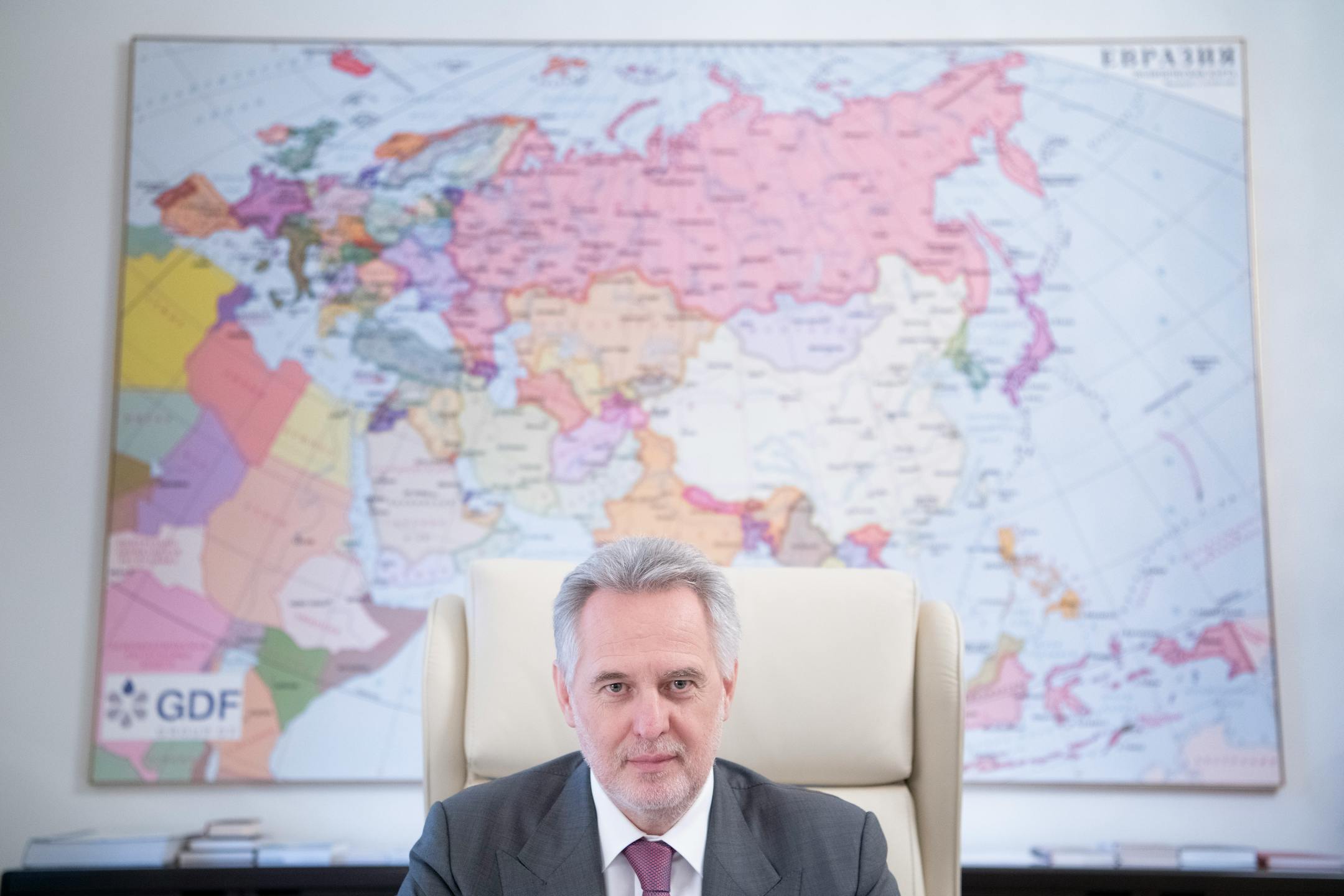
Dmitry Firtash, a Ukrainian energy tycoon under indictment in the U.S., in his office in Vienna, Dec. 6, 2018. Firtash said his company had covered Rudy Giuliani’s travel expenses without his knowledge. (JAMES HILL, New York Times/The Minnesota Star Tribune)

A New York Times review of documents and text messages and interviews found that Firtash's company covered tens of thousands of dollars of Giuliani's travel expenses in the summer of 2019, including his stay in the luxury hotel and private jet flight.

The travel payments did not appear to break any laws, but they show that Giuliani's connection to Firtash was greater than has been publicly known.

"Rudy Giuliani had no idea that Firtash was paying for those trips," said Robert Costello, Giuliani's lawyer, adding that "he certainly would not have allowed it if he had known."

Both Costello and a lawyer for Firtash, Lanny Davis, said their clients never spoke. "As far as Mr. Firtash knew, he never paid for or authorized any funds to be paid for Giuliani," Davis said. The lawyer blamed the payments on "an inadvertent error" by one of Firtash's administrative assistants, who he said did not notice Guiliani's expenses amid other travel costs and paid for them "without Mr. Firtash's knowledge or authority."

Firtash was charged in the United States in 2013 with conspiring to bribe officials in India and has been fighting extradition while strenuously denying the charges. Giuliani considered representing Firtash in his extradition case but has said he quickly rejected the idea.

Firtash's history in Ukraine, where he made a fortune in the energy business and publicly attacked Biden's policies toward the country, appeared to have put the oligarch on Giuliani's radar as he looked for dirt about Biden.

Giuliani began contacting Firtash's lawyers in June 2019 seeking information about corruption in Ukraine, around the time Trump was pressing Ukraine's president, Volodymyr Zelenskyy, to investigate the Bidens. Firtash's lawyers told Giuliani they did not know of anything relevant.

There is no indication Firtash assisted Giuliani in his attacks on the Bidens, and Davis said the oligarch "categorically denies ever helping Giuliani or anyone else in any effort to dig up dirt."

Even so, in the summer of 2019, an associate of Giuliani, Lev Parnas, met with the oligarch and recommended he add new lawyers to his team, the husband and wife, who were helping Giuliani dig into the Bidens. Parnas was paid to serve as their interpreter, and Firtash agreed to pay for some of Parnas' travel expenses.

The offer seemed ideal. Around this time, Giuliani was preparing to go to London and wanted to determine who would cover his travel. "Running into money difficulties on trip to London," Giuliani wrote to Parnas in a text message.

During the trip in late June, Giuliani met in a hotel conference room with some Firtash associates, including a banker whose cousin was a Burisma executive.

Davis said the purpose of the meeting was to discuss Firtash's contention that his extradition was politically motivated, and his associates did not talk about Burisma. The oligarch's associates did not seek Giuliani's help, Davis added.

That day, Giuliani upgraded hotels to the Ritz London. Firtash's company, Group DF, later covered the roughly $8,000 stay, interviews and records show. The next month, the company paid $36,000 for a private flight Giuliani took from the Dominican Republic to Washington. And that August, Giuliani traveled with a friend and a bodyguard to Spain at a cost of more than $30,000, an expense that was listed on an invoice to a Group DF assistant and a longtime adviser to Firtash.

Costello said that Giuliani "doesn't know how it came about."

Davis said his client, Firtash, approved payments only to Parnas — "and never for any of Mr. Giuliani's expenses."

That October, Giuliani planned to fly overseas, but an unforeseen development arose: the arrests of Parnas and an associate, Igor Fruman, on federal campaign finance charges.

Parnas, who had witnessed Giuliani's interactions with Lutsenko, has said he offered to cooperate with the investigation, but prosecutors opted to take him to trial, where he was convicted last year. And although Fruman pleaded guilty, he did not cooperate against Giuliani.

Reporting was contributed by Masha Froliak, Michael Rothfeld, Maria Varenikova and Kenneth P. Vogel. Susan C. Beachy contributed research.

This article originally appeared in the New York Times.

about the writers

about the writers

William K. Rashbaum

Ben Protess