

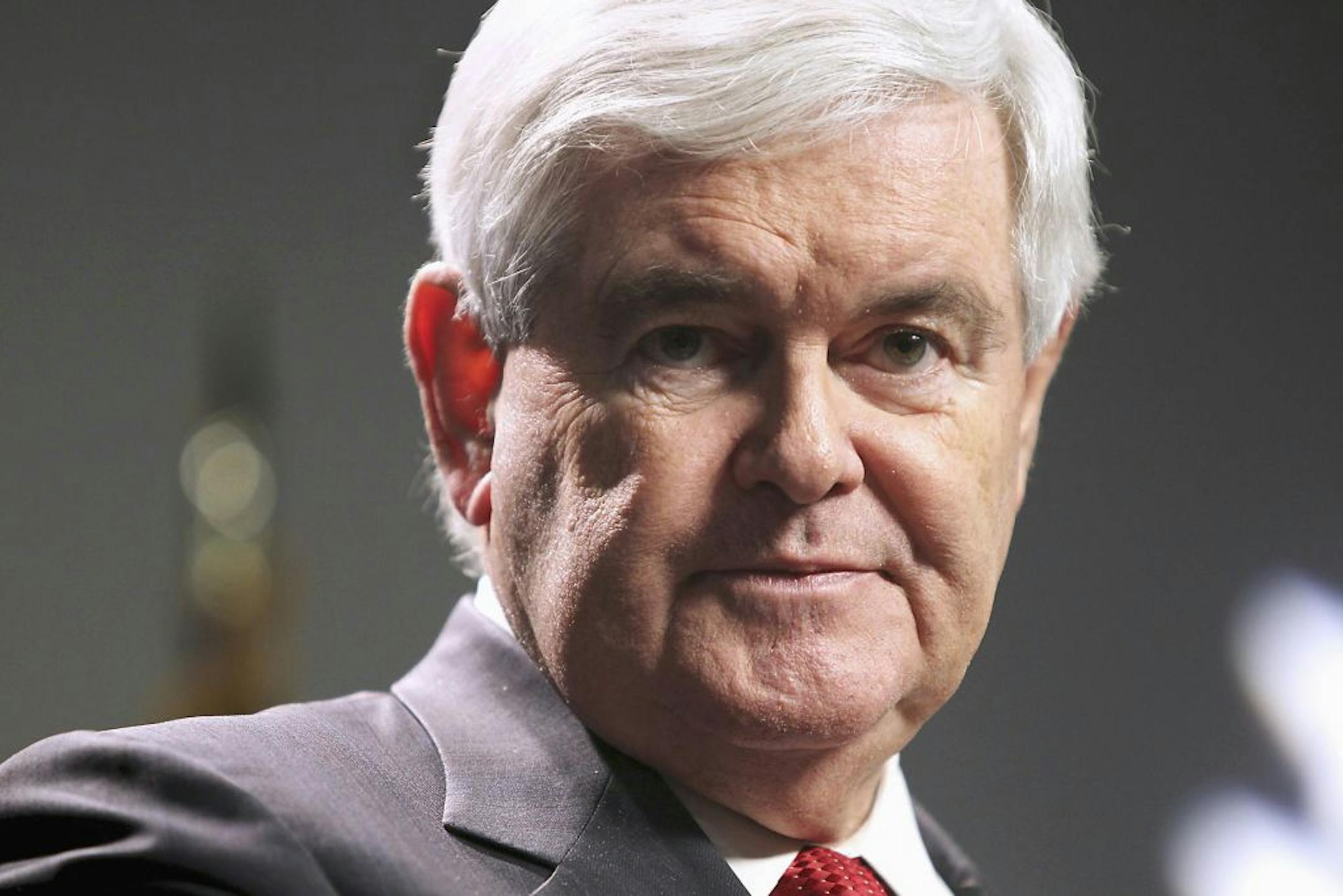
Before Republicans put Newt Gingrich at the top of their party, they should consider what happened the last time he led it.
In the mid-1990s, Gingrich was the de facto head of the GOP. He helped lead it to victory in the congressional elections of 1994, which brought about real accomplishments such as welfare reform.
But once Gingrich attained power, both his popularity and that of his party started to plummet. In the aftermath of his leadership, a Republican was able to take the presidency only by pointedly distancing himself from Gingrich.
Conservatives who dislike George W. Bush's compassionate conservatism have Gingrich to thank for it. After Gingrich lost the budget battles with President Bill Clinton, it took 15 years for any politician to take up the cause of limited-government conservatism that he had discredited.
Although Gingrich isn't solely responsible for the Republican policy defeats of those years, his erratic behavior, lack of discipline and self-absorption had a lot to do with them.
He explained that one reason the federal government shut down in 1995 was that he was angry that Clinton had snubbed him during an international flight.
Gingrich's fans say that he isn't the same man he was then; he has "matured" in his 60s. Maybe so.
But he's still erratic: This year he flip-flopped three times on the top issue of the day, the House Republican plan to reform Medicare.


