

When canning came back into vogue, I was unfashionably late to the party.
Don't get me wrong. I love other people's savory jams and homey jellies. But the operable term was "other people's." To me, the word "canning" conjured a picture that was anything but pretty. And I was ready to let that culinary bandwagon pass me by. Preferably with great haste, and zero hesitation.
You could say I was scarred by childhood. My early years were spent on a sprawling acreage in southern Iowa, where the dwindling weeks of summer were marred by an endless stream of "canning days" -- each approached with the seriousness of a tax audit, and the urgency of the Cuban Missile Crisis.
The kitchen took on the ambience of a steamy, acrid sauna. Mom sweated over a pressure cooker that sputtered with the ferocity of a steam engine on the brink of explosion. Older siblings were pressed into servitude, plunging jar after jar into vats of boiling water.
Only youth could save me. After a few wildly splattering attempts at forcing scalding tomatoes through a sieve, Mom would note my incompetence and reassign me to the far more pleasant task of escorting my baby sister away from the kitchen. Together, we'd flee to the freedom and relative coolness of the great outdoors -- inadvertently eluding any wisdom or satisfaction that might come from turning summer bounty into winter sustenance.
Family tradition intact
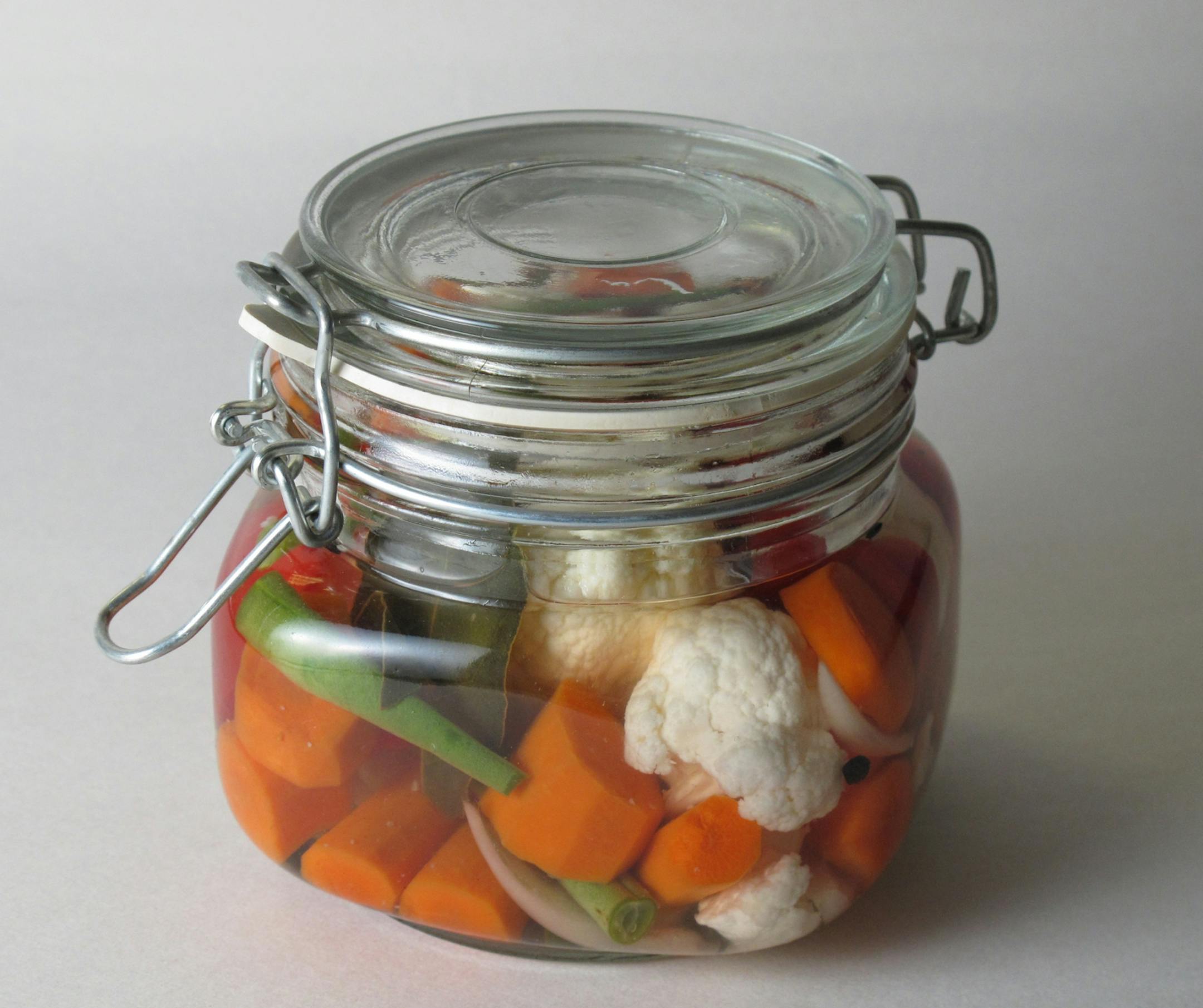
Still, the preservation instinct runs deep. Sooner or later, we all find our weakness. Mine was giardiniera (pronounced jahr-dee-NYAY-rah). I happen to love the stuff. And when I discovered that it involved the kind of canning that, well, isn't really canning, I was in, up to my eyeballs in pickling brine and canning jars.
Derived from the Italian word for garden, giardiniera refers to the crunchy, vinegar-bathed blend of vegetables that once pulled duty as the lone antipasto at local Italian restaurants. It's the traditional accompaniment for Italian beef sandwiches. Oh, and that chile-spiked vegetable relish you've had on Chicago hot dogs? That, too, is a type of giardiniera.


