

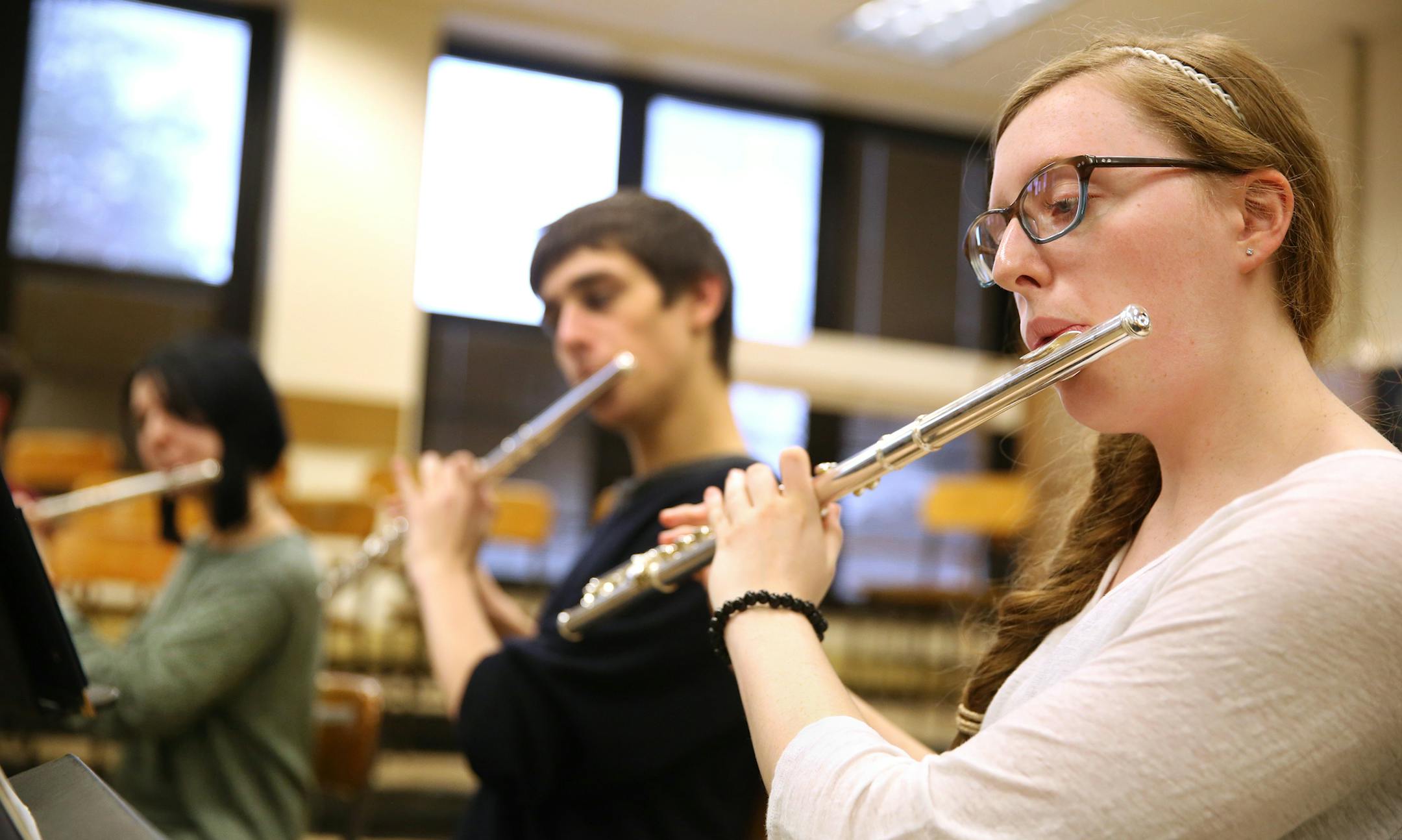
CHICAGO – For high school sophomore Sophia Pellar, a pair of special earplugs has put an end to the pain she suffered when playing flute in the pep band.
Nonetheless, the Mozart-loving teen giggles nervously when she explains that the earplugs — tethered by a bright blue string and designed to protect musicians from noise-induced hearing loss — have yet to become part of her regular repertoire. "I wear earplugs during pep band season, because it can be crazy loud," said Sophia, 16. "But the thought of wearing them every day is a little embarrassing."
With research indicating that as many as 20 percent of teens suffer from hearing loss, much of it caused by noise damage, more doctors and school band directors are urging kids to take precautions such as wearing earplugs. Yet, the experts say, their messages are being undermined by an "uncool" stigma similar to that which once impeded the use of bike helmets and sunscreen.
Officials say even the most vigilant parents typically are unaware of the need for their children to take precautions.
Sophia's mother, Dr. Chimene Pellar, said that while she's thrilled that her three teens enjoy the band program, she became alarmed recently when she learned that Sophia is often in pain after playing her flute in close ranks with her fellow musicians.
"I had never thought of it at all … and she has been playing the flute since she was in fourth grade," said Pellar, a physician. "I also have concerns when I walk by my kids when they have their earbuds in and I can still hear their music. And the longer they listen, the louder it seems to get."
Audiologists who study teen hearing loss say high-decibel music from instruments, concerts and earbuds — as well as other loud noises — can harm the hair cells in the ear's cochlea, leading to cumulative hearing damage that is irreversible.
"We're seeing a rise in the number of adolescents with hearing loss, which is not a surprise when you look at our society, which has gotten busier, nosier and overstimulated," said Dr. Henry Ou, an associate professor of pediatric otolaryngology at Seattle Children's Hospital.


