

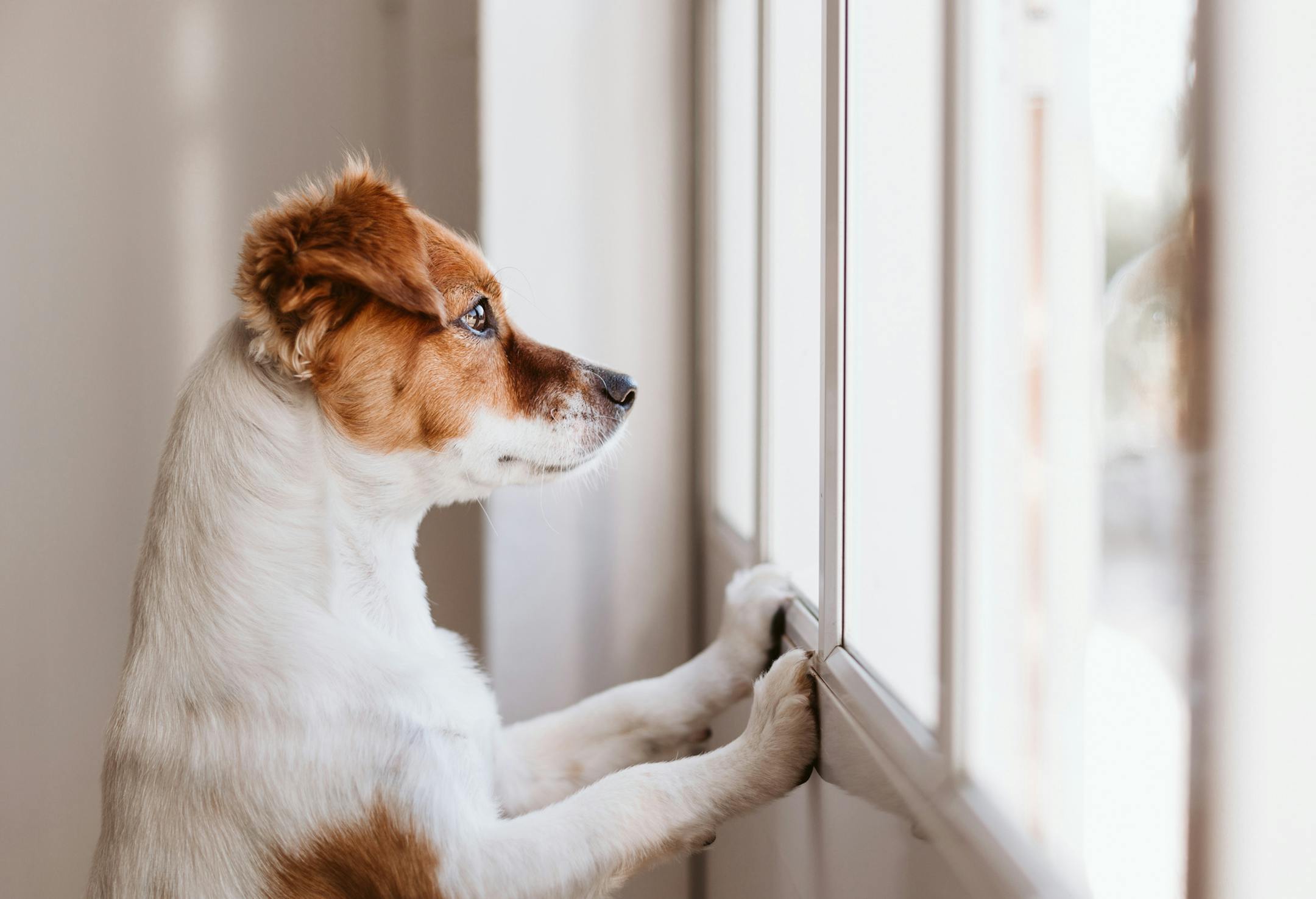
Separation anxiety affects about 15% of dogs, but other animals aren't immune. Cats, birds, bunnies and other pets can experience it, too.
More people are receiving COVID-19 vaccinations and may be away from home more often or may return to offices, school or start to travel. That raises a big question for pet lovers: Will their animals — especially young ones — become anxious being home alone after a year of 24/7 human companionship?
"Some puppies have probably never been alone for more than an hour or two while the owners went to the grocery store," says Minnesota dog trainer Denise Nord. "Being alone and possibly crated is a skill we need to teach our dogs."
Watch to see if your pet shows signs of separation anxiety when you're away. For dogs, that can mean barking or whining, scratching at doors or windows, or other destructive behavior.
Cats may urinate not just outside the litter box, but on their person's clothes or bedding — an attempt to soothe themselves by mingling their own scent with that of their favorite human. Birds vocalize or toss items around in their cage.
If you're not sure about how your pet behaves when you're gone, set up a pet cam to see if — as well as what, where and when — certain behaviors are occurring.
Even better, start now to prepare pets for being on their own more often or for longer periods.
Begin by tweaking your pet's expectations.


