In their 40 years of creating classic beats and rhymes, rap- and hip-hop-influenced R&B producers have always found inspiration in soul, funk and rock-and-roll musicians. Whether it is Ice Cube's sampling of James Brown's "Funky Drummer" on "Jackin' for Beats" or the Beastie Boys' mix of Led Zeppelin's "When the Levee Breaks" with "Sweet Leaf" by Black Sabbath for "Rhymin & Stealin," it remains common practice for producers of the hip-hop generation to sample from music's legends.
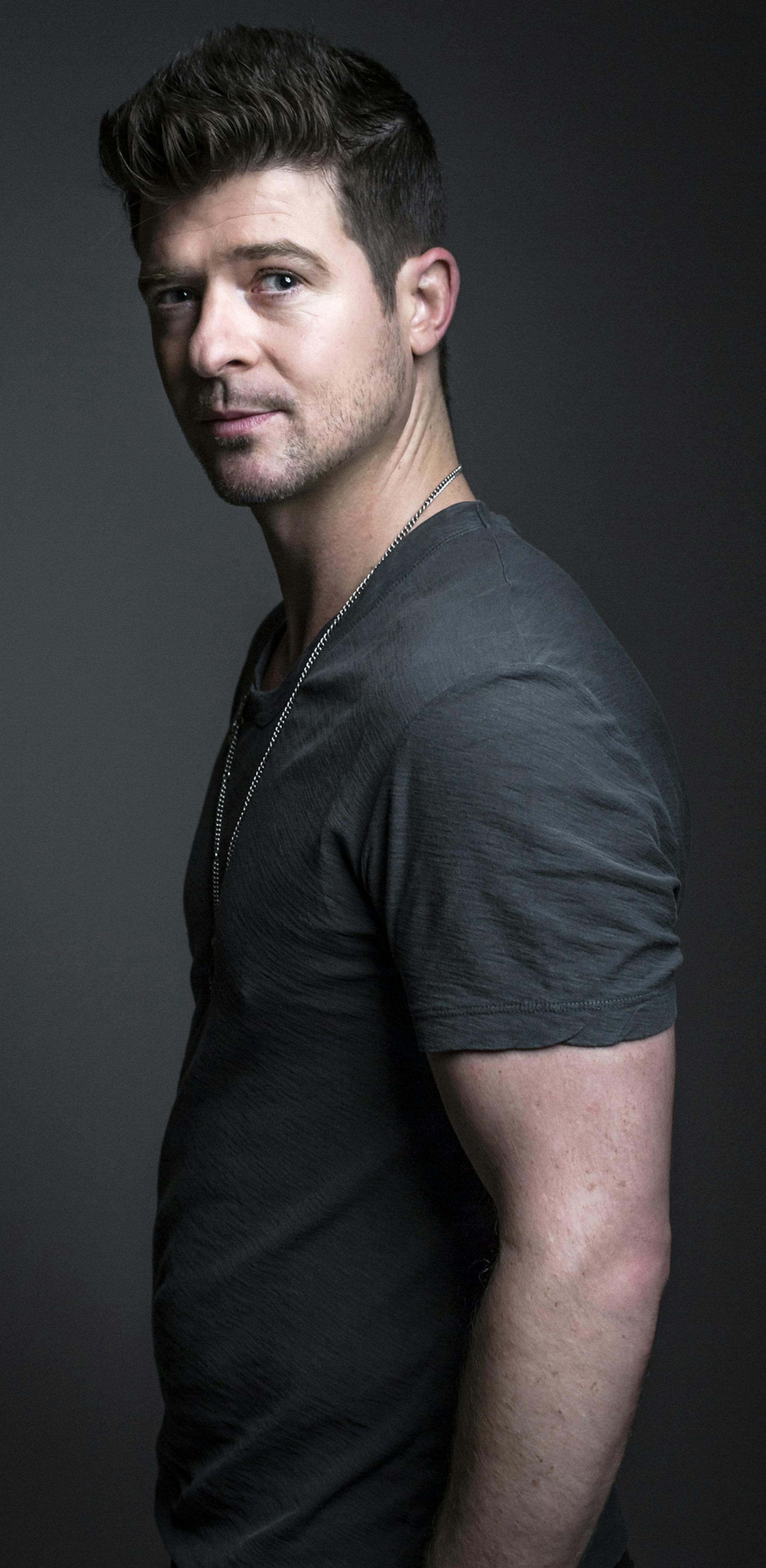
So it probably didn't raise too many eyebrows when super-producer Pharrell Williams manipulated just about every element of Marvin Gaye's "Got to Give It Up" to create "Blurred Lines," landing Robin Thicke and guest rapper Clifford "T.I." Harris Jr. a hit that is currently in its 10th week at No. 1 on the Billboard Hot 100 — the longest Hot 100 reign of 2013.
But then something unusual happened. Concerned about a potential suit for the song's apparent usage of the classic 1977 soul track, Thicke and the "Blurred Lines" team launched a lawsuit against Nona Gaye, Marvin Gaye III, Christian Gaye and Bridgeport Music Inc., asking the judge to protect "Blurred Lines" from any copyright infringement on Gaye's "Got to Give It Up" or Funkadelic's "Sexy Ways." And it had me wondering: Was this a case of a guilty conscience on the part of the producers or a brilliant legal move?
"Blurred Lines" is a real groovy tune. I loved it upon hearing it because it was reminiscent of that Marvin Gaye soul funk that's hard to ignore. But it may also be the first time a sampling artist has sued the original artist in the 40 years of hip-hop sampling cases. And this has me wondering if there's a way of lifting actual elements of a song — the bars, the riffs, the hooks, the drum patterns and the "feeling" of a song — that might be interpretive but not exact? And if so, what is the difference?
I called on three industry professionals for a quick-and-dirty lesson on the ethics of sampling. I spoke to Isaac Hayes III, songwriter, producer and manager of Isaac Hayes Enterprises; Aldrin Davis (aka Toomp), a DJ and producer; and Vincent Phillips, an entertainment attorney based in Atlanta.
"In copyright infringement involving music," Hayes explained, "you have to consider three things: cadence, melody and lyrics, and you have to take two of the three in order for it to be infringement." If neither is used in their identical form, then the producer isn't required to cut a check to the publisher of the original version. "In the case of "Blurred Lines," he continued, "they take none of the three."
Toomp weighed in, saying that Williams sampled the "vibe" of "Got to Give It Up." While laughing, he insisted, "You can't tell me no one in the studio during the time of production didn't listen and say, 'Y'all flipped that Marvin Gaye.' You can't hide that sound," Toomp claimed.
All three agree that "Blurred Lines" is not copyright infringement. It's not a sample, and it isn't an interpolation. Rather, it is a genius re-creation of a vibe that is careful not to infringe upon the song's original master. From the Williams-Thicke perspective, the song evokes an era, and an era isn't copyrightable. So why shoot first?