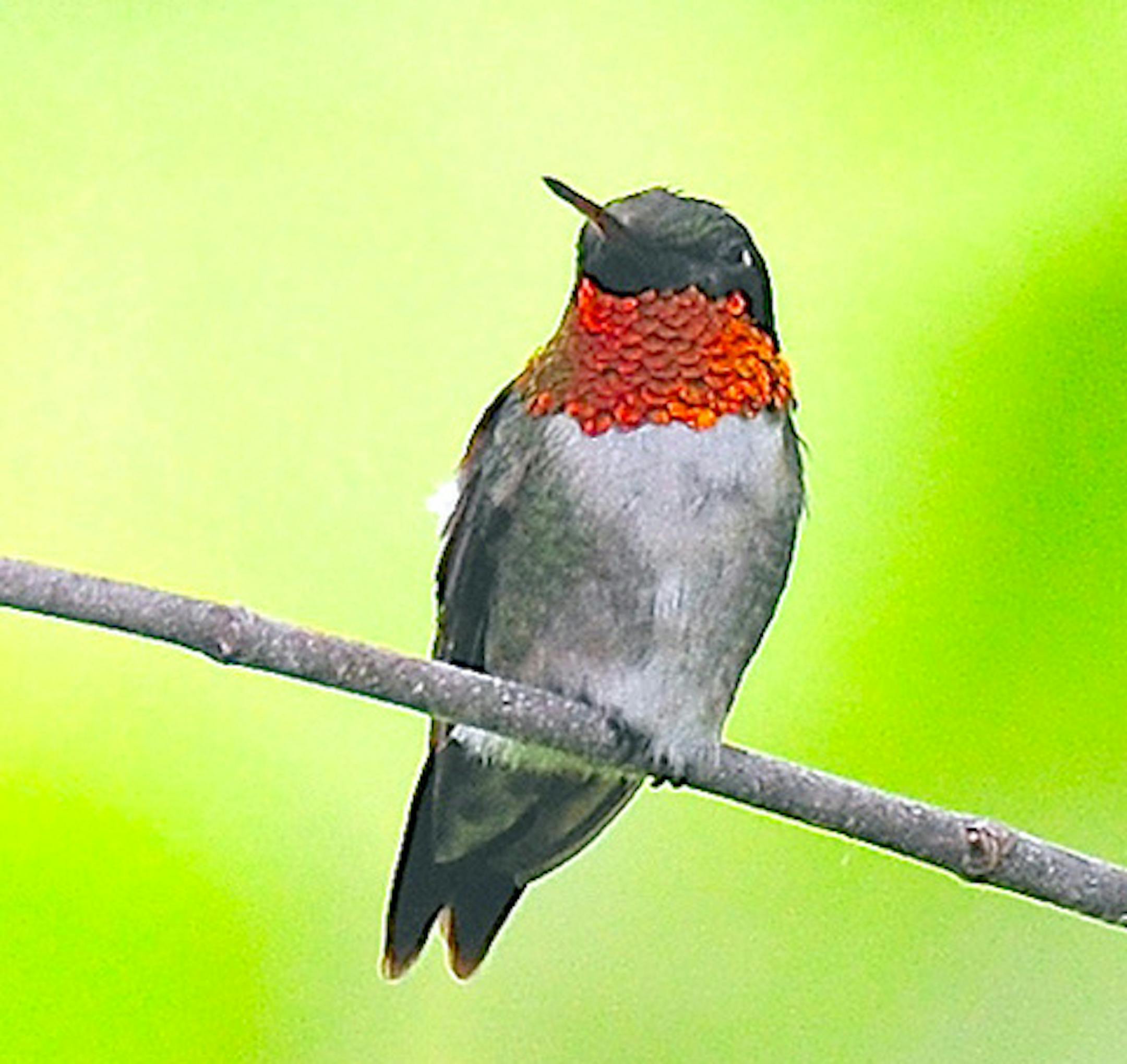
Q: When should I put out my hummingbird feeders?
A: The first of these tiny dynamos should appear in late April, but look for most of these little migrants around mid-May. In addition to your feeder, you could place a hanging basket of flowering plants nearby, to catch their eye and provide another source of nectar. Tune in to Journey North to plot hummingbirds' progress from south to north, https://journeynorth.org/hummingbirds.
Strange scene
Q: A strange scene at our house the other day: Looking out a second-floor window, we spied half of a large rabbit (the head and upper body seemed to be missing) in the rain gutter. Did a raptor do this, and if so, what kind? It was gone the next day.
A: This sounds like the work of a great horned owl. It would have to be a large owl, in order to carry a relatively heavy rabbit up to your second story. And great horned owls are notorious for dismembering their prey and stashing some for later consumption. This very well could have been the work of a male owl bringing food to his mate as she sat on eggs or to tiny owls in their nest in early March.
Lifetime mates
Q: Do cardinals mate for life? I've been watching a pair in my backyard, with the male feeding the female a seed or some other foods. I've read that this is part of their courtship. But what if something happens to one or the other of the pair?
A: Cardinal pairs don't separate after nesting season, as many songbirds do. Instead, they typically remain together all year long. But some cardinals aren't all that different from humans: Most stay together as long as they both live, but some seek out a new mate, even if it's during nesting season. And if one member of a cardinal pair dies, the other will quickly look for a new partner.
Window decals
Q: Tell me again the name of those decals that help prevent birds from running into windows?