
Get ready for the mourning doves

On Labor Day, Minnesotans will be allowed to hunt doves again, only their fifth season in 57 years.

For the Minnesota Star Tribune
August 25, 2008 at 1:09AM
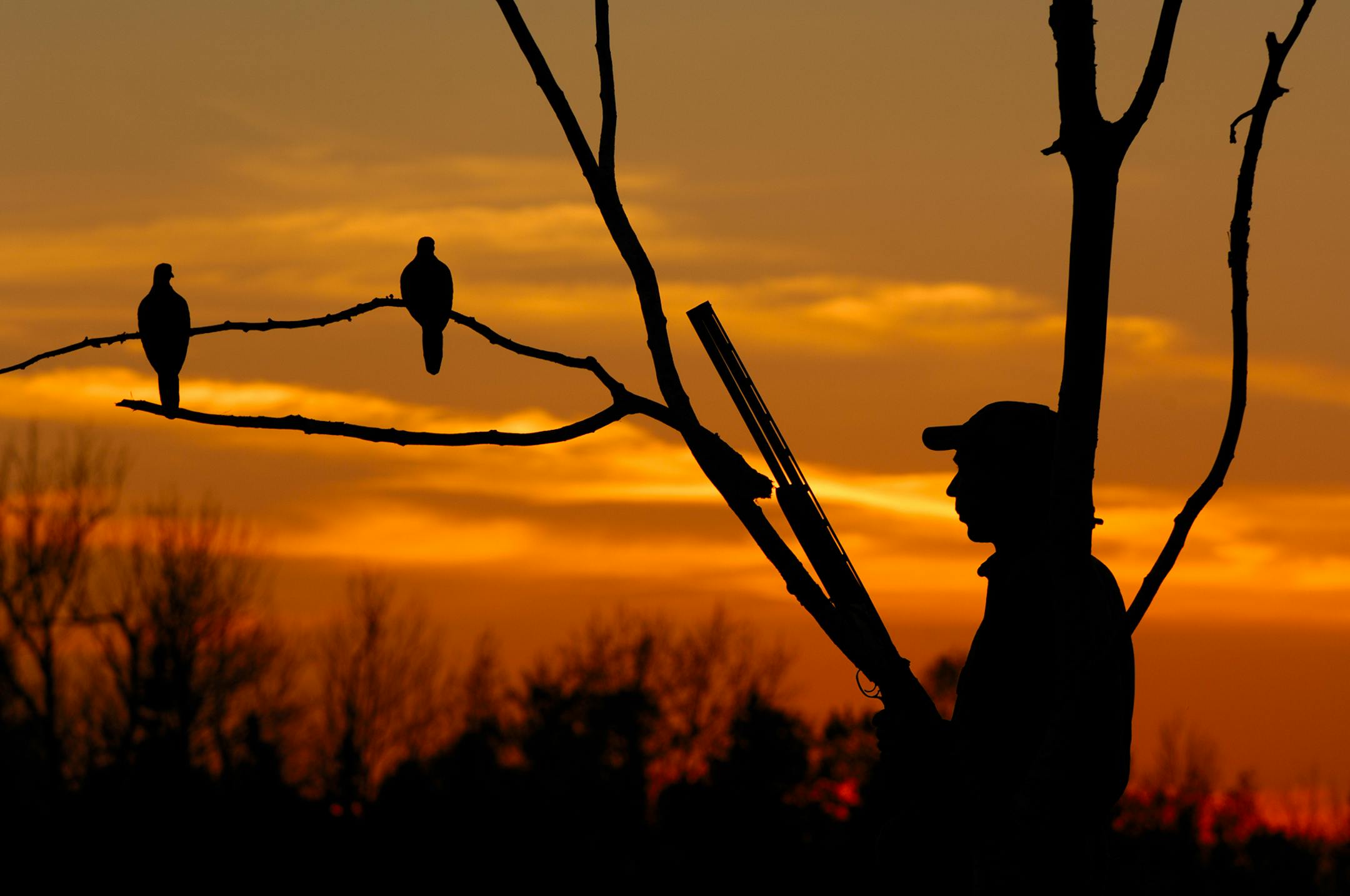
The 2008 mourning dove season opens at a half-hour before sunrise on Sept. 1. The daily limit is 15, with 30 in possession. The U.S. Fish and Wildlife Service estimates the fall populationwil be about 350 million.
The 2008 mourning dove season opens at a half-hour before sunrise on Sept. 1. The daily limit is 15, with 30 in possession. The U.S. Fish and Wildlife Service estimates the fall populationwil be about 350 million. (Special to the Star Tribune/The Minnesota Star Tribune)

At one half-hour before sunrise on Sept. 1, mourning doves will become legal game for Minnesota hunters for only the fifth season since 1946.

Back in 2004 Gov. Tim Pawlenty signed a bill that allowed Minnesota to be the 40th state with a mourning dove hunting season. A surge of calls and e-mails from sportsmen and conservation groups had helped ensure the bill's passage.

Before 2004 Minnesotans had been without a dove season for 57 years, so many citizens are not aware the mourning dove is the most popular game bird in the nation. However, dove hunting in Minnesota is still relatively new. In 2007, the DNR estimates, 13,000 Minnesotans hunted dove, but in Texas, for example, more than 250,000 hunters pursue mourning doves annually.

The U.S. Fish and Wildlife Service estimates the fall population of mourning doves to be 350 million. They are an abundant and widespread bird. However, as is usually the case with any flourishing wildlife populations, annual mourning dove mortality is extremely high. In fact studies show more than half of all mourning doves die each year, yet hunters harvest only an estimated 5 to 10 percent of the population. Weather, accidents and predation top the list of natural causes of mortality.

To more accurately assess mourning dove mortality, the Minnesota DNR is voluntarily taking part in a dove banding effort implemented by the U.S. Fish and Wildlife Service.

"We are in your second year of banding," said Molly Tranel, DNR wildlife research biologist who is stationed in Madelia. "The banding study will help us determine migration characteristics, recovery rates, hunting harvest rates and overall survival rates."

About 15 area wildlife offices from across the state took part in mourning dove banding efforts this summer. A total of 514 doves were banded. About half of those birds were juveniles, the other half adults.

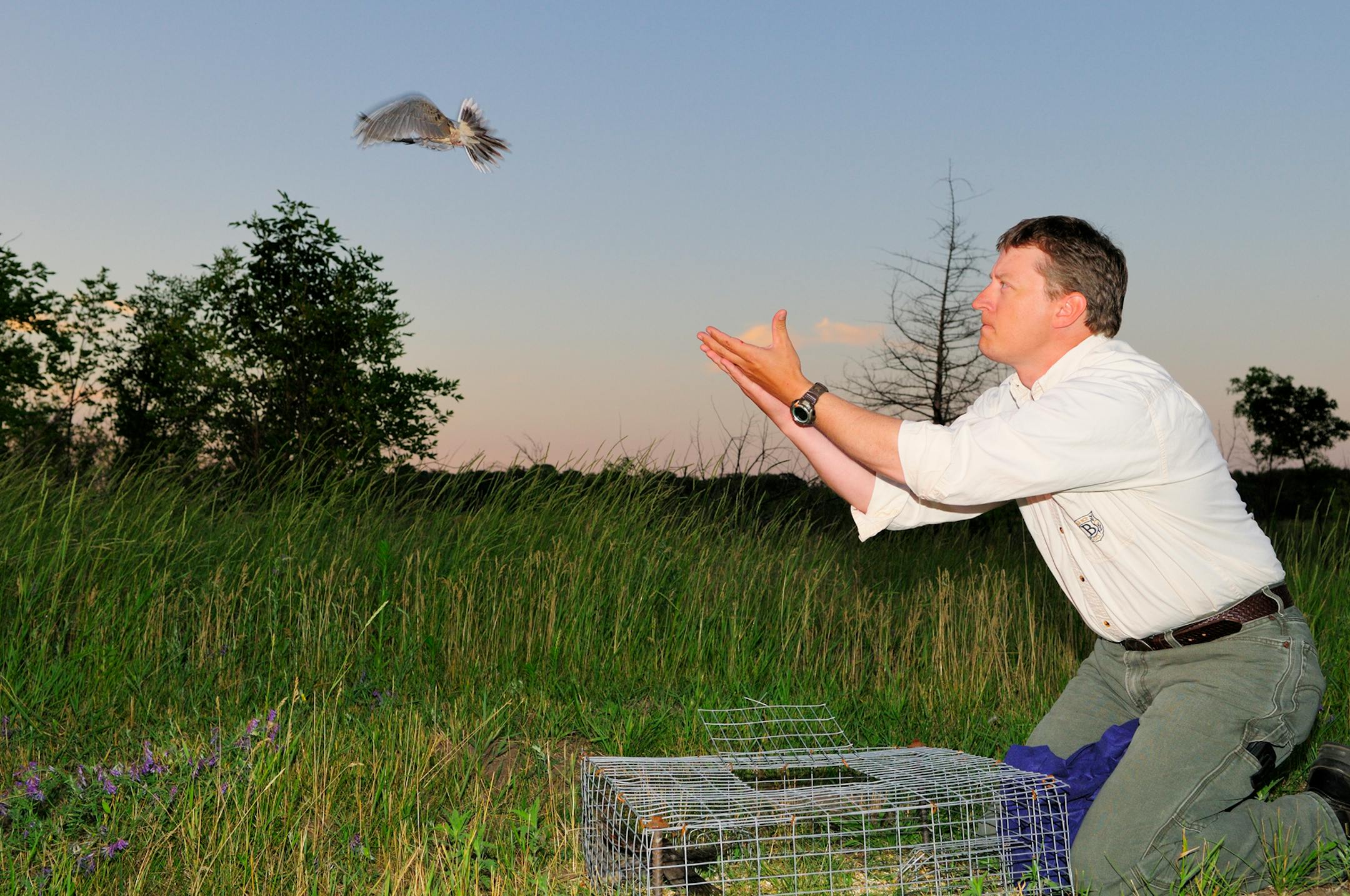
On a mid-July evening, I accompanied Beau Liddell, area wildlife supervisor in Little Falls, as he checked traps he had set earlier that day. The traps held 15 mourning doves, six of which had been banded this summer. Liddell carefully handled each dove as he studied wing feathers to determine each bird's age. He then fitted each of the nine unbanded doves with an aluminum leg band and turned them loose. Liddell and his colleagues banded a total of 90 doves this summer near Little Falls.
Last summer, the Minnesota DNR banded 361 mourning doves, and since then eight of those bands have been recovered, all from doves harvested by hunters. Only one dove captured in 2007 was rebanded this year. The fate of the remaining 352 banded doves is unknown.

Anyone who plans to hunt doves next week is advised to scout ahead for a hunting location. Plan to spend at least one morning and evening exploring. Watch for birds flying to water, feeding areas and roosting sites.

Doves prefer to feed in the open in short cover so check harvested fields of small grains such as millet, oats and wheat. Also, overgrown or weedy fields that contain scattered openings are particularly attractive to feeding doves.

It's been dry in much of Minnesota, so water holes should be especially productive areas to hunt doves. Doves favor ponds with an open shoreline rather than those lined with tall vegetation. The birds usually drink in midmorning after feeding, and in late afternoon.

Doves prefer to roost in thick trees. They seem to favor evergreens, but don't discount any dense grove of trees in farmland that has dove food and water nearby. Mourning doves often spend the day resting in dead trees or on power lines, especially if the weather is cool.

Hunters should plan on pursuing doves as close to the Sept. 1 opening as possible because the birds are quick to leave ahead of any unseasonably cold weather.

Any gauge shotgun will work for shooting doves. The birds are small and fragile so trap and skeet loads of 7 1/2 or 8 shot and improved cylinder or modified chokes will work. Nontoxic shot is required on federal waterfowl production areas. Because doves are migratory birds, shotguns must not be capable of holding more than three shells. Also, party hunting for doves is not legal, which means individuals cannot shoot doves for other party members.

Downed doves can be very difficult to locate, so the wise hunter will employ a dog for retrieving duties. Mark well each fallen dove because sometimes even dogs have trouble finding the birds, especially on hot days. And don't forget to carry plenty of water for your dog.

Baiting laws for doves are different than for waterfowl. In a nutshell, doves can be hunted over manipulated crops. Dove hunters should read regulations thoroughly.

The daily limit on mourning doves is 15, with 30 in possession. Shooting hours are from a half-hour before sunrise to sunset.

Beau Liddell, a DNR area wildlife supervisor, released a banded mourning dove from a trapping site near Little Falls.
Beau Liddell, a DNR area wildlife supervisor, released a banded mourning dove from a trapping site near Little Falls. (Special to the Star Tribune/The Minnesota Star Tribune)
about the writer

about the writer

BILL MARCHEL