

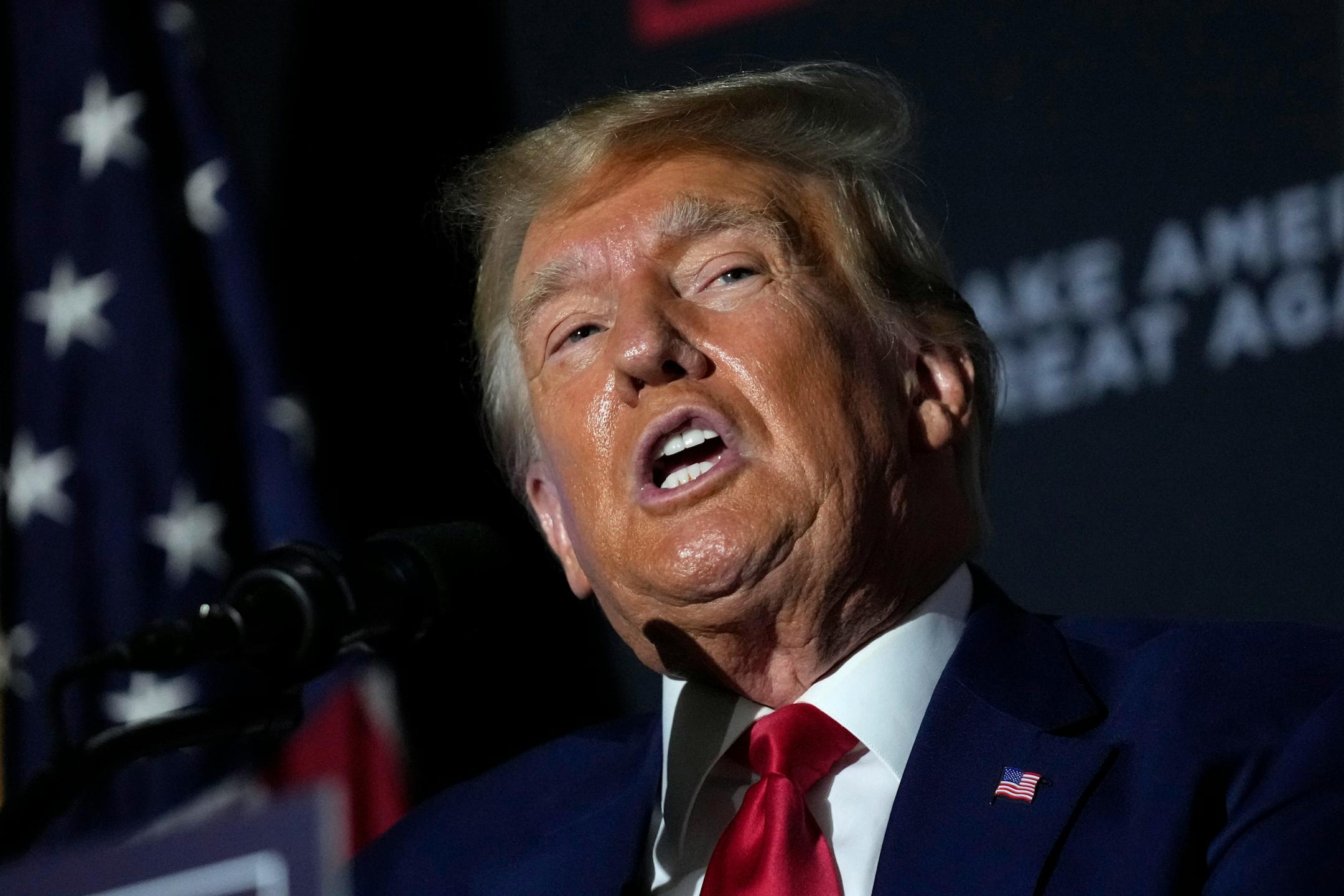
The fourth criminal case involving Donald Trump is likely to come to a head next week, with the district attorney in Atlanta expected to take the findings from her election interference investigation to a grand jury.
The Georgia investigation may be the most expansive legal challenge yet to the efforts that Trump and his advisers undertook to keep him in power after he lost the 2020 election. Nearly 20 people are known to have been told that they could face charges as a result of the investigation, which Fani T. Willis, the district attorney in Fulton County, Georgia, has pursued for 2½ years.
Willis has signaled that she would seek indictments from a grand jury in the first half of August. In a letter to local officials in May, she laid out plans for most of her staff to work remotely during the first three weeks of August amid heightened security concerns. Security barriers were recently erected in front of the downtown Atlanta courthouse, and at lunchtime Tuesday, 16 law enforcement vehicles were parked around the perimeter.
On Tuesday afternoon, two witnesses who received subpoenas to appear before the Fulton County grand jury said in interviews that they had not received notices instructing them to testify within the next 48 hours, a sign that the case will not get to the jury until next week.
Earlier this month, Trump was indicted in a federal case brought by special counsel Jack Smith, in an investigation also related to election interference that listed a number of unindicted co-conspirators. The Georgia inquiry, elements of which overlap with the federal case, involves not just the former president but an array of his aides and advisers at the time of the 2020 election, several of whom are expected to face charges.
If Trump were to be convicted in a federal prosecution, he could theoretically pardon himself if he were reelected president. But presidents do not hold such sway in state matters. Moreover, Georgia law makes pardons possible only five years after the completion of a sentence. Getting a sentence commuted requires the approval of a state panel.
Trump's lawyers have described an indictment in Georgia as a foregone conclusion in recent legal filings, and the foreperson of a special grand jury that heard evidence for several months last year strongly hinted afterward that the group, which served in an advisory capacity, had recommended Trump for indictment.
Two grand juries have been hearing cases at the Fulton County Courthouse during the current Superior Court term, which began on July 11 and runs through Sept. 1. Twelve of 23 jurors need to agree that there is probable cause to hand down criminal charges after hearing evidence in a case.


