Roper: Someone toppled George Washington five years ago. Are we ready to put him back up?

A statue of the first president never returned to a Minneapolis park after vandalism pushed him off a pedestal in 2020.

Columnist Icon
The Minnesota Star Tribune
December 1, 2025 at 12:00PM
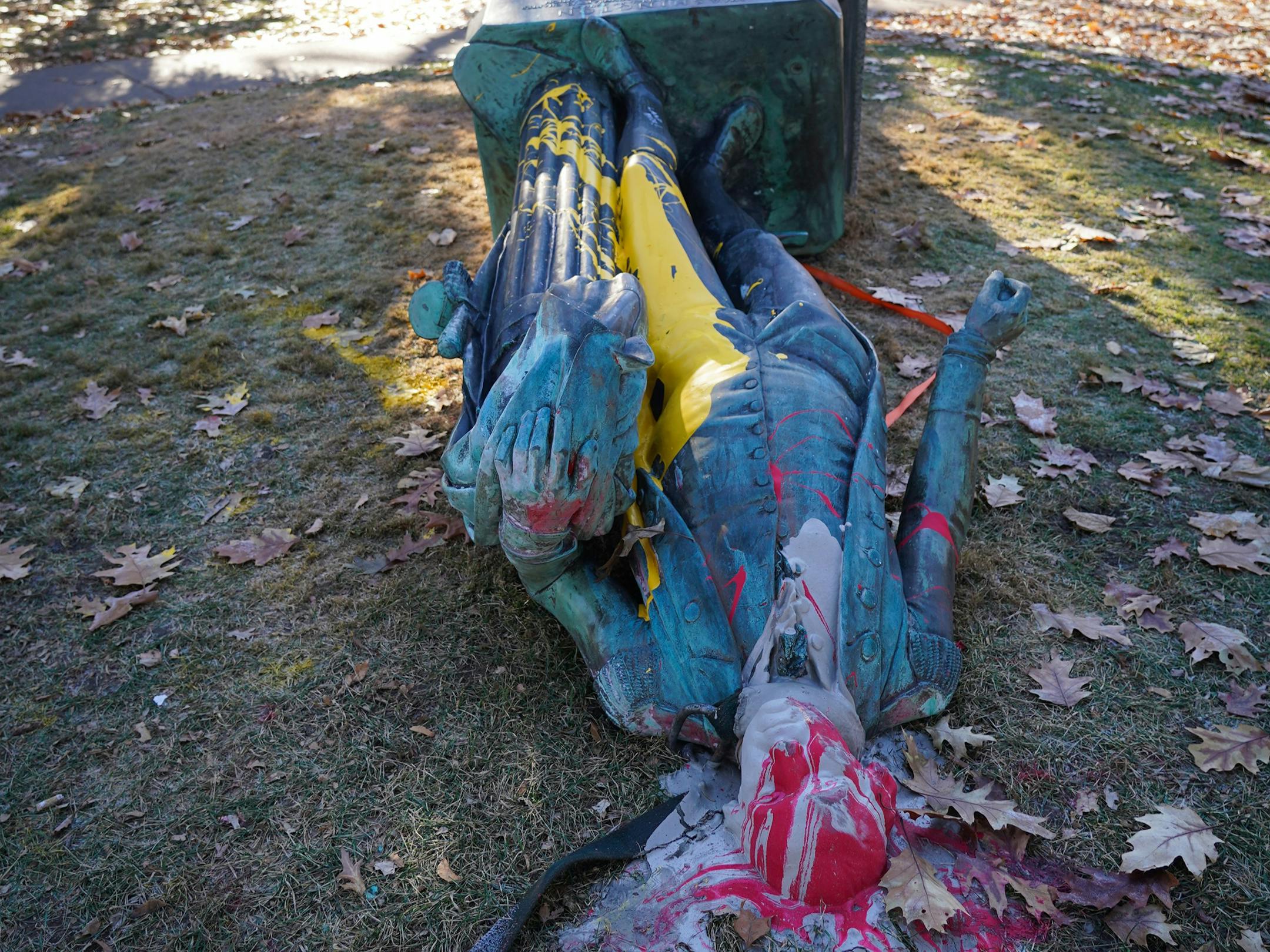
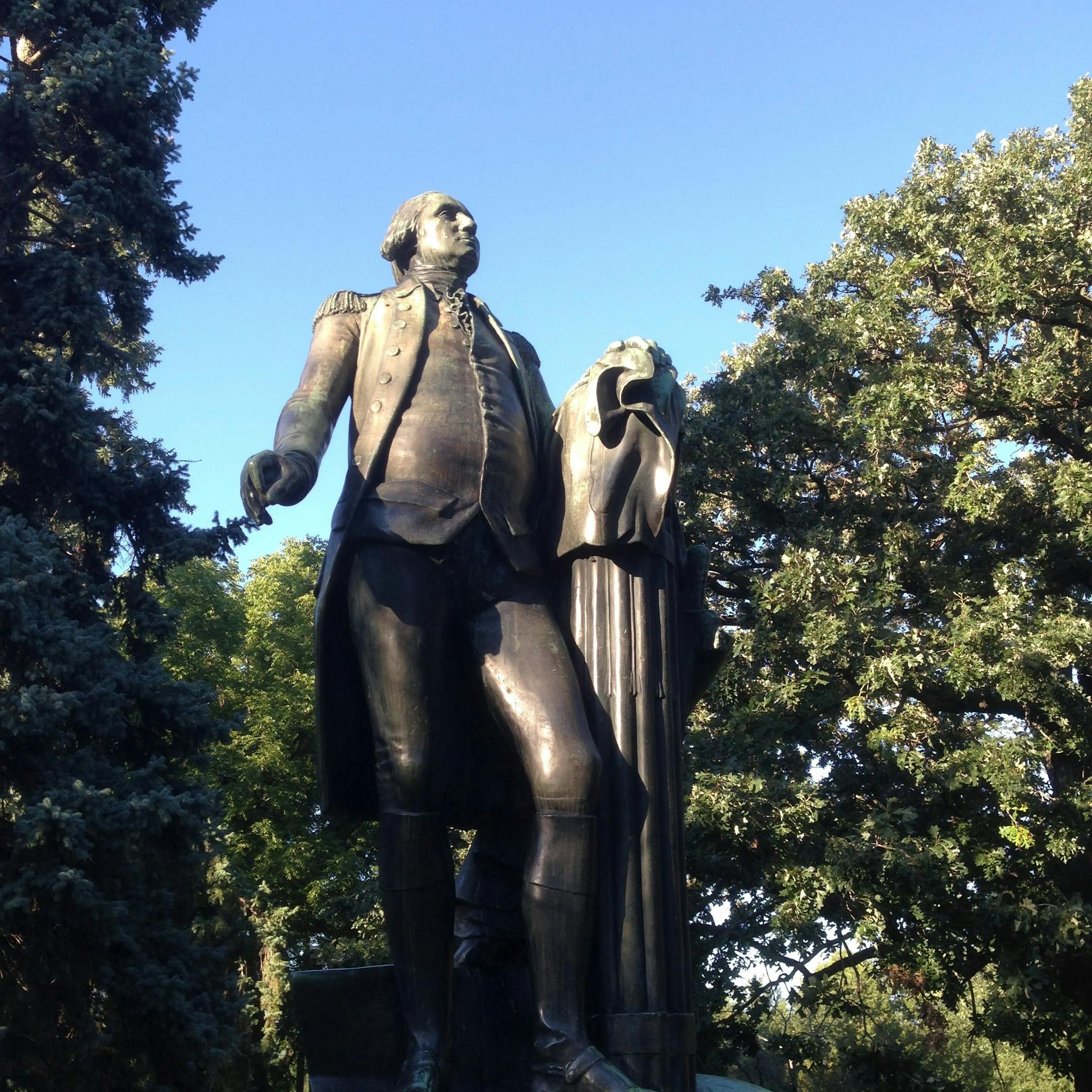
The statue of George Washington in Washburn Fair Oaks Park after it was toppled in 2020. (Shari L. Gross/The Minnesota Star Tribune)

Sign up here to follow this column by email.

They came for George Washington on a chilly November night in 2020.

Wielding ratchet straps, the vandals yanked the statue of our first president from its pedestal in Minneapolis’ Washburn Fair Oaks Park. Then came the yellow paint, splashed across the body. George’s head got a special treatment of oozing cement and red paint, which left him looking like he had bled out — right there in the park.

The desecrators penned some thoughts on the general: “LAND BACK” “GENOCIDAL MANIAC.” Then they slapped a couple of antifa stickers on the guy who led our country’s fight against a king.

It was a Thanksgiving Day surprise when people saw the news hours later. To be honest, I hardly remembered this episode from that traumatic year — marked by rage and masks and fire and loneliness.
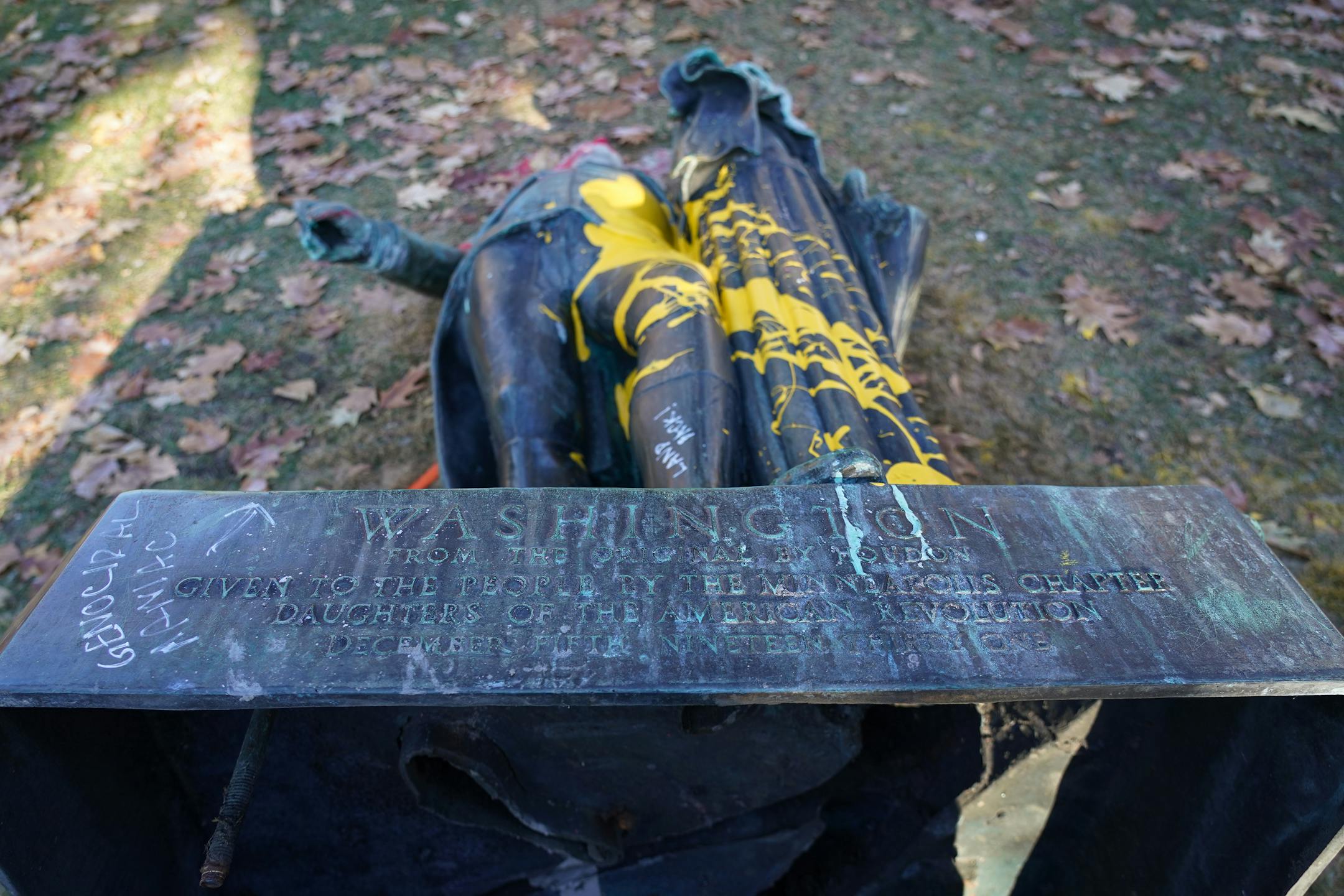
The statue of George Washington, photographed soon after it was toppled in 2020. (Shari L. Gross/The Minnesota Star Tribune)

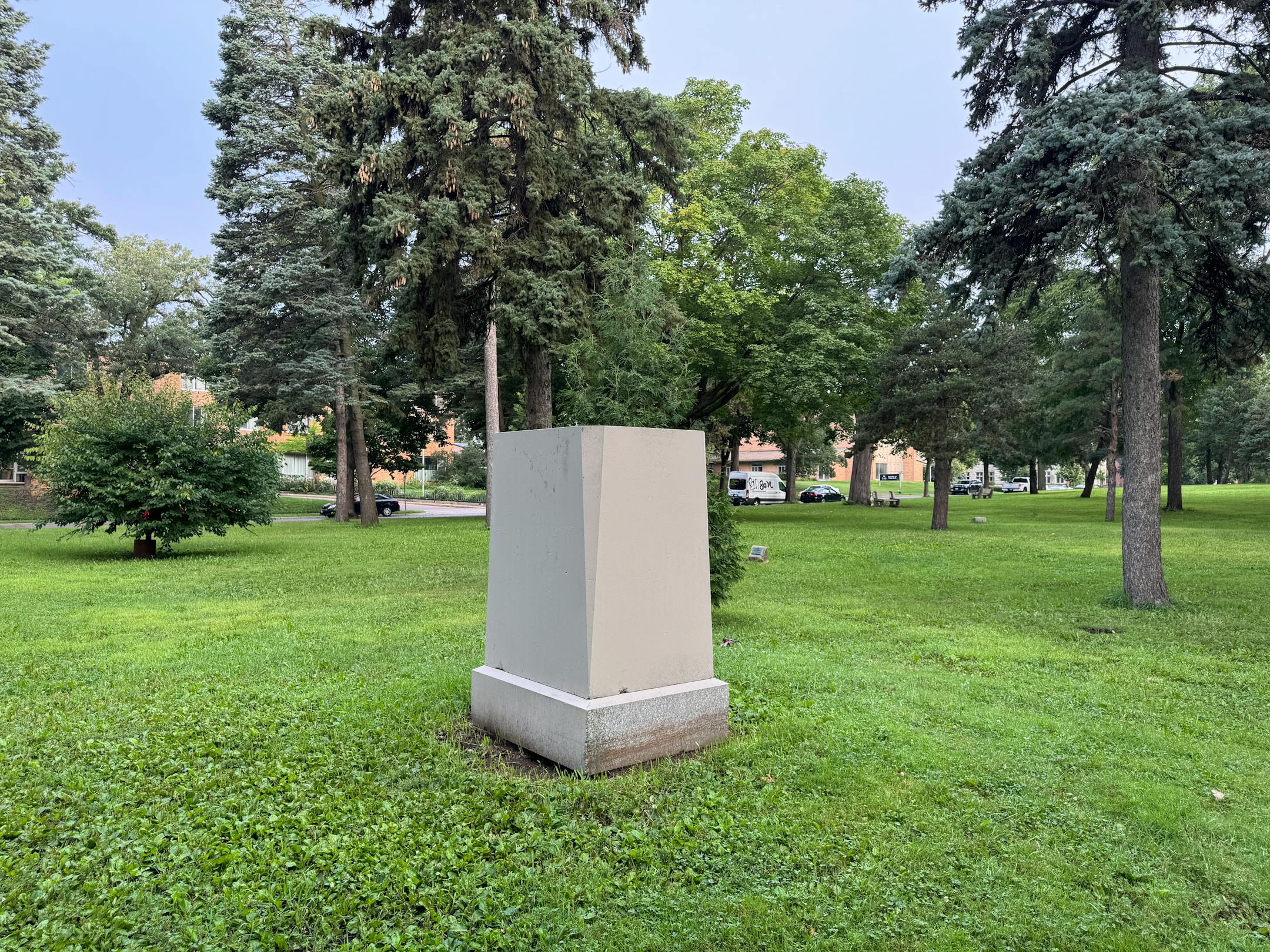
Five years later, George remains in Minneapolis Park Board storage. The repairs to the statue could cost upwards of $50,000, and the Park Board says it doesn’t have the money. The hulking stone plinth still stands empty across from the Minneapolis Institute of Art, a confusing sight for those who don’t know the story.

I know more of that story now, after reading a nearly 100-page police case file that shows Minneapolis Park Police took the vandalism seriously. And it didn’t take them long to hone in on a key clue.

Fingerprints on the bottom of a sticker matched someone already in the system at the Minneapolis Police Department’s crime lab. So police obtained a search warrant for their DNA. The person wouldn’t speak to police, but consented at their attorney’s office to a mouth swab.
That evidence was sent to the Bureau of Criminal Apprehension, to be compared with a swab taken from a ratchet strap left at the scene. But the BCA couldn’t find enough genetic information on the ratchet strap, so the analysis was a bust.

The empty plinth in Washburn Fair Oaks Park where George Washington's statue once stood, photographed in August. (Eric Roper/The Minnesota Star Tribune)

Because of insufficient evidence, the Hennepin County Attorney’s Office declined to file charges in October 2022 — nearly two years after the vandalism.

A lot of statues were vandalized in 2020, in Minnesota and beyond.

In June of that year, activists yanked down a statue of Christopher Columbus at the Minnesota Capitol in broad daylight. The Thanksgiving toppling of the Washington statue was accompanied by red paint being thrown on the Pioneers monument in northeast Minneapolis.

Columbus never returned. And the Pioneers monument continues to be controversial; a recent Native American-led study recommended that it be destroyed.

Washington’s likeness was targeted outside Minnesota, as well. In 2020, vandals yanked down Washington statues in Portland, Ore., and Los Angeles. The Portland statue hasn’t returned (it will soon be restored) and officials in Los Angeles tucked that statue away in a county building.

It’s time we had a conversation about whether we here in Minnesota are ready to put George Washington back on a pedestal — literally and figuratively.

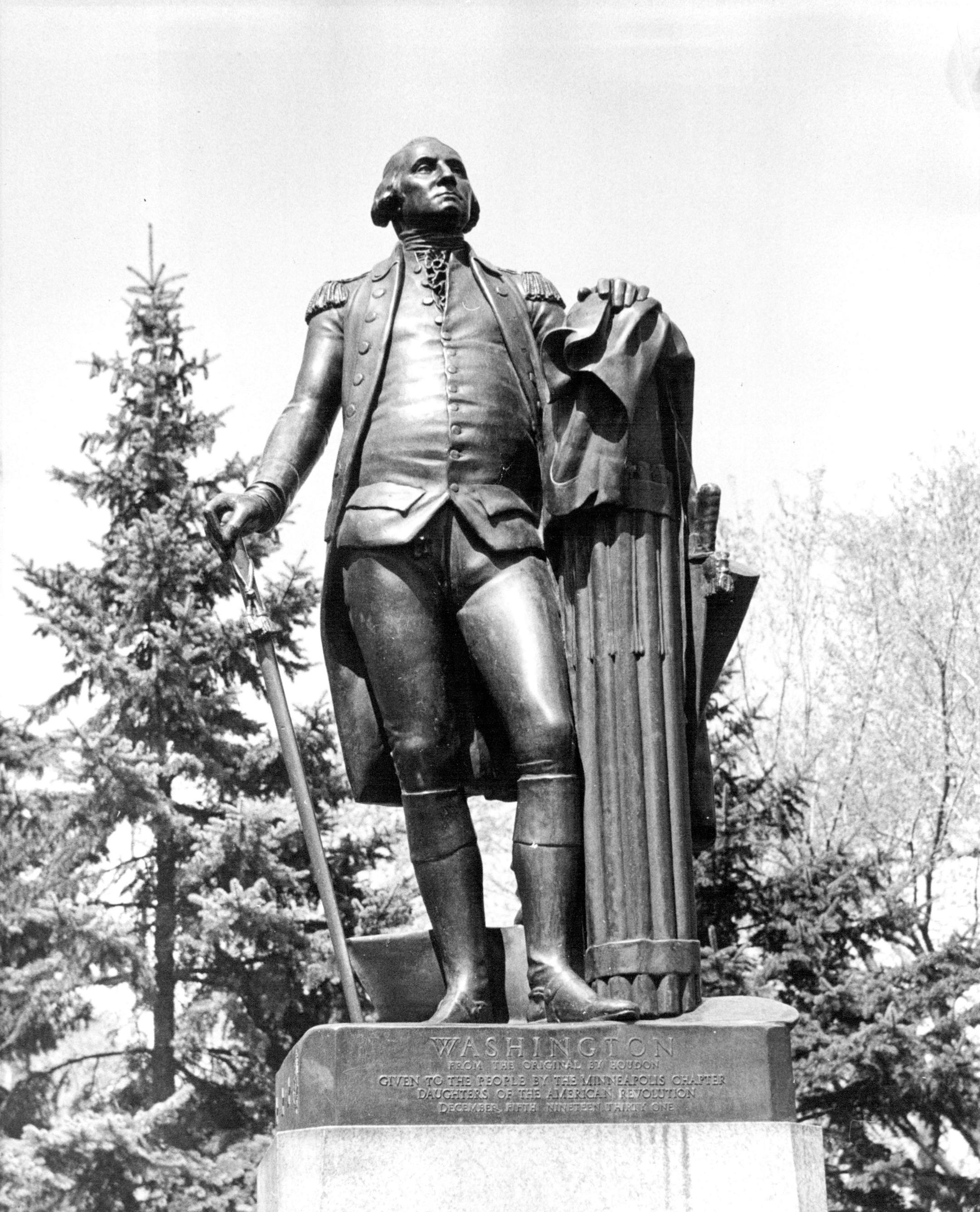
The George Washington statue in Washburn Fair Oaks Park, photographed in 2014. (Eric Roper/The Minnesota Star Tribune)

Perhaps I’m raising this question because George was ubiquitous at my alma mater, George Washington University. You couldn’t escape his image, or the myth. I was the editor of the GW Hatchet newspaper — and the yearbook is the Cherry Tree.

The most controversial aspect of Washington’s legacy is that he owned slaves. Someone spray-painted the number of slaves — 318 — at the base of a prominent Washington statue on George Washington University’s campus a decade ago.

To talk through Washington’s legacy, I turned to Yohuru Williams. He is a professor of history and the founding director of the Racial Justice Initiative at the University of St. Thomas.

Williams noted that many of the leaders that we elevate from the past have flaws, and Washington’s contemporary Thomas Jefferson’s legacy is more tarnished by contradictions about slavery. The question, Williams said, is whether we can lean into history in a way that allows us to understand people like Washington in all their complexity.

“If we start ripping everybody down, then what do we put up?” Williams said.

He added that public symbols of our shared values matter a lot in this era, when disinformation and social media are tearing people apart. People are also on edge under President Donald Trump about the boundaries of the presidency.

The statue of George Washington in Washburn Fair Oaks Park, as it appeared in 1958.

“Washington’s greatness is rooted not simply in being the first president, but also establishing all the conventions we associate with the executive office of the president,” Williams said, noting the two-term tradition first observed by Washington. “It’s appropriate for us to find a space to honor him and that contribution.”

Communities also need to occasionally reevaluate “what they want to put on the pedestal as a reflection of their values,” Williams said. He highlighted the lengthy process to rename Lake Calhoun to Bde Maka Ska as a good example of that.

This is a good time to discuss Washington.

Next year is the 250th anniversary of the Declaration of Independence, which will fill the nation with pomp about the founding. And a new Ken Burns documentary on PBS about the Revolutionary War is reinterpreting Washington’s story for modern audiences.

We can start the conversation in this column. Got thoughts? Send them to me at eric.roper@startribune.com.

about the writer

about the writer

Eric Roper

Columnist

Eric Roper is a columnist for the Star Tribune focused on urban affairs in the Twin Cities. He previously oversaw Curious Minnesota, the Minnesota Star Tribune's reader-driven reporting project.

See Moreicon

More from Minneapolis

See More
card image
Aaron Nesheim/Sahan Journal

Isuroon was forced to close one of its four locations and the Brian Coyle Center’s food shelf often runs short before it can serve all families in need, a sign of the strain many families are facing.