

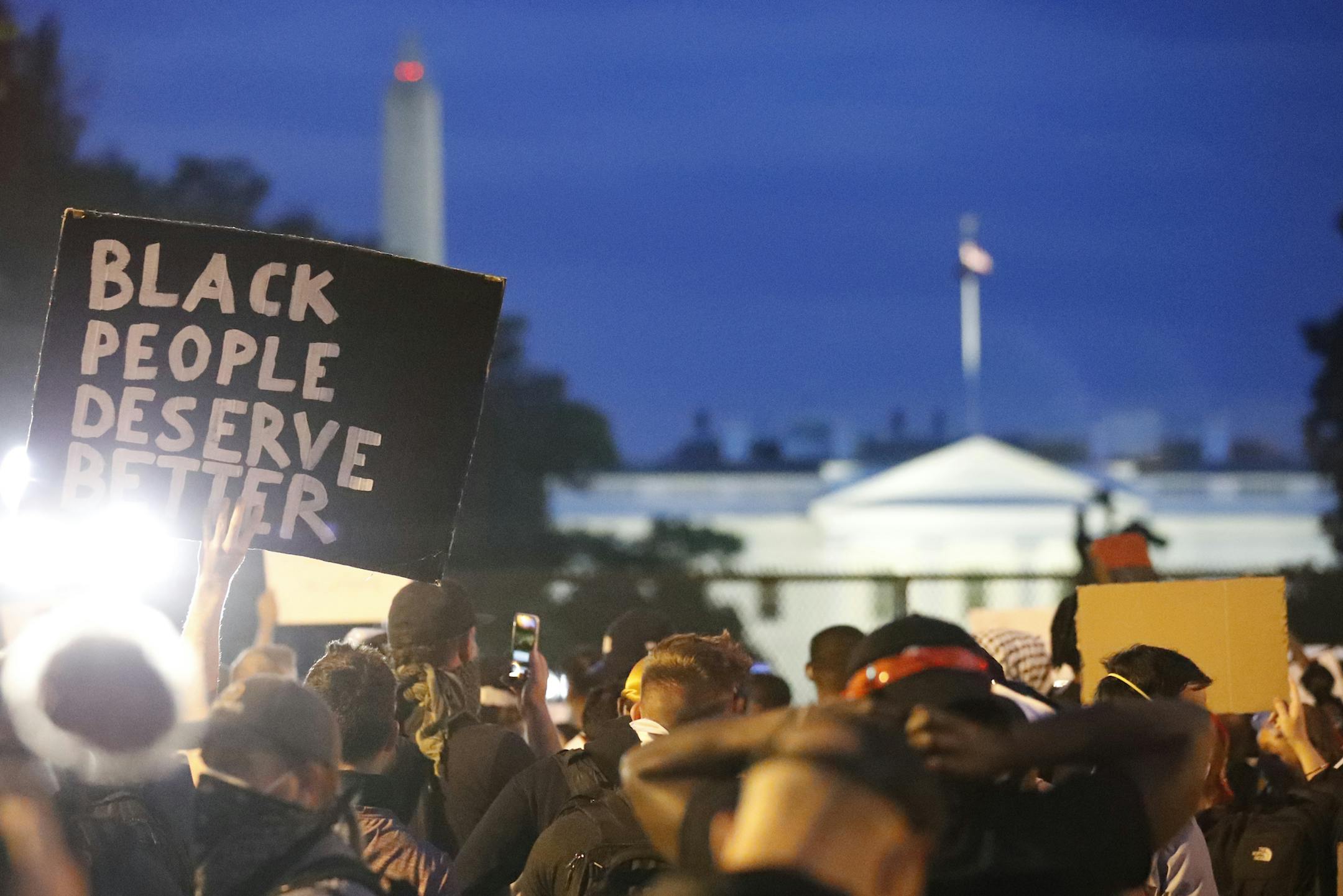
The circumstances that led to the police killings of George Floyd and thousands of other citizens over the years could have been avoided if our elected officials in the 1960s had responded to protesters' demands for socioeconomic inclusion. Instead, policymakers blamed black people for the instability, ignoring the buildup of centuries of racial oppression. They pursued a misguided policy path that has failed to keep communities of color safe for more than 50 years.
The police have long operated as guardians in white and middle-class communities, protecting property from outsiders. But in segregated urban neighborhoods, officials have deployed militarized police forces and expanded the prison system instead of working to address the root causes of the uprisings: mass unemployment, failing public schools, dilapidated housing and the deterioration of basic public goods like clean water.
We can't let history repeat itself. While flames engulf at least 140 cities across the country, we must create a more egalitarian society out of the ashes by transforming policing. The blueprint was laid out in the 1960s — empowering low-income citizens to change their communities in their own vision, and investing in those alternatives at scale. Today we need the courage to act.
President Lyndon B. Johnson recognized the role police brutality and socioeconomic inequality played in urban uprisings when he convened the Kerner Commission in 1967. Its report warned that if American political and economic institutions failed to commit resources "sufficient to make a dramatic, visible impact on life in the urban ghetto," the nation would become increasingly divided along racial lines and plagued by inequality — a "spiral" of segregation, violence and police force. Unfortunately, Johnson and other liberal policymakers distanced themselves from the Kerner report, out of discomfort that the document implicated white racism in fomenting domestic turmoil.
Johnson's racism may have compromised the promise of the Great Society, but his domestic policies leave us with an important policy precedent, a blueprint for getting out of our current crisis. To begin to dismantle the socioeconomic conditions that led to Floyd's premature death, we can look to the principles of community representation and grassroots empowerment that steered the early development of Johnson's domestic program.
The inaugural legislation of the war on poverty, the Economic Opportunity Act of 1964, enshrined a commitment to community involvement in the idea of "maximum feasible participation." Inspired by Saul Alinsky's method for organizing, this principle empowered ordinary citizens to develop their own solutions to cure and prevent the system of racial inequality, with support from the federal government.
Officials from the Office of Economic Opportunity interpreted "maximum feasible participation" to mean the law should help "the poor in developing autonomous and self-managed organizations which are competent to exert political influence on behalf of their own self-interest." Essentially, the Johnson administration and Congress charged the OEO with systematically including poor people in the administration of urban social welfare programs. It was the first and only time in the history of the United States that grassroots organizations received direct federal funding to transform unequal conditions on their own terms.
During the very brief moment when "maximum feasible participation" was given a chance to steer the direction of the war on poverty, activists, organizers and residents of segregated low-income communities throughout the country seized on the idea to realize radical, even revolutionary approaches to restructuring American society, exercising claims to self-determination and autonomy that mainstream civil rights leaders championed in the mid-1960s.


