

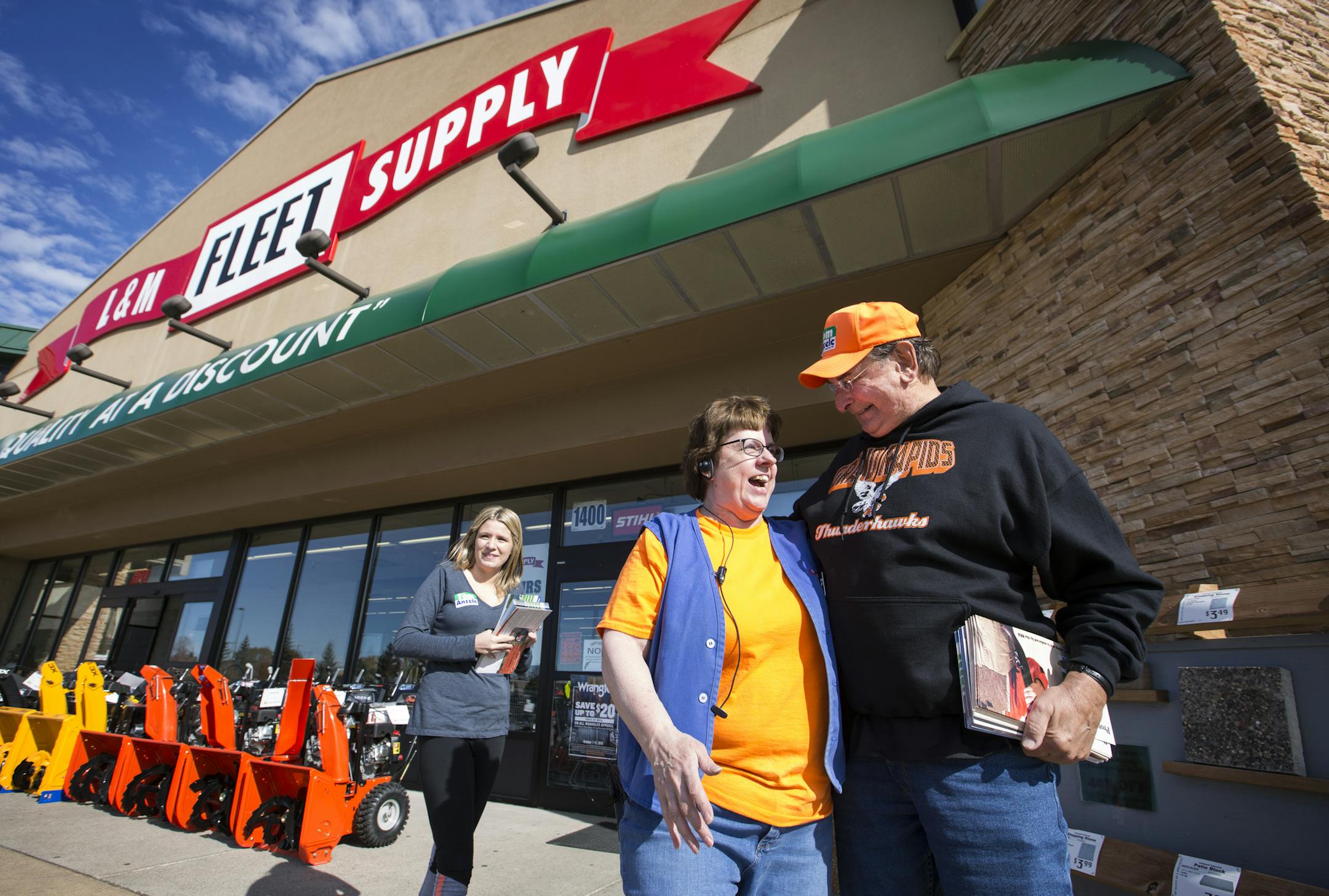
GRAND RAPIDS, Minn. -- State Rep. Tom Anzelc was standing outside an L&M sporting goods and hardware store beaming from all the people he knew from his union days or by way of their kids growing up together.
A man approached and curtly confronted him about his abortion stance before walking away, adding over his shoulder, "If you were really doing your job, wouldn't the mines be booming?"
Minutes later, a store manager appeared and asked him to seek permission from ownership before campaigning.
That's life these days for Anzelc, a DFLer in his fifth term facing a restive and sometimes angry electorate, suffering economic distress during a mining downturn and looking for an unconventional savior in Republican presidential nominee Donald Trump.
Anzelc also faces a tough opponent in Sandy Layman, a well-known economic development consultant who spent eight years as former GOP Gov. Tim Pawlenty's commissioner of the Iron Range Resources and Rehabilitation Board.
The massive, stair-step-shaped district — among the small townships: Smoky Hollow, population 70 — illustrates the challenge faced by the modern DFL, which must stitch together a fragile geographic coalition. To win the seven seats it needs to return to the majority, the House DFL will largely rely on urban and suburban districts but must also keep a lock on the Iron Range and pick off a few areas of rural Minnesota.
The Anzelc-Layman race is matched by equally competitive contests in outstate regional centers like Willmar, Faribault and Red Wing that will help determine whether the House stays Republican.
Minnesota's politics — mirroring a national trend underway for decades — have become geographically divided. While the DFL consolidates its control of urban districts, Republicans have made gains in areas outside the Twin Cities, flipping 10 House seats in 2014.
![Sandy Layman, left, talks with Kyle Kleinendorst while door-knocking for her campaign in Grand Rapids. ] (Leila Navidi/Star Tribune) leila.navidi@startribune.com BACKGROUND INFORMATION: Sandy Layman, former IRRRB commissioner, campaigns for the Minnesota House of Representatives District 05B seat in Grand Rapids on Friday, October 7, 2016. The seat is currently held by Rep. Tom Anzelc, DFL-Balsam Township.](https://arc.stimg.co/startribunemedia/EKWLXAFMNZEY6OEZEPESDKOMBA.jpg?&w=1080)


