

Doing a sequel to a series is tough enough as it is, but doing a prequel almost seems tougher. Not only do you have to create a game experience that reflects on past releases, but you also have to structure something that fits eloquently into the universe, or it throws everything out of whack. Still, more prequels have been succeeding as of late, particularly the previously released "Tomb Raider" and Sony's "God of War: Ascension."
But now it's "Gears of War's" turn, and the pressure is really on Epic Games, as it has handed development duties over to People Can Fly, the developers behind "Bulletstorm." We're not sure what brought this transition forth, but no matter — we were eager to see if the team was up to task in putting Baird and Cole (aka "Cole Train") in the spotlight usually reserved for Fenix and Dom.
Let me say this, though — perhaps this was the change the series needed, because with "Gears of War: Judgment," it feels fresh again. That's not to say it's perfect by any means, but it almost feels as though the excitement is back, thanks to the inclusion of a new structure, some extras that add challenge to each mission and multiplayer that is sure to get the community addicted all over again. The only thing missing is the sheer absurdity that was "Bulletstorm" — but this is "Gears," so no matter.
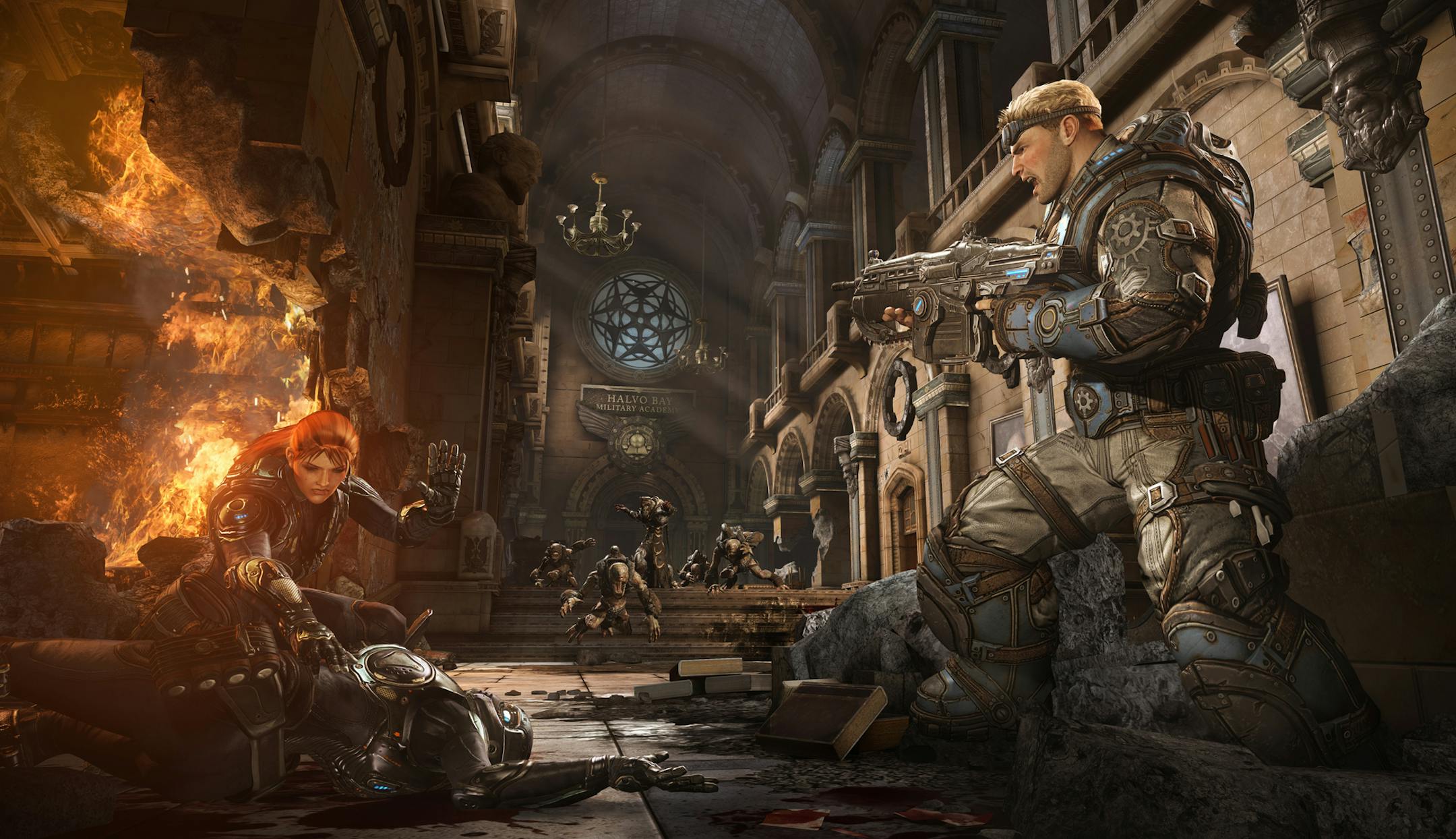
The game follows Baird and his team at Kilo Squad, who are facing a military tribunal for actions I won't spoil here. But each member has a chance to tell his side of the story, and you re-enact these missions, playing through them and laying waste to Locust Horde soldiers. There's different structuring here, though. You play missions in segments, sometimes going from point A to point B, other times taking a Horde-like stance as you defend a position or a robot from harm. It works really well in the game's favor, though — especially considering the addition of the Declassified Missions.
These can be activated at the start of each stage, and doing so adds an extra layer of challenge, such as extra enemies that strike from behind, limited vision or a time limit before everything blasts to smithereens. Turning it on, however, lets you earn extra stars and XP, enabling you to unlock the supplementary Aftermath chapter, as well as being able to level up. Here, skill is everything.
"Gears of War" remains a beast to play, as you'll spend a great deal of time shooting and sawing enemies in half with your Lancer — as you should be. But People Can Fly managed to improve the controls in its own special way. Running around feels much tighter, and the aim feels a bit smoother as well, especially when you're surrounded and need to get your shots off right. It's also helpful being able to throw grenades without selecting them on a sub-bar — sticking them to enemies never felt so good. The only negative is, when you're playing on your own, your teammates can be idiots, sometimes running right past you when you're in need of revival.
Luckily, multiplayer more than makes up for this. You can play through the game in co-op, with up to three people online (or two people locally) to drive your team to victory. And each soldier feels perfectly balanced; there isn't any sort of unfair advantage playing an older character or anything like that.
If you prefer fighting your friends, People Can Fly has you covered as well. Horde Mode is missing, but the new Survival and OverRun Modes fill in wonderfully, with plenty of waves of enemies to defeat and points to overtake. The new Free-For-All Mode is interesting, if only to watch humans saw other humans in half — a first for the series. And of course, Team Deathmatch is back, so you can enjoy the new maps that are offered here in traditional play. It's a lot of fun, with only some minor server issues getting in the way. (Epic will probably address those by the time you hop on, though.)


