

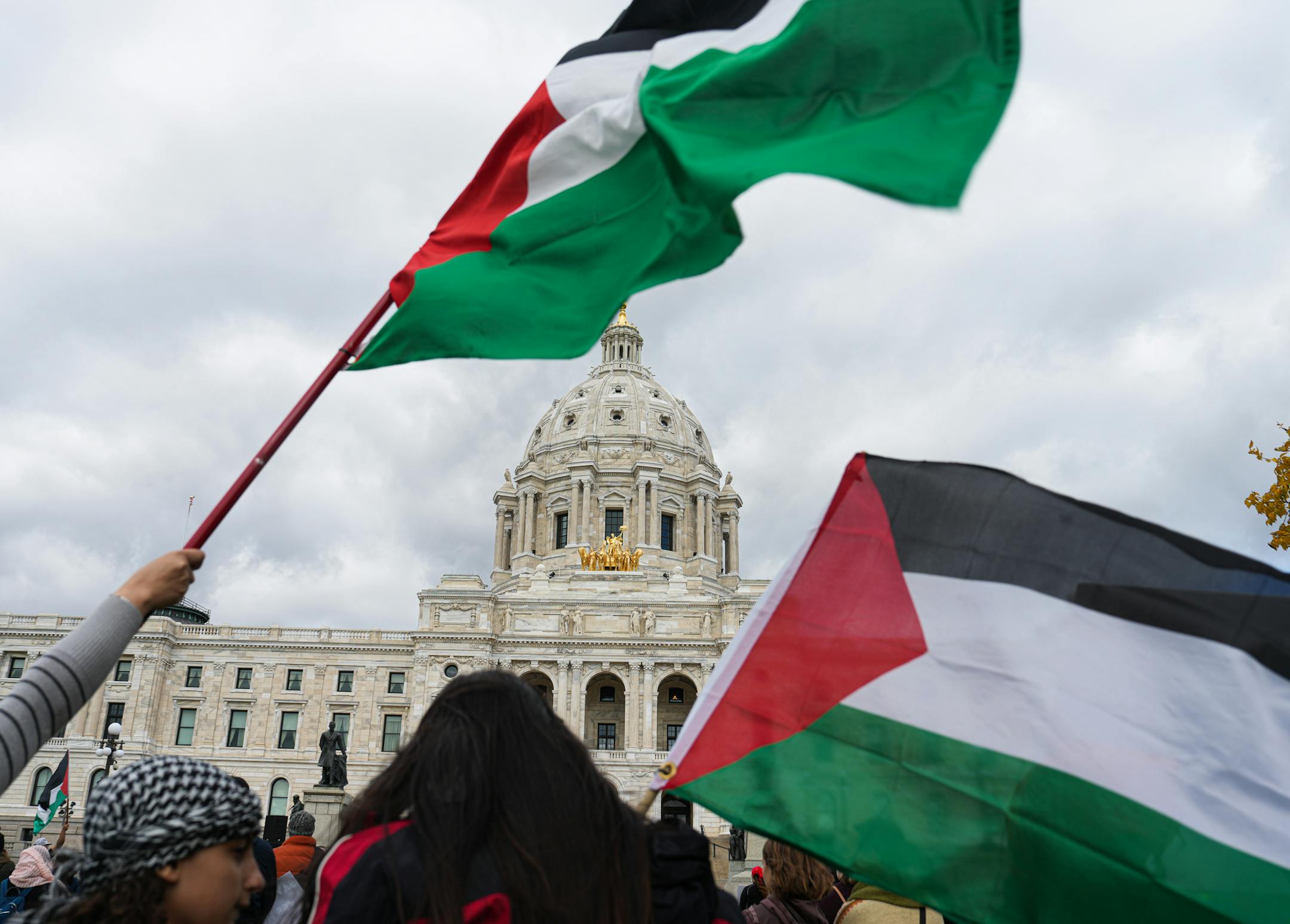
News of a ceasefire in Gaza prompted relief among Twin Cities faith leaders and advocacy groups this weekend — but also uncertainty about what the agreement will truly mean for civilians and whether it marks the start of lasting peace.
Israeli hostages being held in Gaza are expected to be freed Monday as part of a ceasefire that also will include the release of hundreds of Palestinian prisoners plus an influx in food, fuel and other aid to Gaza.
The stand-down comes two years after Hamas-led militants attacked southern Israel on Oct. 7, 2023, killing close to 1,200 people, many of whom were civilians, and taking 250 hostages. In the ensuing war, more than 67,000 Palestinians have been killed, according to Gaza’s Health Ministry, which doesn’t differentiate between civilians and combatants.
Local pro-Palestinian activists described the pause in fighting as both necessary and incomplete, a moment of respite that does not resolve the humanitarian crisis or the political conditions behind it. Supporters of Israel have said that while the future of the deal should be evaluated, the immediate focus should be on providing support to the hostages and their families.
On Sunday, Rabbi Jessica Rosenberg of Jewish Voice for Peace Twin Cities called the ceasefire comforting, but said it did not address “the conditions that led to this violence.”
“Every day without bombs dropping on Gaza is an incredible relief,” said Rosenberg, whose organization opposes U.S. military aid to Israel. “Gaza has been decimated. The people have endured so much death and destruction.”
While Jewish Voice for Peace and other activist groups called for U.S. military policy change, other Jewish organizations focused on relief for Israelis affected by the war.
In a joint statement, the St. Paul and Minneapolis Jewish Federations called the ceasefire a moment to give thanks after “two long years of heartbreak and pain for our community and for our brothers and sisters in Israel.”


