

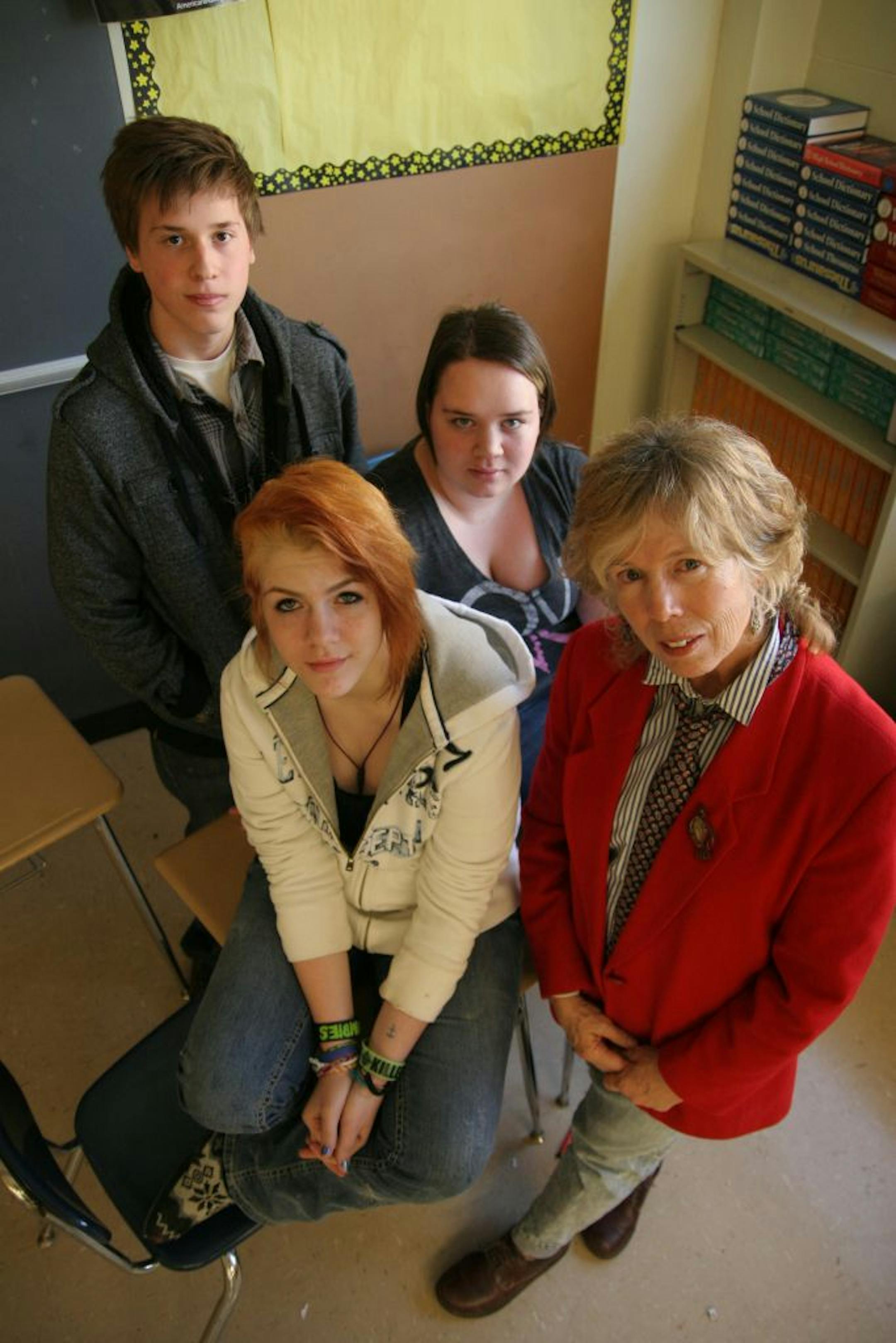
Carlyn Erion looked at sophomore Dan Frazier last year and saw someone who didn't want to be seen.
"He wanted to be invisible and as silent as possible," said the Coon Rapids High School English teacher.
A more confident junior is emerging, in part because of his involvement in the school's Gay-Straight Alliance (GSA) club, both say.
The club is one of 11 in the Anoka-Hennepin District, where adults on the school board, in administrative offices and in the community have agonized for more than a decade over how -- or whether -- to broach issues of sexual orientation at school. The question has taken them from the board room to the courtroom and led to a federal civil rights investigation as the issue has become intertwined with allegations of bullying and harassment tied to sexual orientation.
Meanwhile, student-led GSA clubs in each of the district's middle and high schools have informally given students a venue to work things out.
The clubs are a place where youth can be themselves when schools and families sometimes may want them to be someone else. In the classrooms of mentor teachers, the students share stories, offer support and plan how to transform their world to a place where all people are accepted just as they are.
As the name suggests, not all members are gay, lesbian, bisexual or transgender (GLBT). For that matter, they're not asked to identify themselves by their sexual orientation. Some have been bullied; others have not. The groups are popular not only with GLBT students and their allies, but others who just want a place to fit in, said Barry Scanlan, the district's prevention coordinator.
There are about 4,000 GSA clubs at schools around the country. Research by the Gay-Lesbian-Straight Education Network found that GLBT students in schools with such clubs were less likely to hear slurs daily, more likely to feel safe, to have identified allies among peers and teachers and to feel a sense of belonging at school.


