

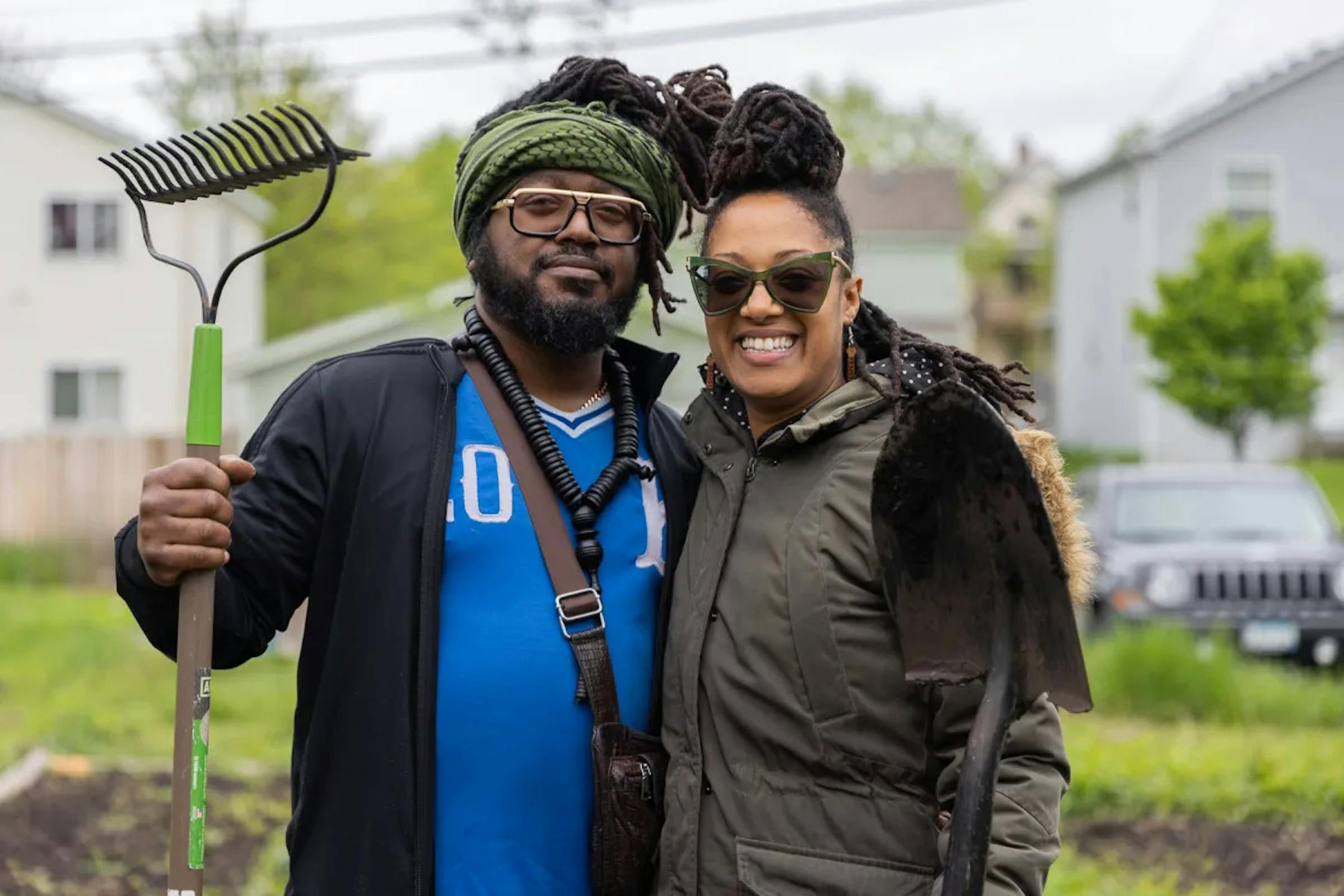
At first, it's hard to spot the garden on a vacant lot at 2131 Penn Av. N. in the Willard–Hay neighborhood.
But when Queen Frye shows up in her gardening clothes — dirt-stained jeans, funky sunglasses and wooden earrings with the word "RESIST" etched on them — the yard comes to life.
The lot sat vacant for 15 years until Frye, an accountant, and Michael Kuykindall, a hair stylist, turned it into R. Roots Garden in 2019.
The couple saw an opportunity to give back to the neighborhood Frye grew up in by creating a direct link to healthy food and a space for community to gather.
On a recent day in late May, rows of bright green seedlings were taking shape, forming rows of mustard greens, cucumbers, zucchini, kale, and bell and hot peppers. Frye pointed out a patch of corn, a plot for nearby high schoolers to garden, and a section for new experiments — eggplant, artichokes and celery. A rain barrel collects water, and a compost system collects yard waste.
Across Minneapolis, gardens have been popping up in vacant lots with increasing frequency. The city now encourages sanctioned vegetable gardening in almost any available spot, from park-owned land to community gardens to abandoned or vacant lots.
Vacant lot gardens provide access to healthy foods and green spaces, said Grace Rude with Homegrown Minneapolis, a city initiative to grow more healthy, sustainable, local foods.
"Gardening and urban agriculture improve the soil quality, and it's important for the climate to support local food," Rude said. "It's way better to have food grown next door with fewer pesticides and less transportation."

