

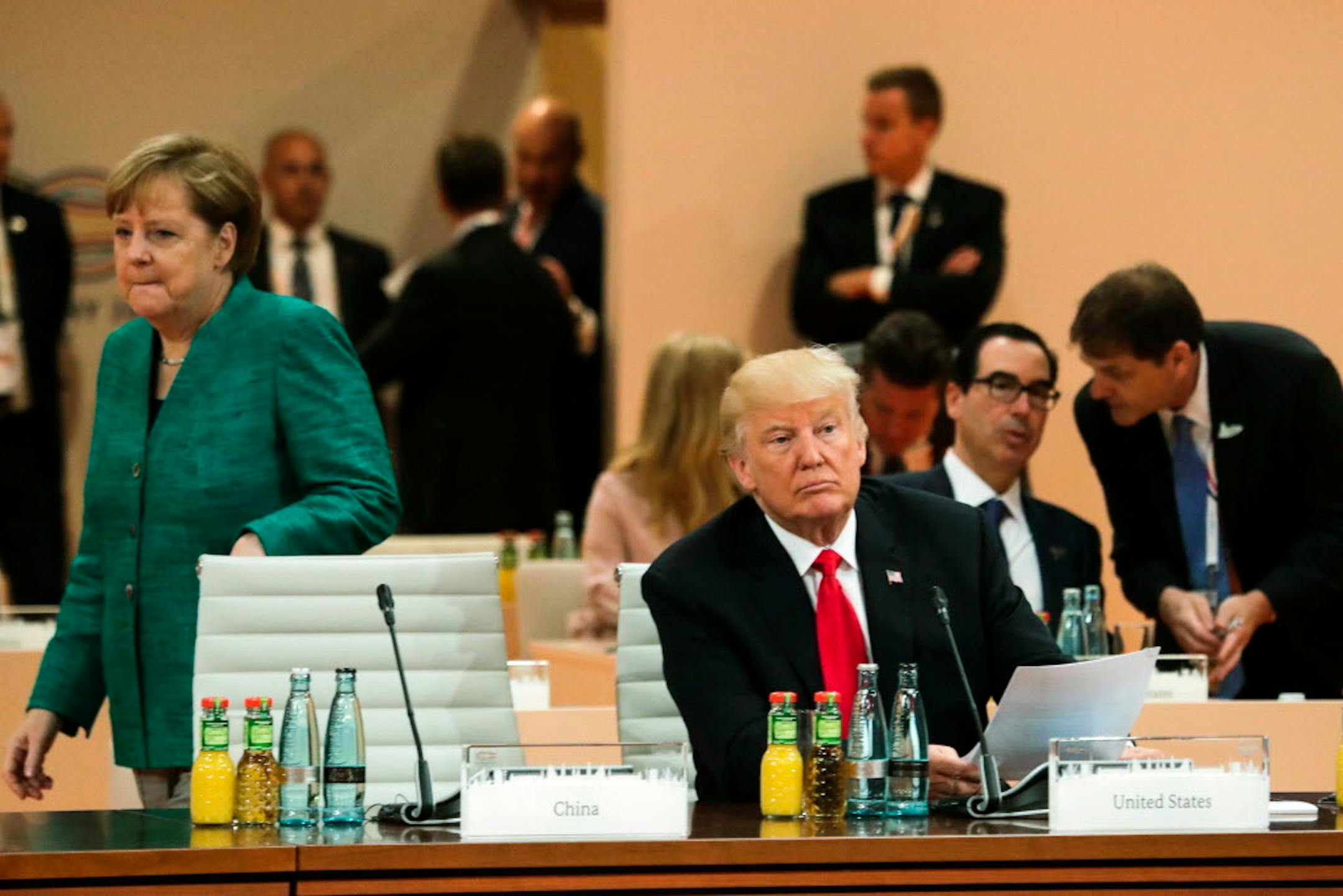
HAMBURG, Germany — World powers lined up against U.S. President Donald Trump on climate change, reaffirming their support for international efforts to fight global warming.
The Group of 20 summit that ended Saturday in Hamburg also revealed tensions on trade, as the U.S. administration and international partners forged a deal that endorsed open markets but acknowledged countries had a right to put up barriers to block unfair practices
The summit's final statement made clear that the other countries and the European Union unanimously supported the Paris climate agreement rejected by Trump. They called the deal to reduce greenhouse gases "irreversible" and vowed to implement it "swiftly" and without exception.
The other countries, from European powers such as Germany to emerging ones such as China and energy producers such as Saudi Arabia, merely "took note" of the U.S. position, which was boxed off in a separate paragraph that the summit host, German Chancellor Angela Merkel, made clear applied only to the United States.
She said the U.S. position was "regrettable" but that the summit had achieved "good results in some areas," and cited a hard-won agreement on trade that included Trump and the United States but did not erase the differences over the issue. She said the talks had been at times "difficult."
Trump's chief economic adviser played down tensions between the U.S. and other nations as the president headed home from his first G-20 summit.
Gary Cohn told reporters aboard Air Force One that while communiques "are never easy," he thought this one "came together pretty reasonably. He said having "a diversity of opinions in a group of 20" was not unexpected.
"To get 20 of your friends to agree to have dinner tonight is pretty hard," Cohn said.


