

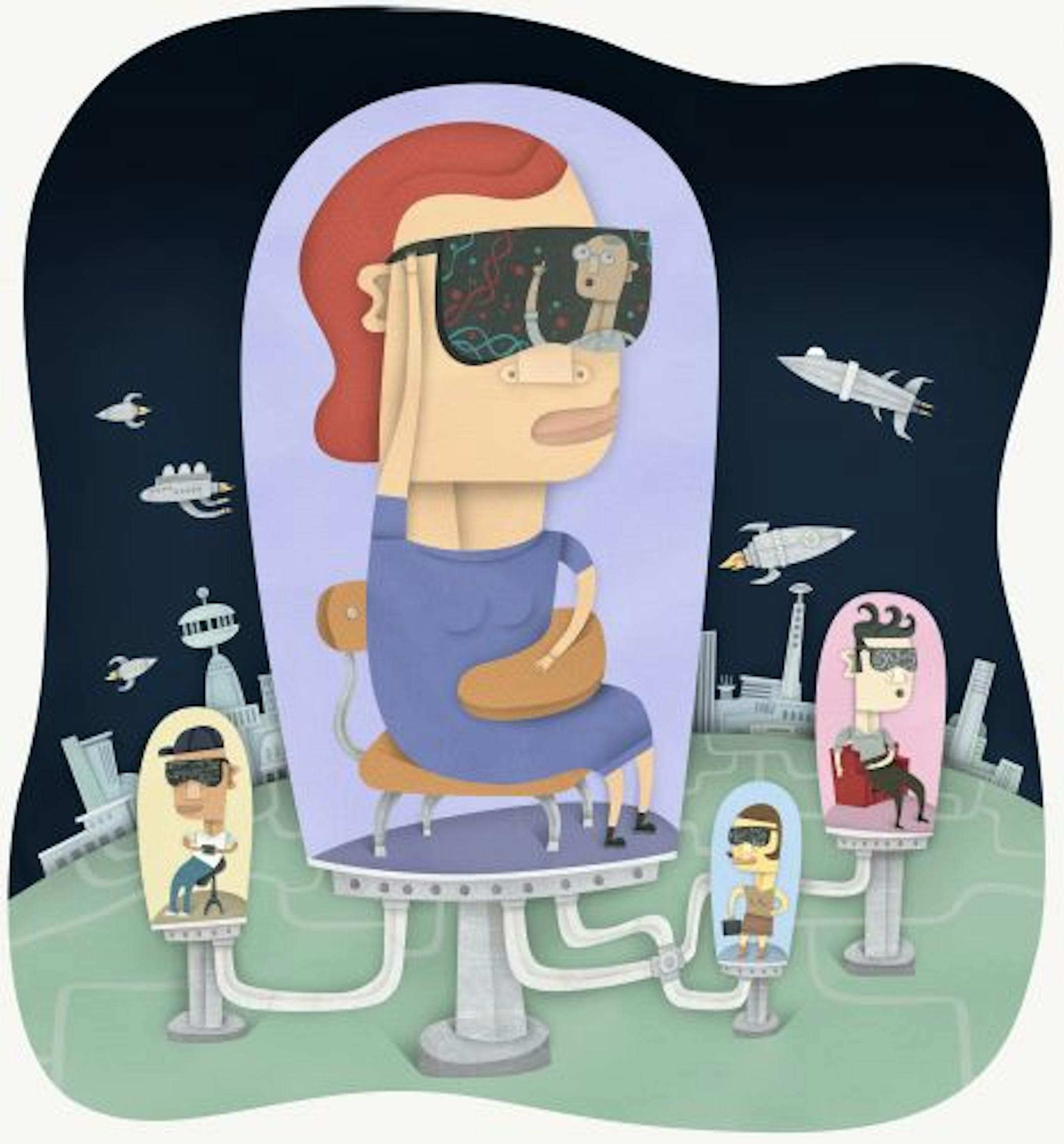
When students wake up in the late 2030s, they won't have to take many steps to go to "class." School subjects will be right at their fingertips via a personal device or in their field of vision in the form of a heads-up display from an ocular implant. A night's worth of learning material will have stacked up for them to ponder, along with assignments from a teacher, notes from fellow students on cooperative projects and maybe even an interactive history lesson.
Education will be 24/7. And technology won't just facilitate remote learning. When kids do go to a school building, maybe once or twice a week, giant 3-D screens will allow them to interact with students and teachers worldwide.
Sound far-fetched? Consider how far we've come in 25 years.
In the mid-1980s, the most "plugged-in" classroom had a small Apple IIe computer in the corner, a TV with a VCR and maybe a player for 12-inch laserdiscs with "interactive" programs. Today, schools that have high-tech equipment boast truly interactive Smart Boards, compact laptops, multimedia projectors and wireless Internet access.
So, sure, it's feasible. The technological seeds for our futuristic scenario have been planted in the form of simpler devices that we already use. The obstacles keeping them from taking root in tomorrow's classrooms include inadequate school funding and a slow-to-change education system that some say needs to be reformed.
"The biggest thing holding back the future of the classroom is the future of the classroom," said Arthur Harkins, a professor at the University of Minnesota who specializes in technology and education. "It's an obsolete question."
For example, he said, students could learn around the clock if schools simply embraced the handheld devices that kids already have. Instead, most schools today confiscate or ban those devices because they are distractions or could be used for cheating.
"Technology is becoming more portable, personalized and inexpensive," Harkins said. "Everything we know about schools is pretty much the opposite direction."


