1:50
1:50The Twins' championship teams of 1987 and '91 largely grew up together in the minor leagues, many of them playing for manager Tom Kelly. Their boisterous clubhouse and prideful, long-standing leaders seemed to benefit them in big games.
An eight-year losing streak ended in 2001 when another group of players who had won together in the minor leagues reached the big leagues.
For years, the Twins have honored their World Series champs on every conceivable occasion. They have also celebrated the Twins of the early 2000s, a team that never made it to a World Series.
There is a reason for this. That group of players fought off the dubious threat of contraction, and played the game the way the more romantic among us believe it should be played — with passion, humor, grit and a sense of brotherhood.
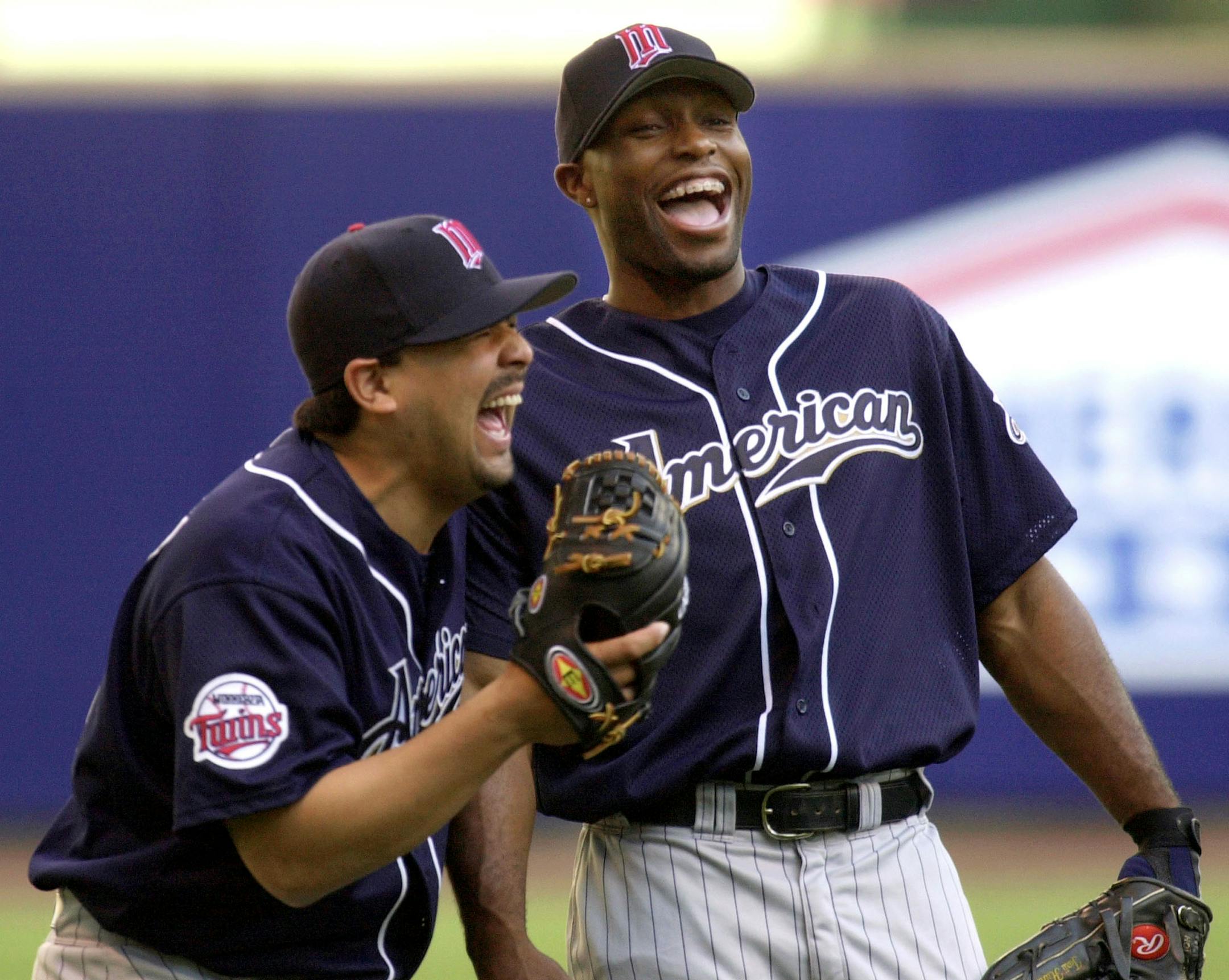
With the return of two of the key players of the early 2000s — outfielder Torii Hunter and closer-turned-bullpen coach Eddie Guardado — the Twins' clubhouse this spring was once again loud and funny, after a handful of years during which it resembled a small-town library.
Their return also brought reminders of how those teams embodied the hard-to-define, easy-to-see characteristic that could be called "baseball competitiveness" — a loose-yet-driven attitude that has marked the Twins' best teams.
There was the time in spring training that Corey Koskie loaded David Ortiz's clothes with ice, to distract him from the large dollop of peanut butter in his underwear. While cursing his teammates about the ice, Ortiz made it halfway across the clubhouse before realizing something was amiss. He began screaming at Koskie, threatening to kill him. Koskie and Hunter were already on the floor, laughing.
There was the time that Koskie hid in the back of Hunter's car after a game at the Metrodome. Koskie popped up halfway home and screamed, "Gimme all your money!" "I'm from the 'hood," Hunter said. "I saw something back there and reached down to grab a pen. I almost stabbed Corey Koskie to death. How would that have looked in the newspaper?