

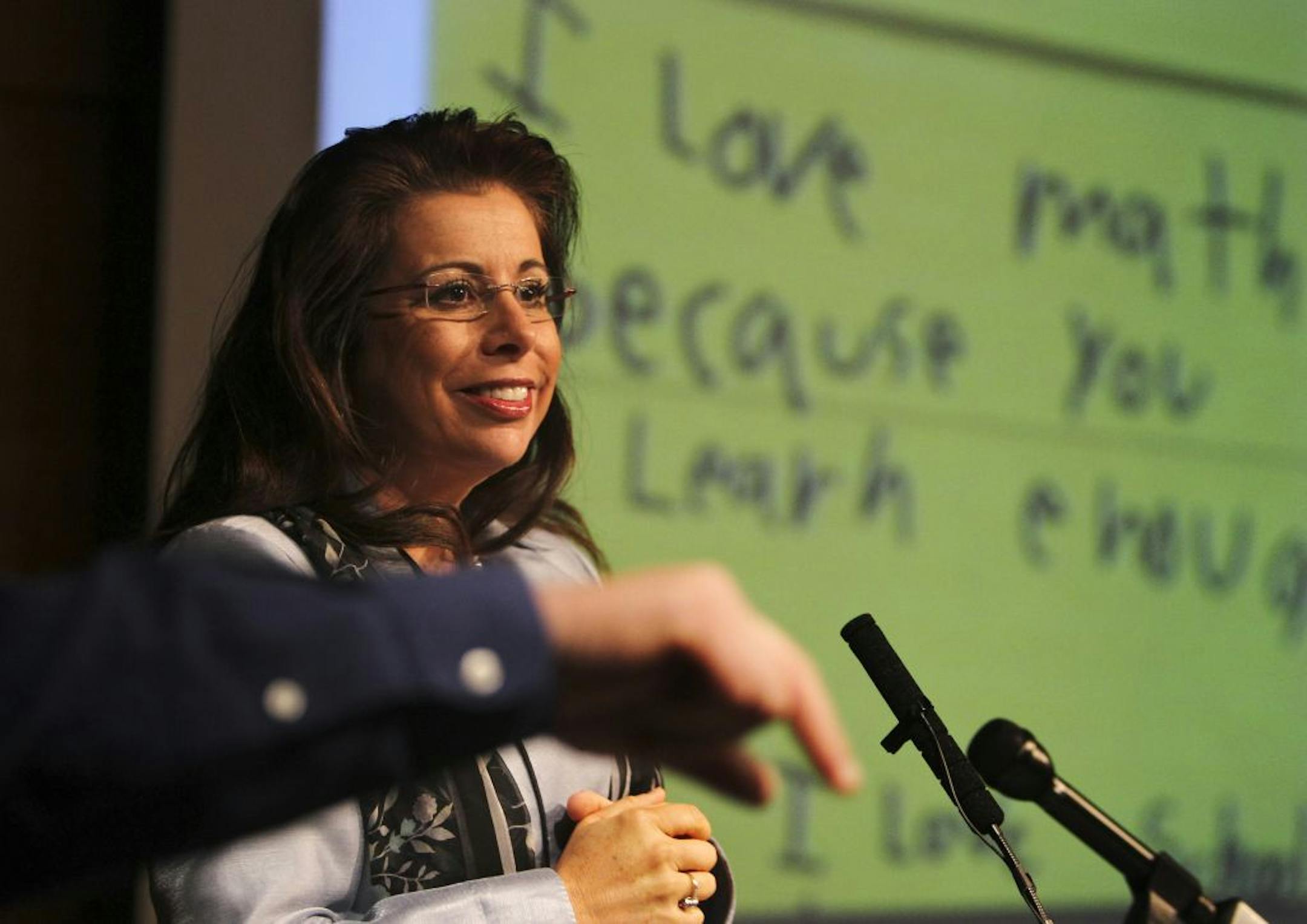
St. Paul schools Superintendent Valeria Silva on Thursday mapped out a new five-year vision for the district that aims to build on a sweeping makeover that has produced promising, yet mixed, results.
Strong Schools, Strong Communities 2.0, the second phase of a districtwide reorganization launched three years ago, would rely on technology-enhanced learning and a doubling down on racial equity efforts as a means to ensure that all district students succeed, Silva said in a State of the District speech.
"I want the country to look at us and say, 'Look at what St. Paul did,' " she said.
But much work needs to be done, and in the case of the district's stubborn racial achievement gap, done so quickly, St. Paul Mayor Chris Coleman said recently.
In 2013, the gap between white and black students testing as proficient in math stood at 45 percent — a disparity described as "horrific" by school Board Member Jean O'Connell. The performance of both groups was up 2 percent over the previous year — 71 percent of whites were proficient in math, compared with 26 percent of blacks — but because the increases were identical, the gap went unchanged.
The district's four-year graduation rate has risen 7 percent, from 59 to 66 percent, Silva noted Thursday. But that is below the district's vision of 80 percent.
St. Paul also has yet to see the enrollment gains or transportation savings that Silva cited as goals when she first introduced the Strong Schools, Strong Communities plan in January 2011.
Since then, however, district voters have approved $9 million annually to use technology to tailor learning to the individual — an initiative that is to be rolled out to ninth-graders beginning next year, Silva said Thursday.


