

 3:14
3:14Recovering from a broken hip, Bob Patrin moved slowly into the sun room of his home in Edina. Waiting on a table were three binders, the testaments to Patrin's 30-year obsession to clear the name of his uncle Frank.
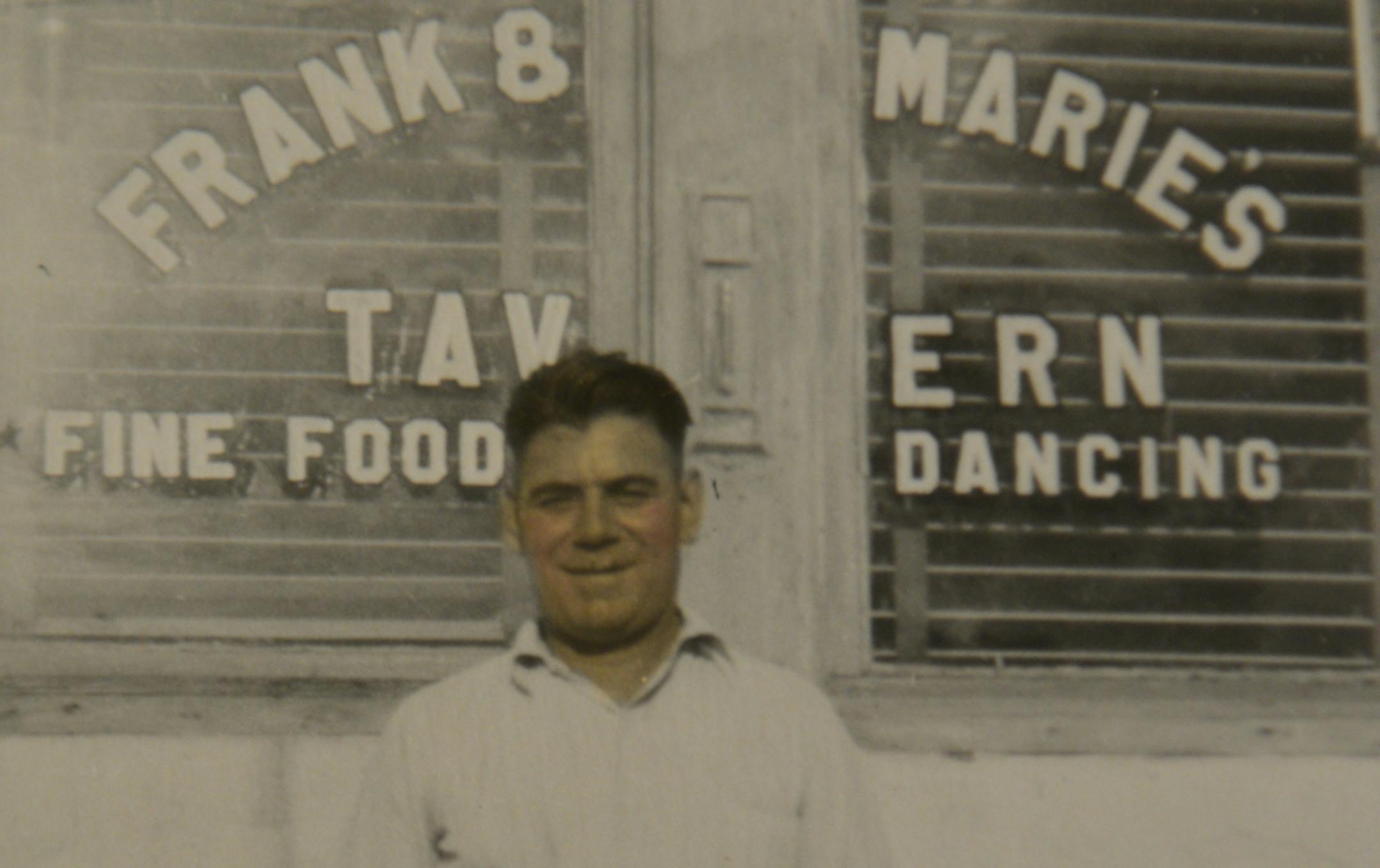
Patrin lowered himself onto a couch and flipped through the binders. Plastic envelopes held photocopied news clippings, a yellowing insurance policy, an old Twin Cities map. He took out a color photograph, circa 1945, of his mother's brother-in-law, Frank Fietek. He's smiling as he stands in front of his new bar just outside the St. Paul city limits. The lettering in the windows reads: Frank & Marie's Tavern, Fine Food, Dancing.
Then, a copy of a death certificate dated March 4, 1946. Name of deceased: Frank Fietek. Age: 42. Cause of death: Strangulation, due to hanging.
The death merited a three-paragraph story in the newspaper that left no doubt that it was self-inflicted. "Relatives said the man, discharged from the Army because of his age, had been despondent after recently breaking both legs in an accident."
Patrin was a teenager when his uncle died, and his family hid the article from him. He discovered it in his mother's papers years later, and what seemed to him the sheer absurdity of the official account compelled him to try to set the record straight.
Patrin, who's 84, a retired University of Minnesota employee and a sports historian, has told his version of the story over and over again, and sometimes you have to yank him out of his memories to get to the point. Yet he is consistent: There was no accident, no suicide. Patrin is convinced that his uncle died at the hands of gangsters, because he got in on the liquor business without their permission, and then proved too bullheaded to heed their increasingly violent overtures.
Patrin thinks he knows who did it, but no cop would even make an arrest on the evidence he offers. Yet given the suspicious events preceding Fietek's death, the authorities should not have left it up to his nephew to do a real investigation decades after justice could be served.
Growing up on Rice Street during the Great Depression, Patrin got an early education in the violent code of old St. Paul. He said that as a child, he pushed his way through a crowd to see the body of Homer Van Meter, a John Dillinger lieutenant gunned down by police at Marion and University in August 1934.
![Bob Patrin has made a 30-year effort to clear the name of his dead uncle Frank Fietek. Frank got on the mob's wrong side in the mid-1940s and shortly thereafter was found dead in his basement, hanging from a pipe. Patrin makes a strong circumstantial case that it was murder, not suicide. ] .Richard.Sennott@startribune.com Richard Sennott/Star Tribune Edina Minn.Wednesday 5/28/2014) ** (cq)](https://arc.stimg.co/startribunemedia/MX2MQKPE76TEPPKBDMME2U3DE4.jpg?&w=1080)
![Bob Patrin has made a 30-year effort to clear the name of his dead uncle Frank Fietek. Frank got on the mob's wrong side in the mid-1940s and shortly thereafter was found dead in his basement, hanging from a pipe. Patrin makes a strong circumstantial case that it was murder, not suicide. ] .Richard.Sennott@startribune.com Richard Sennott/Star Tribune Edina Minn.Wednesday 5/28/2014) ** (cq)](https://arc.stimg.co/startribunemedia/TQDQ72L63G2NWM3IR5KRVIPO64.jpg?&w=1080)
![Bob Patrin has made a 30-year effort to clear the name of his dead uncle Frank Fietek. Frank got on the mob's wrong side in the mid-1940s and shortly thereafter was found dead in his basement, hanging from a pipe. Patrin makes a strong circumstantial case that it was murder, not suicide. This is a news clipping of his death from a St Paul news paper ] .Richard.Sennott@startribune.com Richard Sennott/Star Tribune Edina Minn.Wednesday 5/28/2014) ** (cq)](https://arc.stimg.co/startribunemedia/ULHU6XVXYZ6RC4K7QCHBYNYNYQ.jpg?&w=1080)


