
Fruit breeders hit sweet spot

August 17, 2013 at 9:40PM
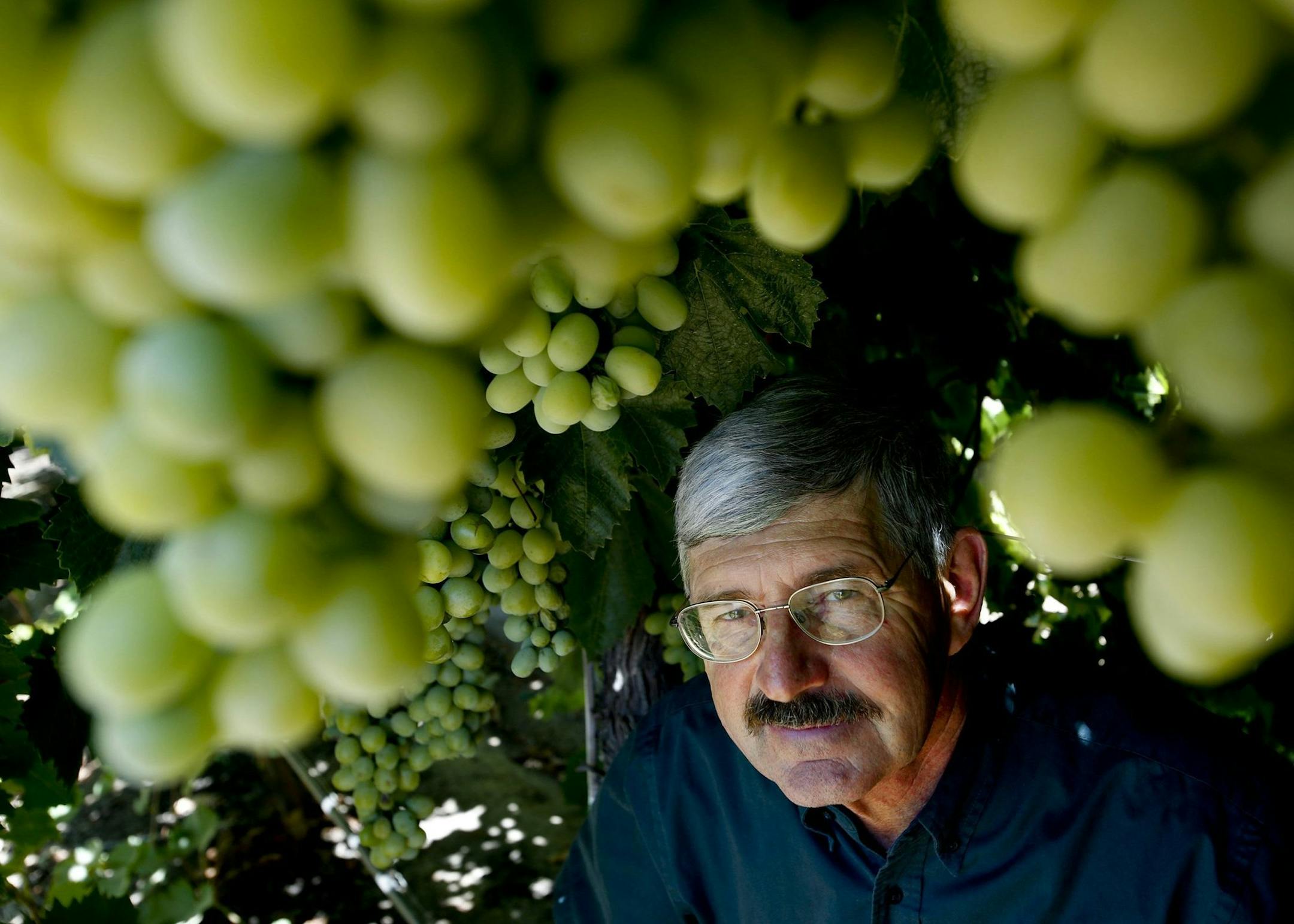
Geneticist David Cain with the Cotton Candy Grape at International Fruit Genetics. Cain spearheads the Delano, California, facility, marrying select traits across thousands of nameless trial grapes, seeking varieties that pack enough sugar to capture consumer tastes. "Weíre competing against candy bars and cookies," he said. (Anne Cusack/Los Angeles Times/MCT) ORG XMIT: 1141782
Geneticist David Cain with the Cotton Candy grape at International Fruit Genetics, one of many companies seeking to develop varieties of fruit that pack enough sugar to capture consumer tastes. “We’re competing against candy bars and cookies,” he said. (The Minnesota Star Tribune)

LOS ANGELES – It's not easy peddling fresh fruit to a nation of junk-food addicts. But in rural Kern County, Calif., David Cain is working to win the stomachs and wallets of U.S. grocery shoppers.

Cain is a fruit breeder. His latest invention is called the Cotton Candy grape. Bite into one of these green globes and the taste triggers the unmistakable sensation of eating a puffy, pink ball of spun sugar.

By marrying select traits across thousands of nameless trial grapes, Cain and other breeders have developed patented varieties that pack enough sugar they may as well be Skittles on the vine. That's no accident.

"We're competing against candy bars and cookies," said Cain, 62, a former scientist at the U.S. Department of Agriculture who now heads research at privately owned International Fruit Genetics in Bakersfield, Calif.

In an intensely competitive marketplace, breeding and branding have become almost as valuable to farmers as sun and soil. Producers are constantly tinkering, hoping to come up with the next Cuties Clementine orange or Honeycrisp apple — distinct products that stand out in the crowded fruit aisle.

"People are looking for more flavor," said Mark Carroll, senior director for produce and floral at Gelson's Markets, which will carry the Cotton Candy grape. "Once they get hooked, they want more no matter what."

Cain's company, in the heart of California's $1.1 billion table grape industry, specializes in bold flavors and exotic shapes. Purple-hued Funny Fingers are long and thin like chili peppers. A variety named Sweet Sapphire come as round and fat as D batteries. Like the Cotton Candy, the special varieties are patented, then licensed to growers. The Funny Fingers are marketed as Witch Fingers and are available at high-end supermarkets. The Cotton Candy will be available this month.

Ordinary grapes like the red Flame Seedless can cost as little as 88 cents a pound. The Cotton Candy could fetch around $6 a pound, though prices would come down if enough growers cultivate the grape.
The U.S. designer-fruit craze kicked into high gear in the late 1980s. That's when a Californian plum-apricot hybrid called the pluot hit the market. The crispy stone fruit, which took 20 years to develop, proved such a hit with consumers that it inspired more farmers to invest in breeding programs to boost sales.

California is now churning out other sweet inventions, including apriums (a pluot but with more apricot), peacharines (peach and nectarine) and cherums (cherry and plum).

Not to be confused with GMO engineering, cross-breeding techniques employed by fruit breeders are centuries old. In the case of grapes, pollen from male grape flowers is extracted and then carefully brushed onto the female clusters of the target plant. Then comes a lot of waiting. Then replanting. Then repeating the process — for years, even decades.

"It's a bit like fishing. You never know when you're going to get the big one," said Cain, a soft-spoken man who would look every bit the lab coat-clad scientist if it weren't for the soil under his nails.

Fruit breeders have made California No. 1 when it comes to grapes. Almost all the table grapes commercially grown in the U.S. come from the Golden State, which shipped a record 100 million boxes last year.

Still, to stay competitive in the nation's lunchboxes, growers must keep developing new tastes.


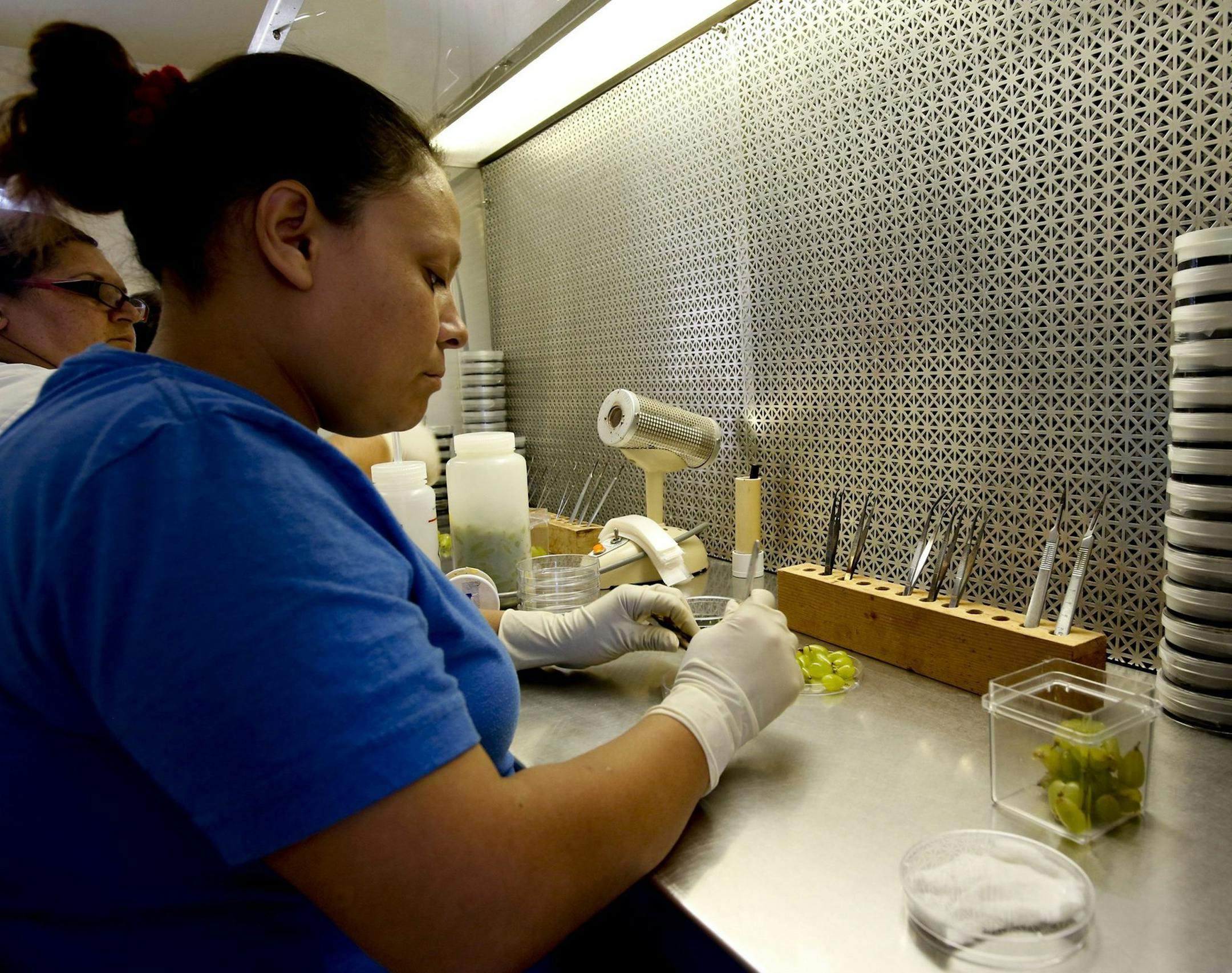
Angelica Ayala removes seeds from grapes and places them in a petri dish in the lab at International Fruit Genetics. Geneticist David Cain spearheads at the Delano, California, facility, marrying select traits across thousands of nameless trial grapes, seeking varieties that pack enough sugar to capture consumer tastes. "Weíre competing against candy bars and cookies," Cain said. (Anne Cusack/Los Angeles Times/MCT) ORG XMIT: 1141782
Angelica Ayala removed seeds from grapes and placed them in a petri dish in a lab at International Fruit Genetics. (The Minnesota Star Tribune)
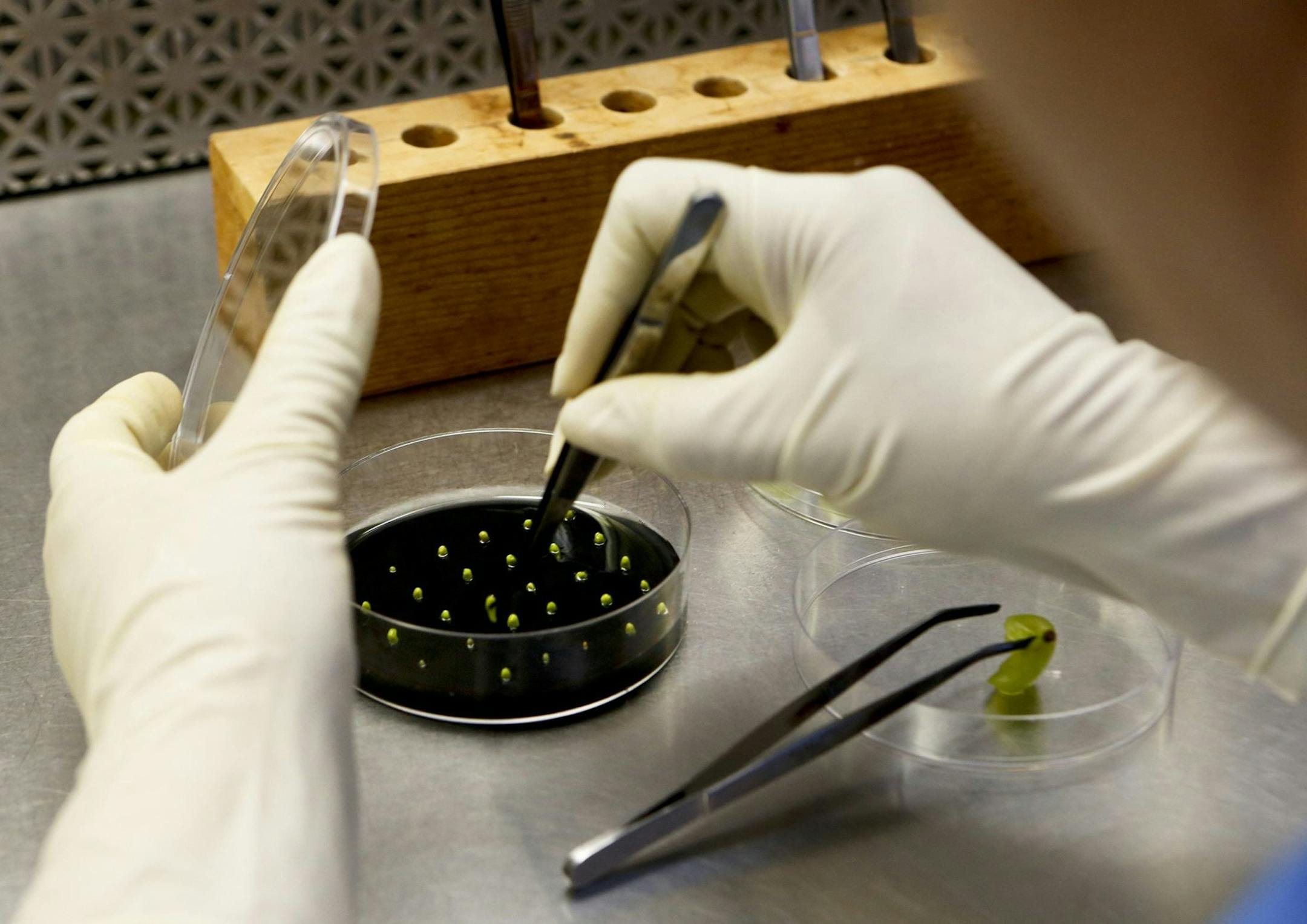
Grape seeds are placed in a petri dish in the lab at International Fruit Genetics. Geneticist David Cain spearheads a the Delano, California, facility, marrying select traits across thousands of nameless trial grapes, seeking varieties that pack enough sugar to capture consumer tastes. "Weíre competing against candy bars and cookies," Cain said. (Anne Cusack/Los Angeles Times/MCT) ORG XMIT: 1141782
Grape seeds were placed in a petri dish in a lab at International Fruit Genetics. Geneticist David Cain spearheads at the Delano, Calif., facility, marrying select traits across thousands of grapes. (The Minnesota Star Tribune)
about the writer

about the writer

David Pierson Los Angeles Times

More from No Section

See More
FILE -- A rent deposit slot at an apartment complex in Tucker, Ga., on July 21, 2020. As an eviction crisis has seemed increasingly likely this summer, everyone in the housing market has made the same plea to Washington: Send money — lots of it — that would keep renters in their homes and landlords afloat. (Melissa Golden/The New York Times) ORG XMIT: XNYT58
Melissa Golden/The New York Times

It’s too soon to tell how much the immigration crackdown is to blame.