

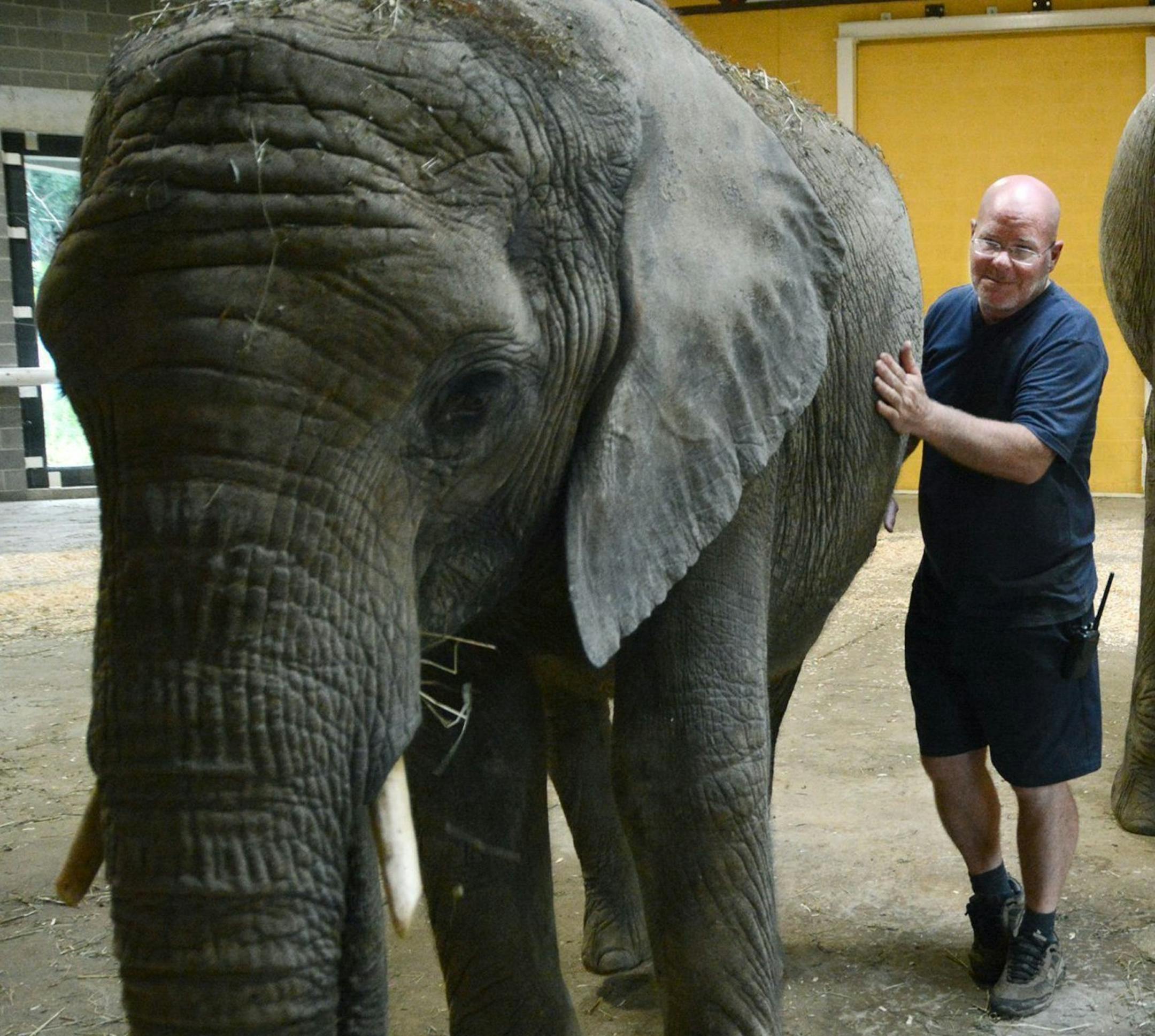
PITTSBURGH – In the last decade in Africa, ivory poachers have eliminated some 70 percent of the wild elephant population. In zoos around the world, natural reproduction and artificial insemination are difficult.
But at zoos in Austria and England, two baby elephants were artificially fathered with sperm gathered from South African wild elephants in a project spearheaded by international partners, including the Pittsburgh Zoo and PPG Aquarium.
For the first time, elephant genetic material gathered in the wild was frozen and used to artificially inseminate captive female elephants that delivered calves.
Previous attempts to freeze elephant semen samples for artificial insemination failed.
The process is still experimental but considered promising by international elephant conservation groups.
Project Frozen Dumbo is a partnership among the Leibniz Institute for Zoo and Wildlife Research in Berlin, the Pittsburgh Zoo, the Vienna Zoo and ZooParc de Beauval in France. It originated through discussions between Barbara Baker, president and CEO of the Pittsburgh Zoo, and Thomas Hildebrandt, a reproductive specialist at the Leibniz Institute.
"The success of this procedure creates more opportunities to introduce new genetics into the African elephant population among zoos, diversifying the population," Baker said.
In 2011, teams from the Pittsburgh Zoo and Leibniz Institute, including Baker and Hildebrandt, traveled to the Phinda Resource Reserve in South Africa to help wildlife researchers tranquilize and collect sperm from 15 wild elephants. The material was frozen using Hildebrandt's process, which led to the two successful births in Europe in 2013 and 2014. A third elephant inseminated through the process is now pregnant at another zoo in England.


