

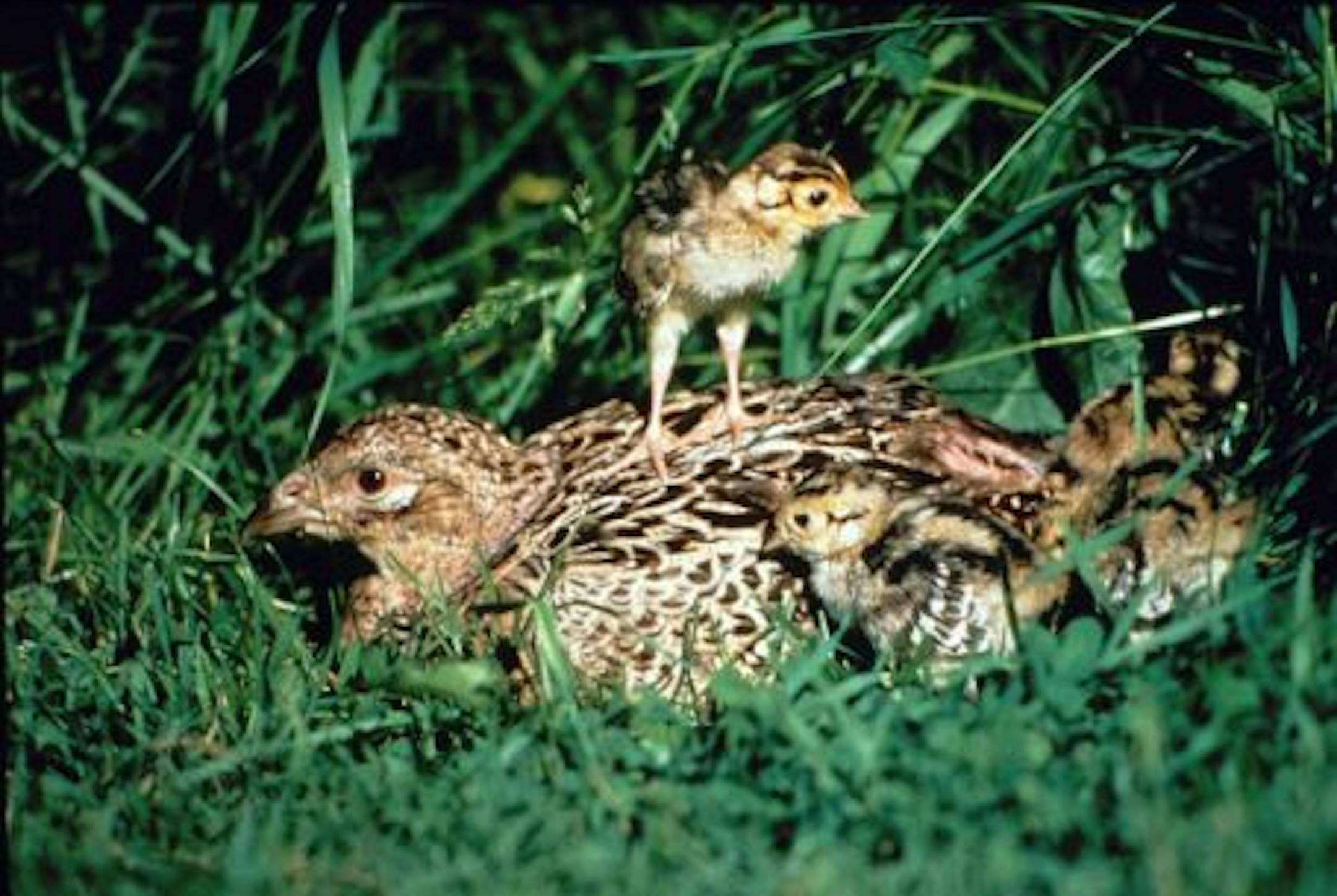
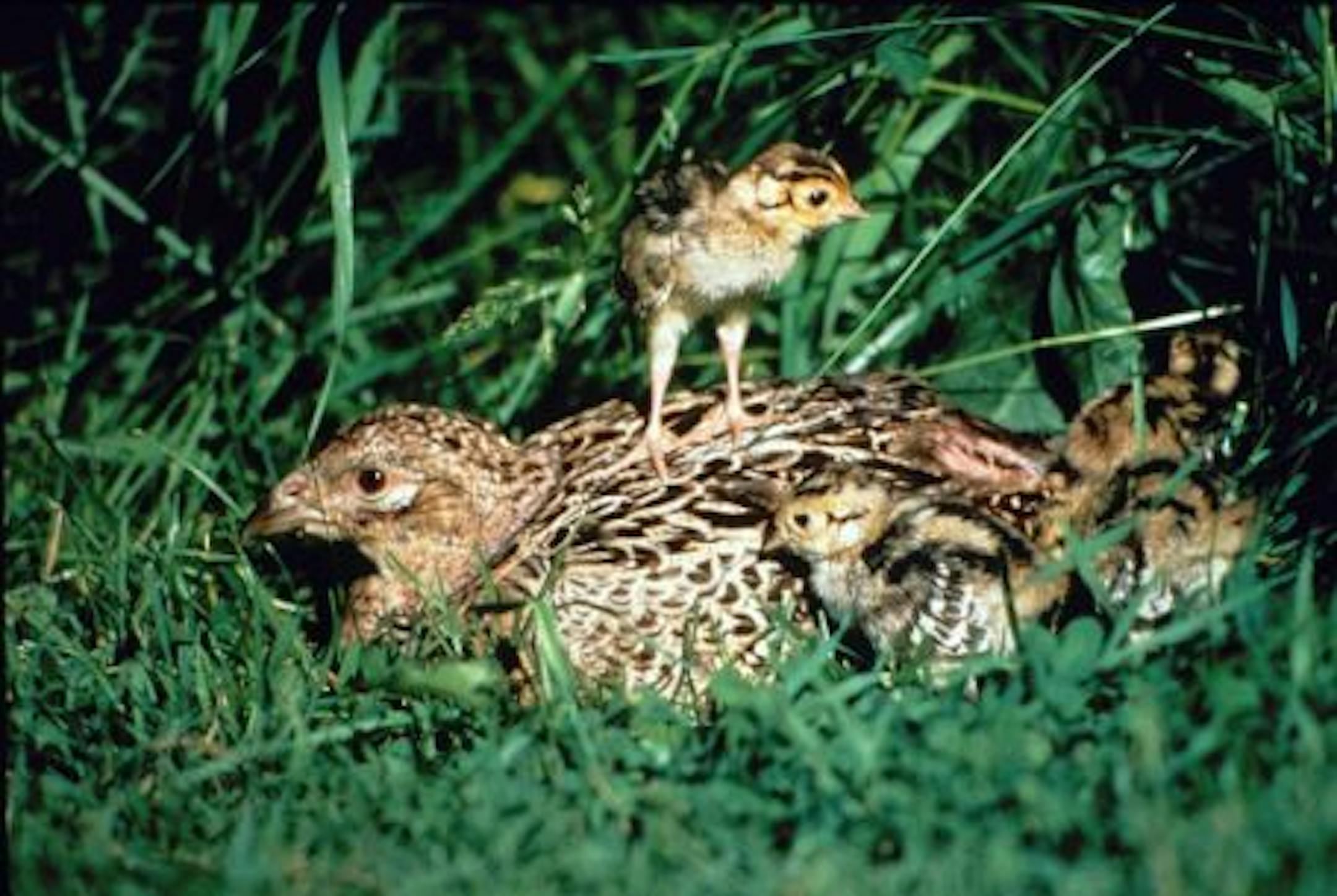
Young pheasant chicks are incredibly vulnerable to death by exposure. The good news is that this weekend's cold snap didn't occur at the peak of hatch.
It's been well-documented that pheasants have had a tough go of it the last few years. We've expired 7 million acres of CRP habitat and are coming off a harsh winter for the birds. For any hope of a rebound, we need to avoid a cold and wet spring. Consequently, this weekend's frosty temps across much of the upper Midwest had me concerned about pheasant reproduction. For a little insight, I called a handful of Pheasants Forever biologists this morning to get their take.
A Warm and Buggy Start to Spring
Across much of the pheasant range, we've had an early and warm spring, which has helped green things up quickly. Although most early nests are established in dead vegetation from the previous year, this year's early green vegetation does offer good cover for nesting hens. Likewise, the early warmth has kicked insect production into gear. While those insects aren't important to hens on the nest, the bugs are critical once the chicks hatch from those eggs. You may be surprised to learn that insects represent more than 90 percent of a pheasant chick's diet during their first week of life and half of the youngster's diet the entire first month. There have been reports of broods in southern Iowa starting on April 30th this year; that's very early!
A Welcome Lack of Gully Washers
The other major factor in spring reproduction is the amount of precipitation. We need the right amount of rain to green things up, but a gully washer can spell doom. With the loss of big habitat blocks, pheasant hens tend to focus on ditches, roadsides, drainage areas, and other places holding some concealment cover. Unfortunately, these areas tend to gather water during heavy rain events, which results in washed away or submerged nests. So far, it's been a relatively quiet spring across most of the pheasant range for major precipitation events.
A Frosty Weekend
There is some small cause for concern as a result of this weekend's cold temperatures across portions of the pheasant range's northern tier. The issue centers on laid eggs versus the start of egg incubation. For instance, if a hen had laid 8 eggs by Friday evening, but hadn't started the incubation process, then those eggs were likely left unprotected overnight. Pheasant hens don't start incubating their eggs until the entire clutch has been laid. Eggs left unprotected during abnormally low temperatures could potentially chill and die.


