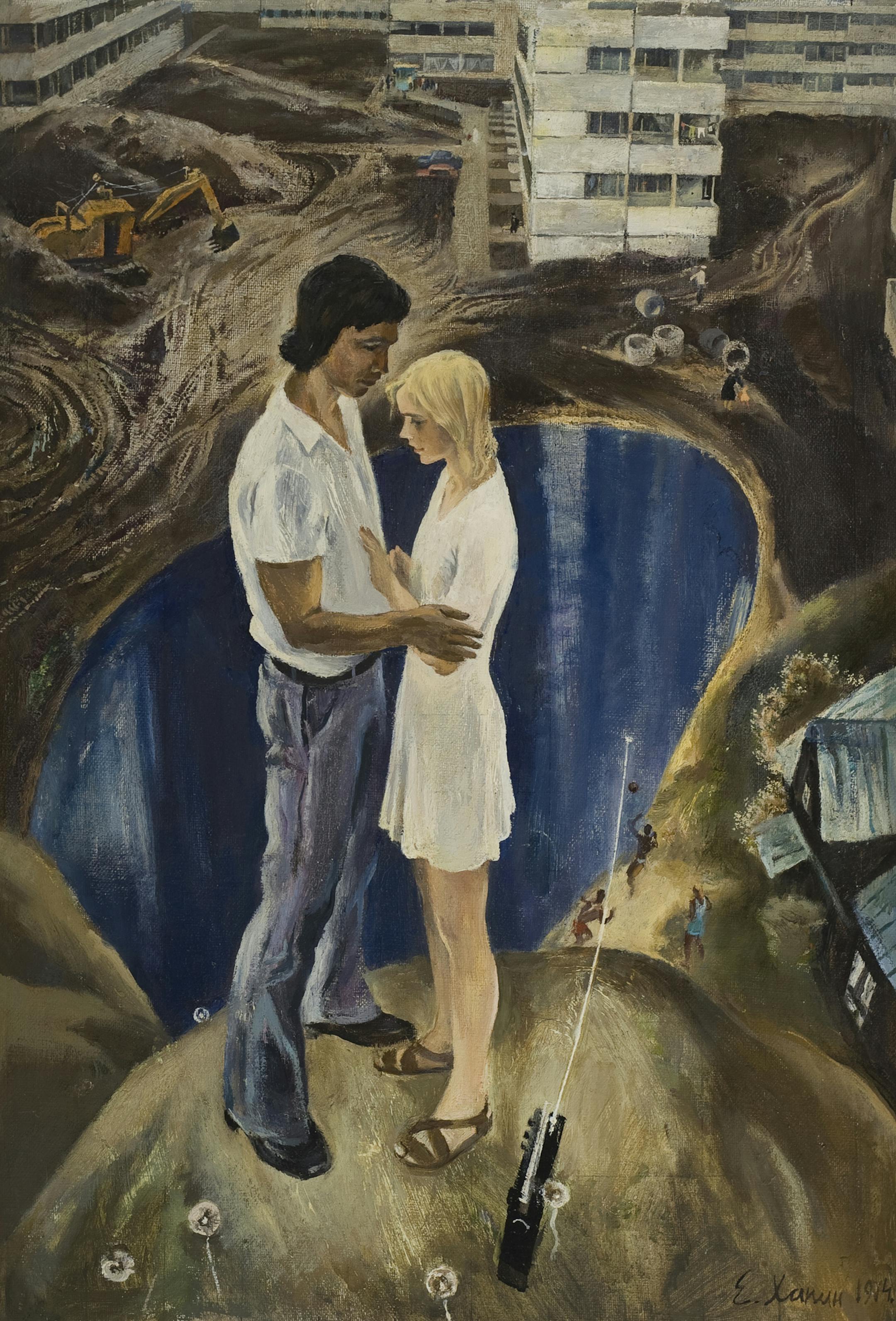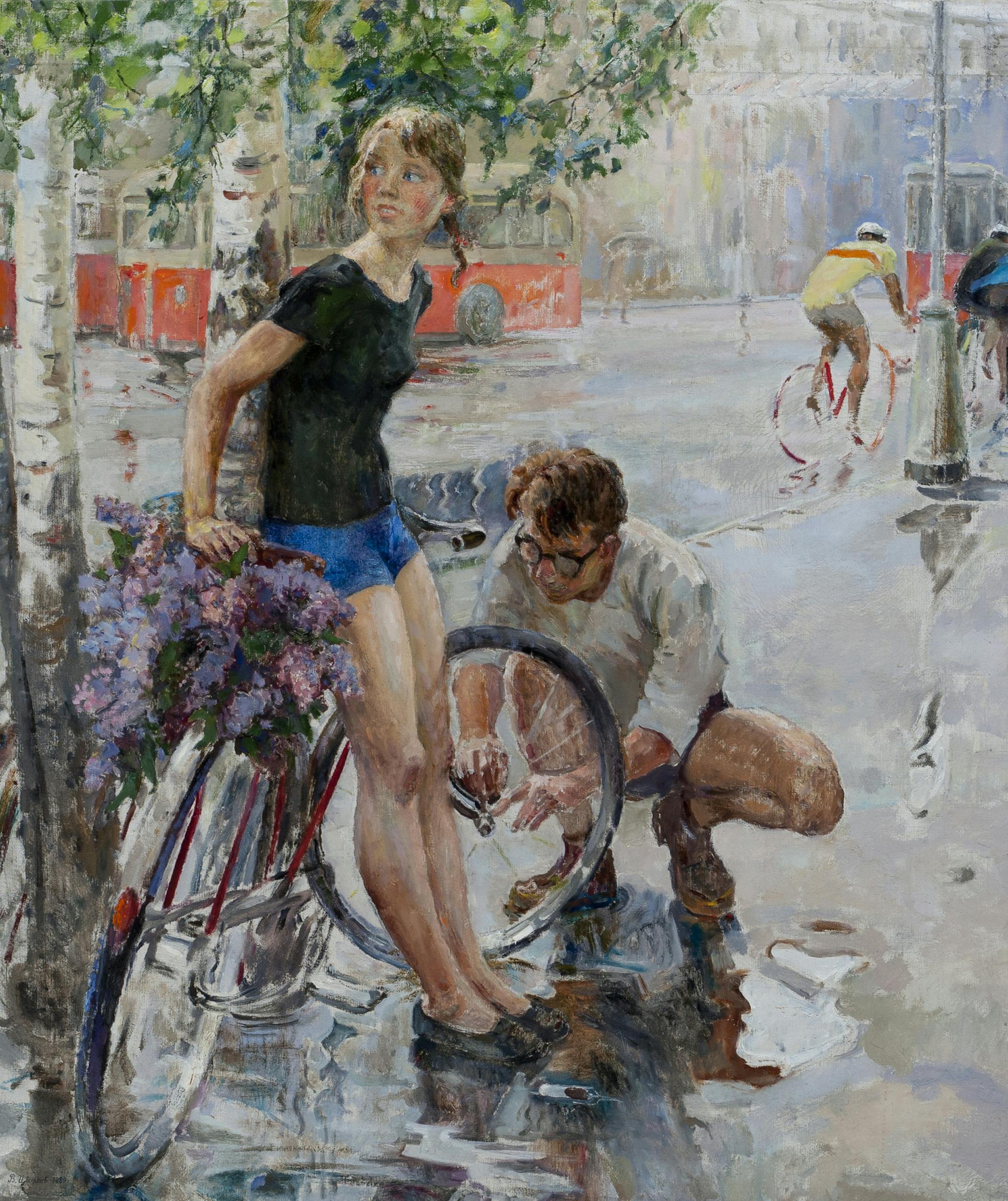
Love flourished in the Soviet Union even as the country strove to reinvent itself as a worker's paradise where citizens were expected to adore the Motherland more than the pretty girl or handsome guy running the jackhammer next door.
That is the premise of "Romance in Soviet Art," on view through Sept. 20 at the Museum of Russian Art in south Minneapolis.
Humans being the hormone-infused creatures that they are, the persistence of love and romance is not surprising. What's clever, and so enjoyably instructive, about this exhibition is the way Russian-born curator Masha Zavialova points out the simmering sexual frisson in otherwise conventional Soviet-era paintings and then uses the pictures to explain how the state tried to shape intimate relationships in her former homeland during the era following World War II.
On loan primarily from Twin Cities collectors, the 40 paintings date from 1946 to roughly 1993, when the Soviet Union collapsed in economic turmoil. Their stylistic range — from lush Impressionistic brushwork through posterized Socialist Realism to a gritty manner known as the Severe style — subtly echoes the political upheavals of the time.
Love in a time of desolation
Art was a quasi-official tool of public policy in the Soviet Union, where artists received rigorous technical training and were expected to produce images that furthered state goals and ideals.
At the show's entrance, Fedor V. Antonov's 1946 painting "The Confession" suggests the role young lovers were expected to play in rebuilding their country after an estimated 20 million Russians died — many of starvation — defending their country against Hitler's onslaught.
In Antonov's picture a heroic young soldier with two medals on his uniform confesses his love to his demure sweetheart on a hilltop overlooking a bucolic valley dotted with piles of ripe grain and pretty plumes of lavender smoke wafting from distant factories. At a time when Soviet factories were still shuttered and its fields bare, the painting was a total fantasy intended to inspire rather than to depict reality. Stylistically it is pure Monet, right down to the grain stacks and twilight smoke.
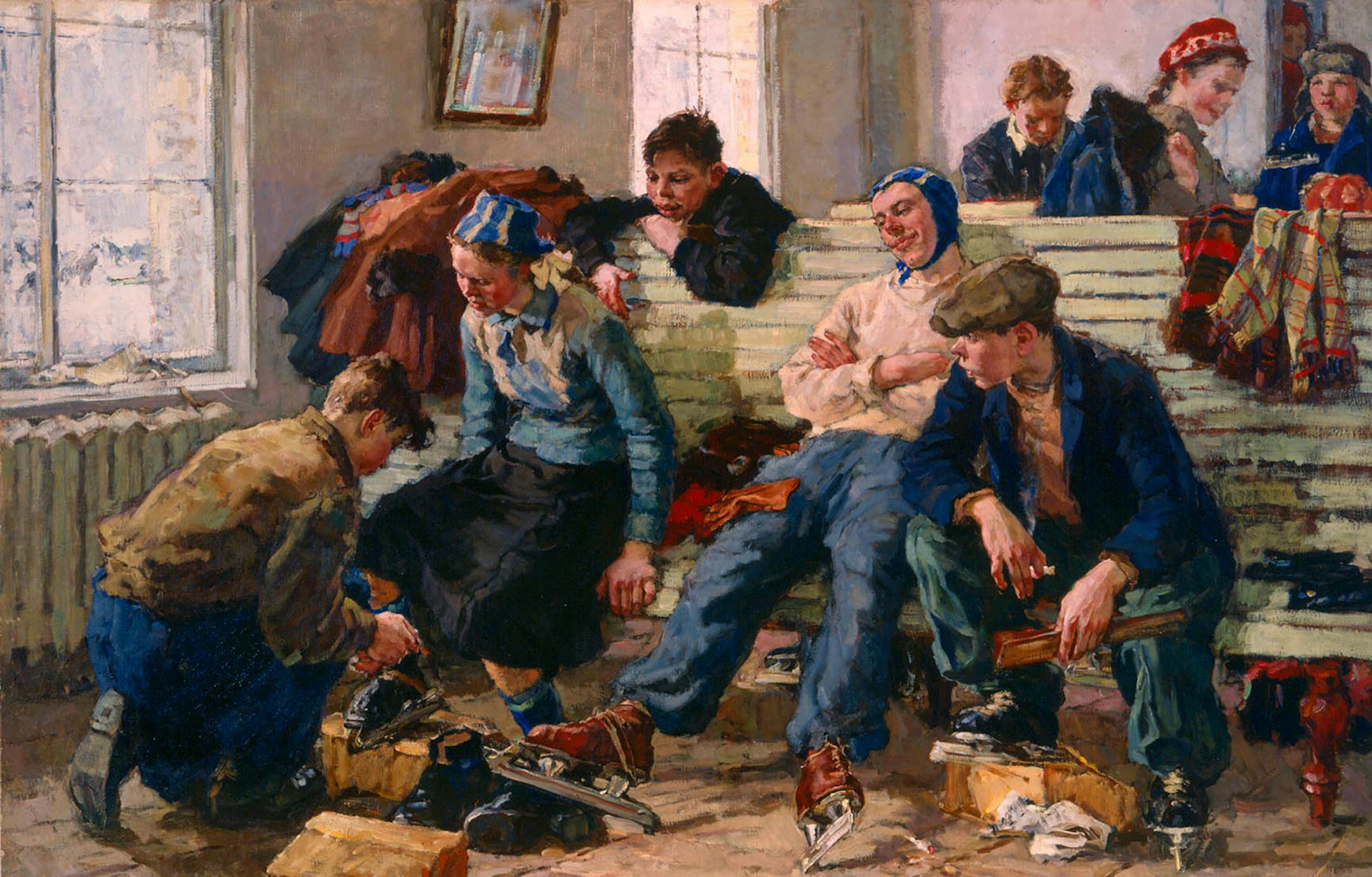
A decade later, Nina L. Veselova reintroduced "private emotional space" in her 1957 painting of "Ice Skaters" lounging in a warming house. As a teenage boy kneels to tie the skates of a pretty girl, other guys watch with derisive expressions, mocking and a bit envious. Painted four years after the death of Stalin, when the USSR was opening a crack to Western influence, the 5-feet-wide picture exudes a folksy charm that to American eyes may recall Norman Rockwell's magazine covers of the time.