

By KATHY HUNT • Tribune Media Services
For years the rutabaga and spiky kohlrabi have endured being snubbed for their more glamorous brethren. Other members of the same cabbage family -- turnips, cauliflower and broccoli -- made their way to our plates long before these two homely vegetables snuck onto produce stands.
Fortunately, the culinary cold shoulder has come to an end. From salads and purées and stews to casseroles, these versatile veggies finally get their due.
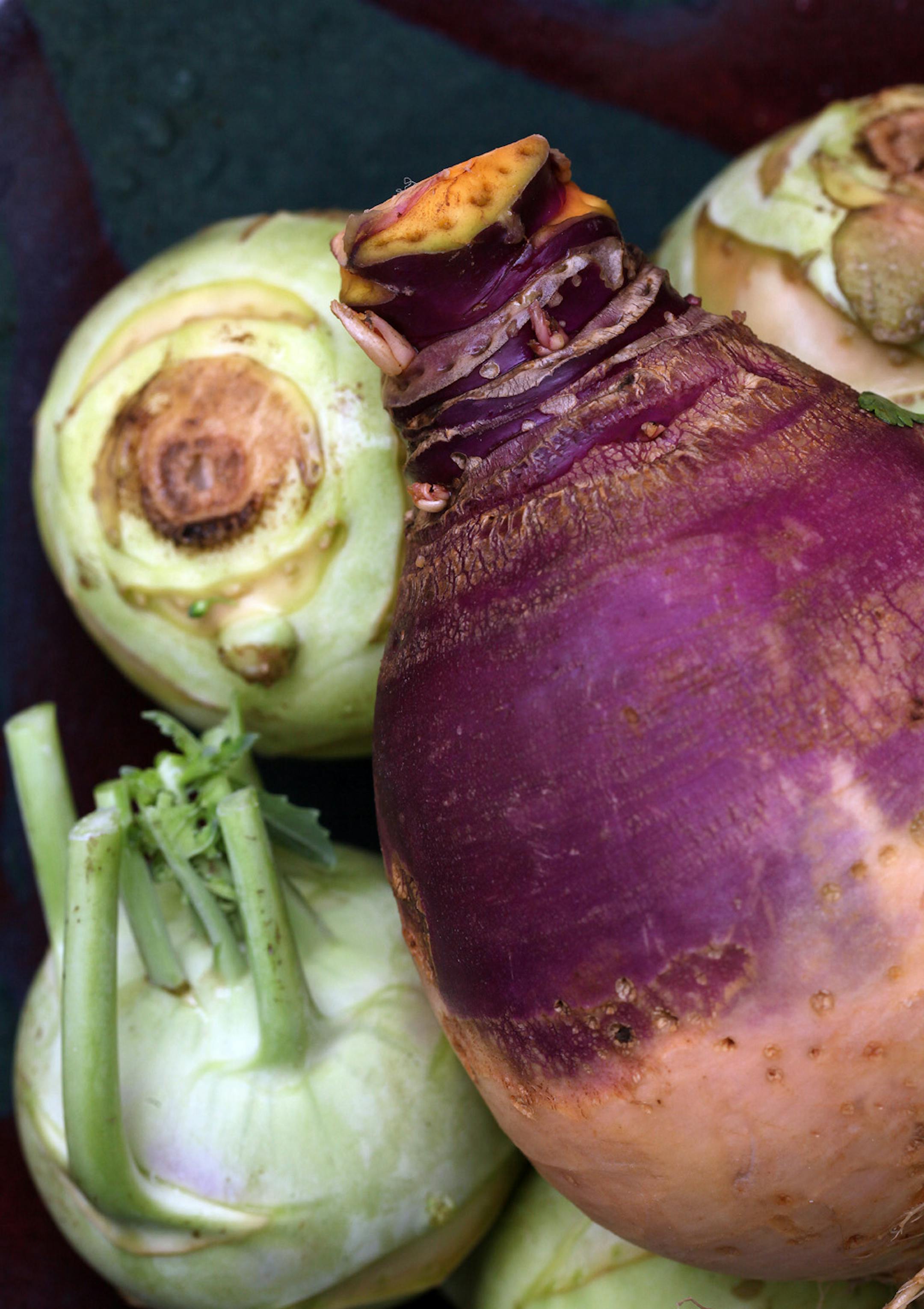
Resembling an oversized, scarred turnip, the rutabaga hails from Central Europe. Although its exact birthplace is unknown, the cool-weather-loving root vegetable got its start as a popular Swedish crop. Hence the nicknames "Swede" or "Swedish turnip."
In winter the rutabaga possesses a sweet, peppery flavor reminiscent of a mild turnip. With its honeyed yet tangy taste and firm texture, it partners well with a wealth of foods, such as apples, cheese, pears, pork, potatoes, tomatoes, tuna and, of course, turnips. Unceasingly flexible, it hits it off with such diverse herbs and spices as basil, cardamom, cayenne, nutmeg, rosemary and star anise.
When choosing a rutabaga, look for smooth, firm flesh that feels heavy for its size. The top part should be a bright purple, the lower portion yellow. Avoid any that appear washed out or feel woody or dry.
Because most producers wax their rutabagas to prevent them from drying out, cooks must first peel them before using. After completing that task, the culinary possibilities seem limitless.
In Scandinavia, cooks stick to simpler concoctions. "We let the vegetable stand on its own and allow the flavor to speak for itself," says Stockholm journalist Christina Anderson. She prepares both rutabagas and kohlrabi with a splash of olive oil and dash of salt and pepper.


