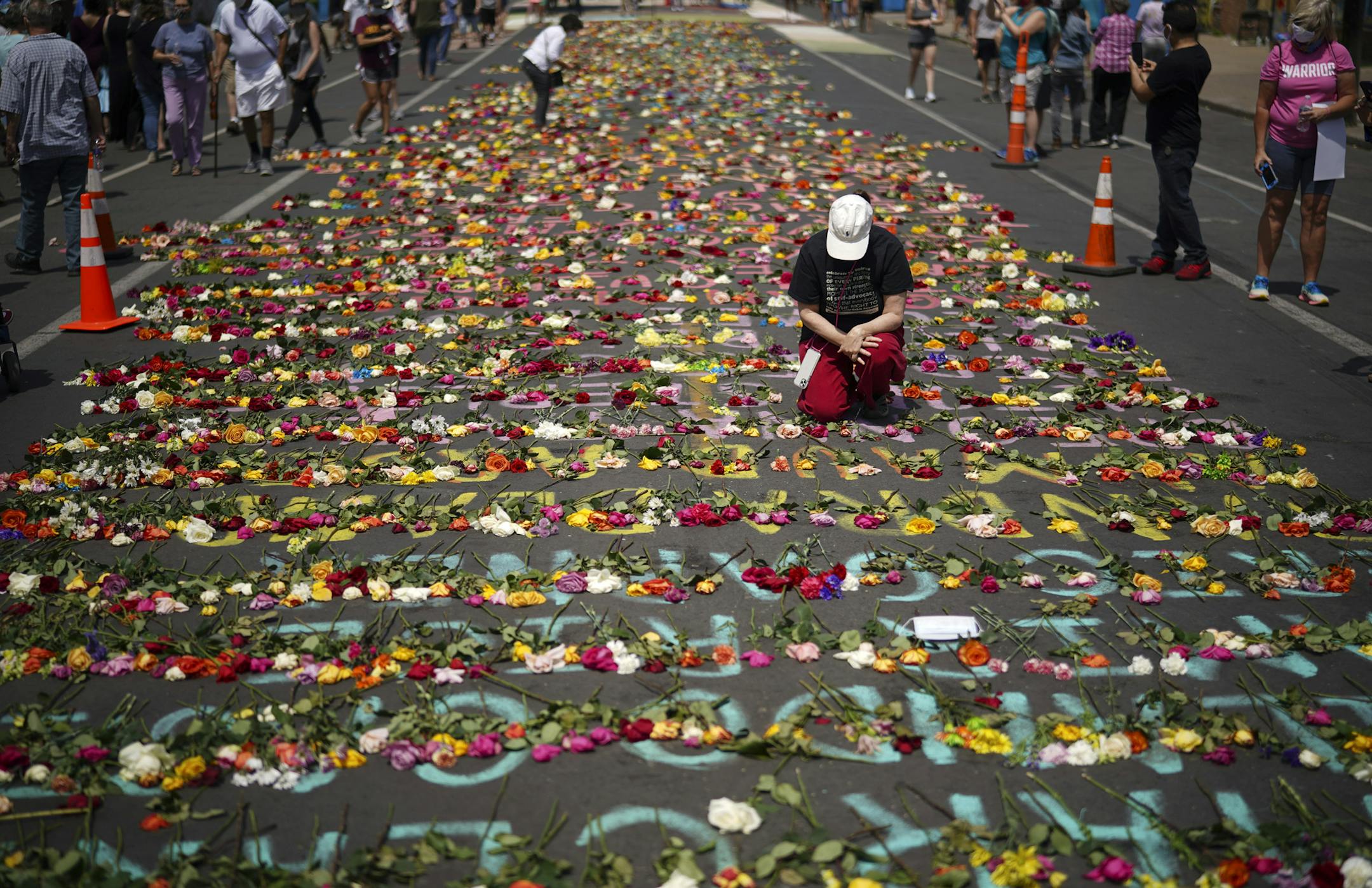
Back when the world's attention was on Standing Rock Reservation during the Dakota Access pipeline protests a few years ago, LeeAnn Eastman said African-Americans came to the encampments to stand in solidarity. Now she said that mutual respect is being shown as Indigenous people come to Minneapolis in the aftermath of George Floyd's killing.
"We've been in this movement and struggled together for a long time," Eastman said. "Indigenous people all over support Black Lives Matter."
Eastman traveled from Sisseton, S.D., with about 20 other relatives and friends Sunday to pay their respects at the Floyd memorial site sprawling across the intersection of 38th Street and Chicago Avenue where Floyd was arrested. She said they came to sing prayer songs and offer encouragement "to keep this going."
"I wanted to see where George passed away," said Alvin Village Center of Standing Rock. "I felt sad, hurt thinking about black people and Natives being treated the same way."
From surrounding states like the Dakotas and Wisconsin to neighboring suburban communities, mourners have flocked to the memorial site to pay respects and bear witness to where Floyd took his last breaths under a Minneapolis police officer's knee. It's been two weeks since he cried out for help as officers killed the unarmed 46-year-old man, sparking international protests and demands for justice. Marches still carry on across the country as the memorial continues to take on new sculptures, signage and murals. The collection of flowers seems to grow with every passing hour and there is a steady stream of people taking pictures, handing out free food and water, and bringing life to a landmark defined by tragedy.
'Very moving'
"We wanted to bring some flowers and pay our respects. Living in rural Hudson, you feel a little removed from it, so it made sense to come," said Johan Nielsen of Hudson, Wis. Nielsen's girlfriend, Susan Roeder of Stillwater, said visiting the memorial was "very moving, as you would expect." They brought along food to donate and were encouraged to make the trip thanks to Roeder's two teenage daughters, who she said will not tolerate injustice.
"Two weeks feels like a lifetime. You can't imagine how the world could change already in such a short amount of time," she said. "With the pandemic and to have Minneapolis be the center of the universe, it was surreal."
Erin Heep MacEwen, 47, invited her parents, Bert and Diane Heep, to make a day trip from Ely down to Minneapolis on Sunday. The family was tearful as they reflected on the experience of seeing the places they've watched on television and online the past two weeks. MacEwen said it's all heartbreak mixed with shame, which is why they want to show solidarity with the movement as white people from rural Minnesota.