

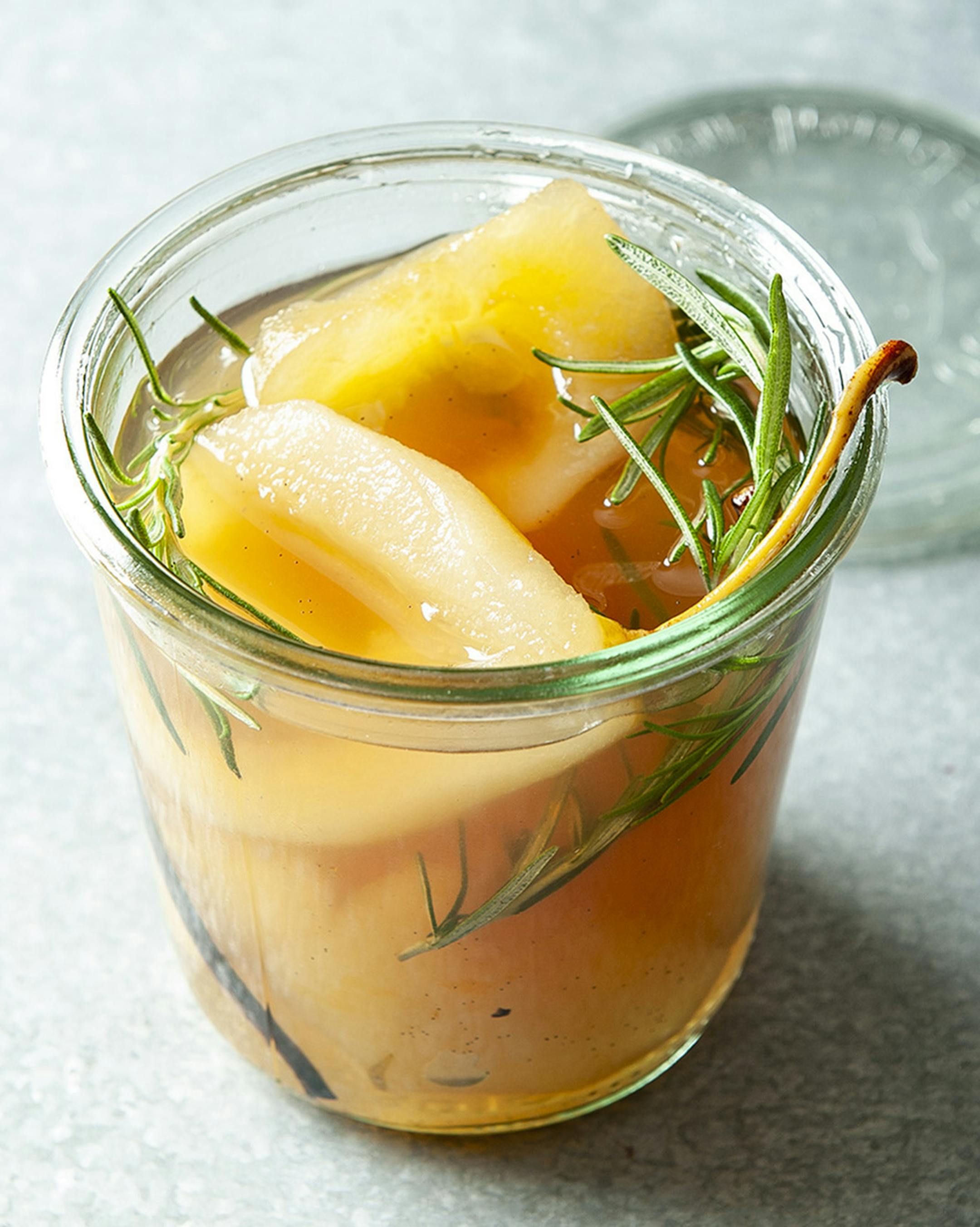
Our local pears are prolific and perfect right now. When ripe, the texture is tender and the flavors are nuanced and complex with hints of rose, honey and almonds.
Unlike most tree fruit, pears are best ripened after they are picked. Left too long in the orchard, their sugars turn to starch. Pears are harvested when they are still green, but snap from the branch when easily twisted.
Find local varieties of pears in our farmers markets and food co-ops: Look for ones that are medium-sized and super-sweet, but don't let their appearance dissuade you. They can be spotted and oddly shaped.
Parker pears are bronze and oblong, with a fine-grained texture and lots of sweet juice. Moon Glow is a Bartlett variety that is yellowish-green, buttery textured and fragrant.
Look for pears that are firm, not nicked or bruised and be sure the area around the stem is not mushy or brown. Once home, ripen the pears in a bowl on the counter at room temperature and to speed up the process add a banana. Because pears ripen from the inside out, don't judge them by looking at the color of the skin.
If the area near the stem end gives slightly, the pear is ready to eat. Store ripe pears in your refrigerator's crisper for a couple of days, but don't wait.
Unlike apples, pears tend to lose some of their sweetness when cooked, which is why they're often poached in sweet wine or syrup. When roasted with pork, their edges caramelize a little and turn slightly crisp.
Sauté pear slices in a little butter and they'll turn mellow and creamy, great with dark-meat chicken or to layer into sandwiches, or to top off pound cake.

