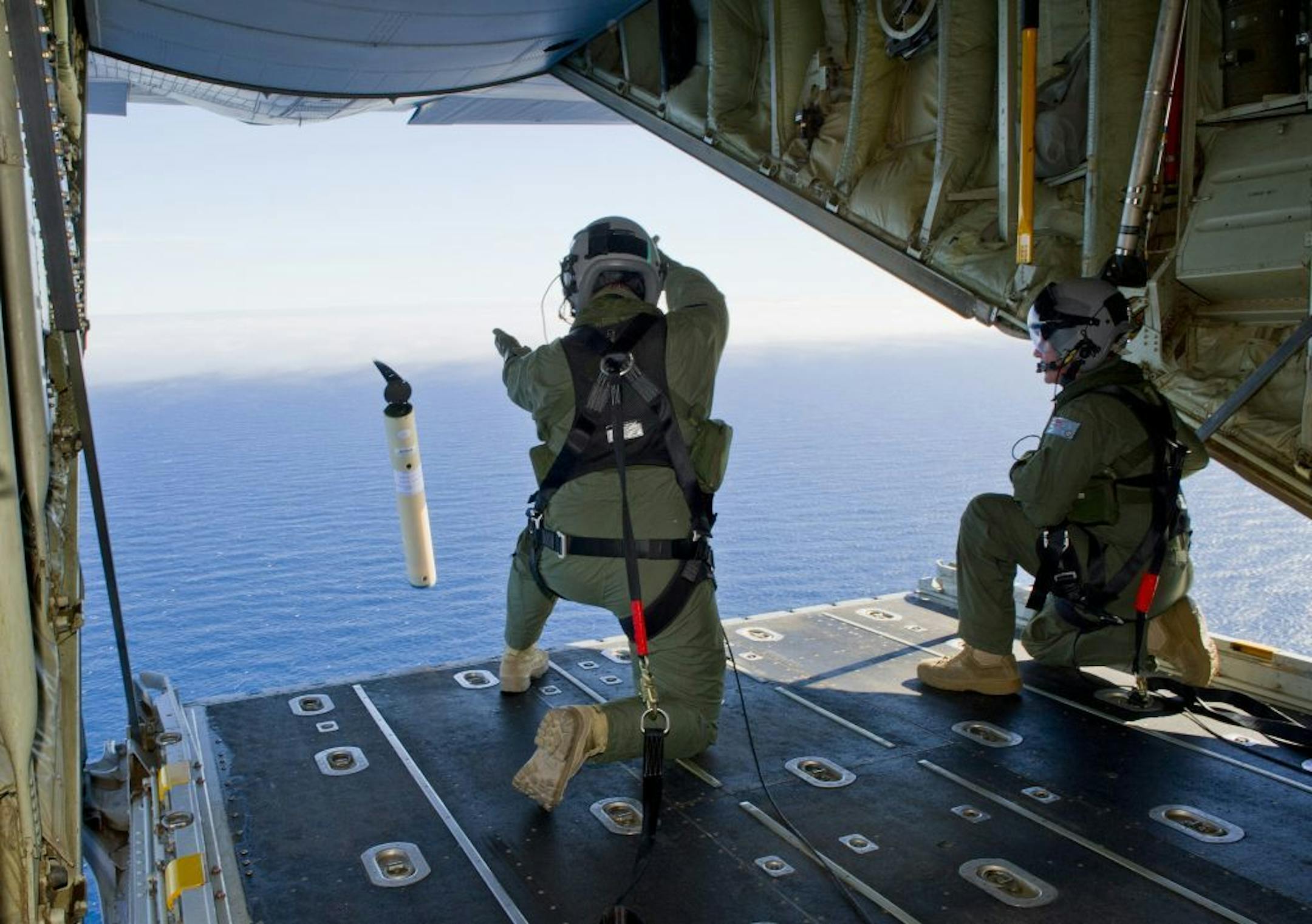
From satellites to binoculars, the hardware being used in the search for the missing plane far off western Australia ranges from the sophisticated to the simple. Some of the equipment being used to look for Malaysia Airlines Flight 370:
ORION PLANES
The plane most utilized so far has been the Lockheed P-3 Orion, a four-engine turboprop favored by the Australian and New Zealand defense forces. Because the search area in the southern Indian Ocean is so remote — some 2,500 kilometers (1,550 miles) southwest of Perth — it's an eight-hour round trip, leaving the planes just two or three hours to search.
One advantage of this plane is that it can fly at low altitudes for long periods. Mike Yardley, an air commodore with New Zealand's air force, said that his team's Orion flew at just 200 feet (60 meters) above the water Thursday to stay below thick clouds and fog — which requires intense concentration by the two pilots.
The Orion has a crew of 13, some of whom are stationed on an observation deck to search. Yardley said they use their eyesight, as well as a state-of-the-art radar system and three cameras — one infrared, one long-range, and one high resolution. The combination of systems helps them detect almost anything that's on the surface, he said. The crew also films everything so they can review what they've seen after they return to base.
The Orion has sonar to search below sea level, although it's not being used in this search, Yardley said.
Other planes involved Friday include a U.S. Navy P-8 Poseidon, which has been designed for anti-submarine warfare, and a civilian Bombardier Global Express, a long-range corporate jet with state emergency service observers on board. More planes are on the way.
BINOCULARS