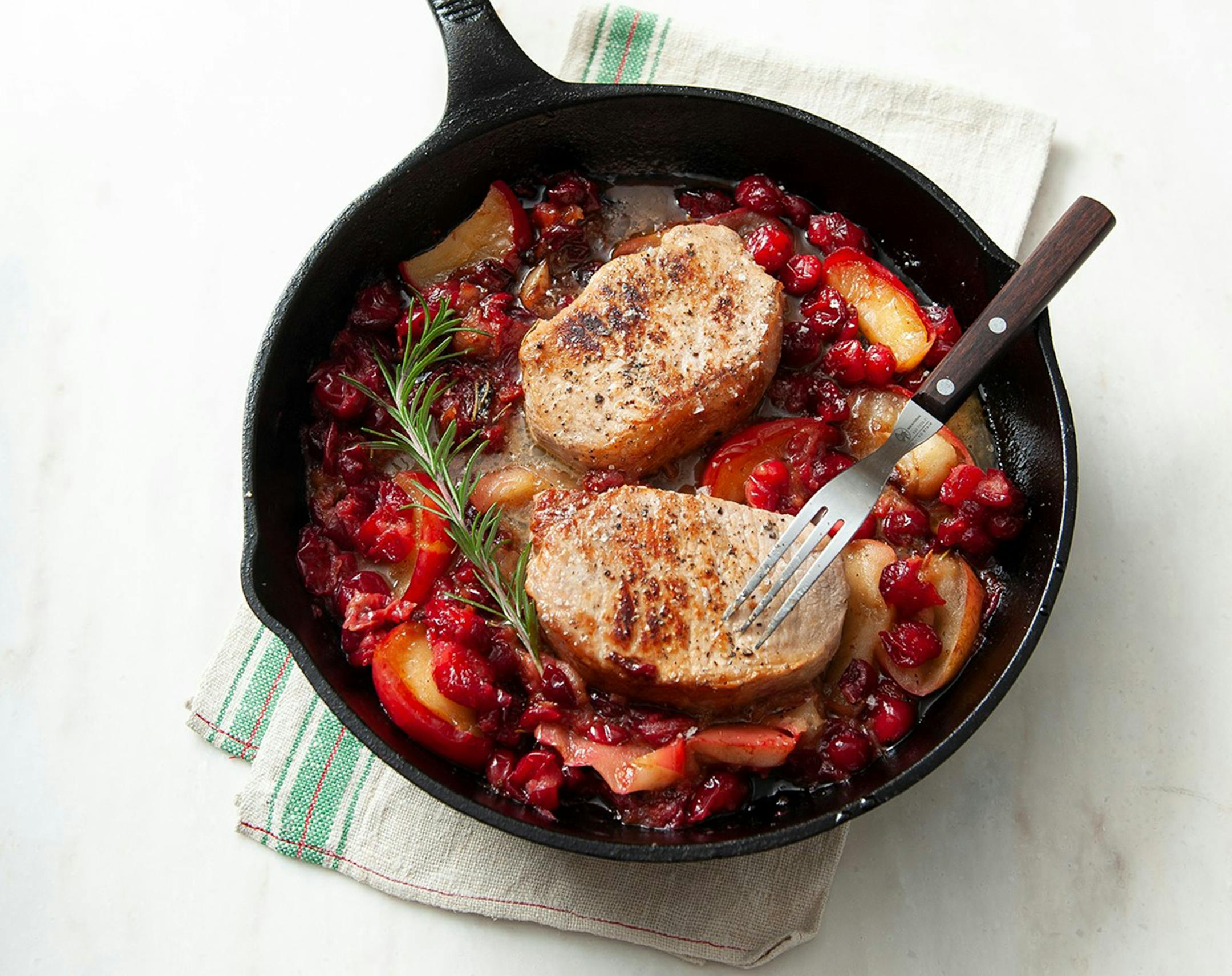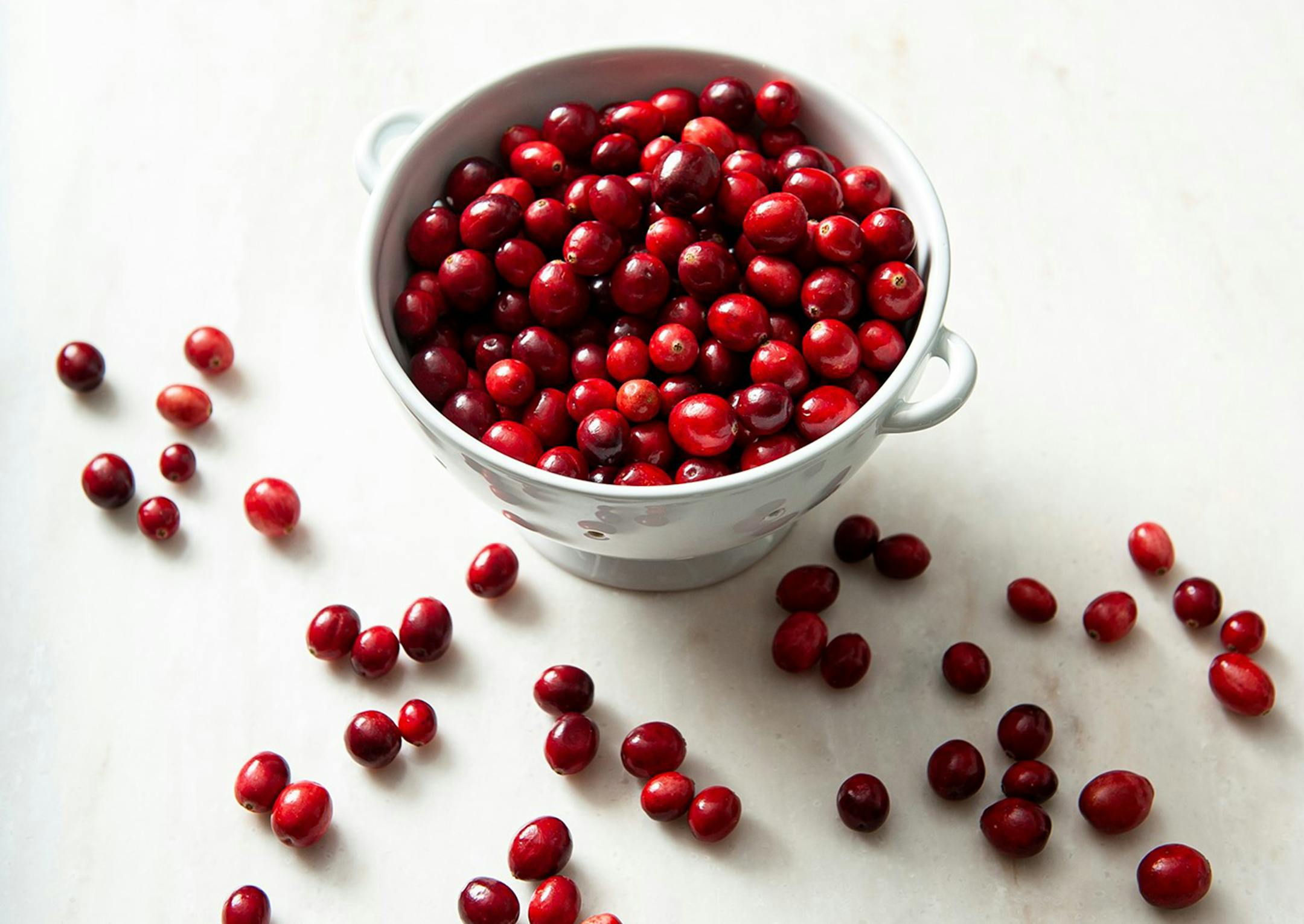
It seems so fitting that the nature of cranberries is bittersweet, as they are the final fruit of the season. When cranberries appear in markets, I know the holidays are galloping near.
Robust, round, oblong or pear-shaped, and varying in color from pink to ruby red, cranberries were nicknamed "bounce berries" because they hop and skip when they roll off the counter onto the floor. The name itself evolved from "craneberries," inspired by sandhill cranes, whose heads atop their elegant necks resemble the berries on their long, thin vines. Brilliant, crisp and tart, they add snap and color to otherwise dull wintry meals.
Long before white colonists arrived in our region, Native Americans relied on cranberries to preserve animals, dye fabrics and treat wounds in poultices. They pounded the berries with meat to make pemmican, which nourished families through the harsh winters, and simmered cranberries into soups and stews. European settlers cultivated cranberries for savory meat dishes, sweet jellies and juice for wine and vinegar. The cranberry's high vitamin C content was a sure defense against scurvy.
Today, central Wisconsin is the fresh cranberry capital of the world, capturing more than 60% of the market, much of it exported to Europe and Japan. New Jersey and Massachusetts grow plenty of cranberries, too, but those are mostly processed into dried fruit, jelly and juice.
The cranberry plant is well suited to Wisconsin's wetlands, water-soaked areas that create transition points between dry land and open water. The plants don't grow directly in the water, but lay their roots at the edge, thriving in the alternating layers of peat, sand, clay and rock. Add the cold winters and mild summers and the growing conditions are perfect.
Cranberries have evolved to contain a tiny air pocket that allows them to float and disperse through the marshes to reseed. This bobbing ability is a boon to the commercial farmers, who flood their fields to make it easier for mechanical beaters to detach the berries from their vines before being scooped up by huge booms and raked or vacuumed into trucks.
Unlike the enormous cranberry growers, the Ruesch Century Farm, a fourth-generation certified organic operation in central Wisconsin, uses the "dry method" to rake the ripe berries directly off their vines from the fields. It's a gentler process that keeps the berries from absorbing water, swelling and then shrinking or becoming too soft while in storage. "Drying and then cooling the berries right as they're harvested ensures a longer shelf life," owner Brian Ruesch has said.
The truly fresh local berries in our markets are firmer and less tannic than the frozen berries. They add pops of color to wild rice pilafs, salads, roasted poultry and meat, pan-seared fish, and make a wonderful garnish to creamy soups. I like to whir cranberries into smoothies, swirl them into yogurt, simmer them into oatmeal and toss them into dough for cookies, muffins, cakes, breads, tarts and pies.