

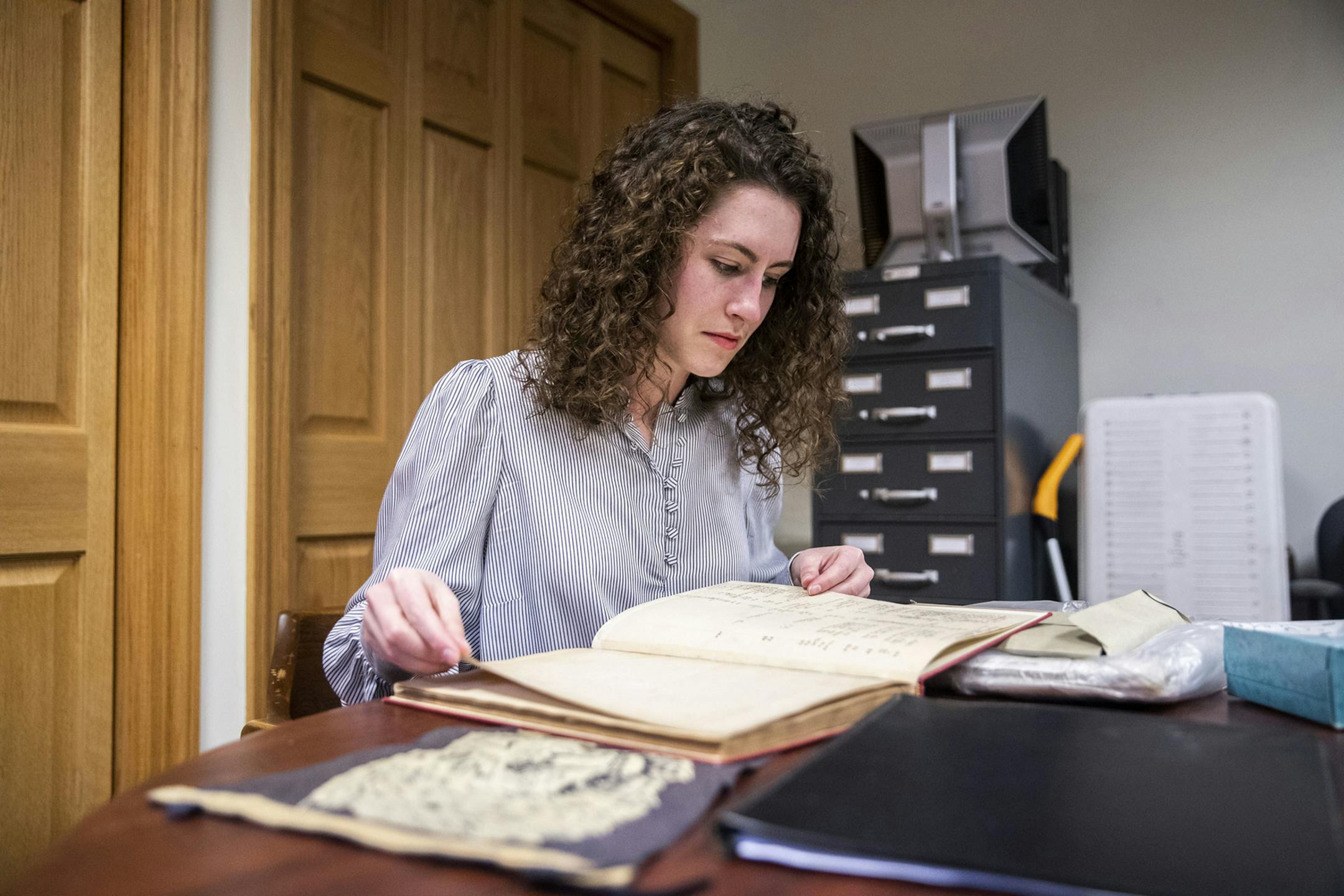
PHILADELPHIA – In her junior year at Villanova University, Angelina Lincoln lived across from a student apartment building called Moulden Hall.
Passing by the gray stone residence, she often wondered about its namesake. Never did she imagine someone so unlikely. Nor did she imagine that her postgraduate studies would be consumed by a man who, born to enslaved parents as an indentured servant, decided in 1886 to will his $10,000 farm to the school's Augustinian friars.
In precarious times that saw Villanova forced twice to close its doors, William Moulden would help it survive.
His gift was forged in an "unlikely 30-year friendship between a black man and the priests he came to trust and a university built on that trust," Lincoln wrote in a summary of her master's degree research.
Until Lincoln began digging into the lives of Moulden and his wife, Juliana, nearly everything that university administrators knew about them fit into a blurb on Villanova's website: They were the first known black Catholics in the area, gave $200 toward construction of the first chapel on campus, and left their estate to the school.
But "she kept finding more and more," said the Rev. Peter Donohue, university president, "More than anyone else at Villanova knew."
Donohue had assumed that the land Moulden donated was the site of the family's original, mid-19th century log cabin, where the law school now stands. Lincoln, however, discovered that he went on to purchase a 3-acre farm 2 miles away. Of that land, so precious to a freed black man, Moulden wrote in his will: "I give divise and bequeath unto my friend Reverend Francis M. Sheeran O.S.A."
But that is only the end of the story.


